

Key takeaways
- Juicers press juice from celery, leafy greens, and hard produce in centrifugal and masticating designs. Compare feed chutes, pulp bins, and speeds.
As an Amazon Associate we earn from qualifying purchases.
A morning juice routine usually comes down to a short list of ingredients: celery stalks, leafy greens, carrots, apples, maybe a knob of ginger. The machine that handles that list well has to do two very different jobs. It needs to tear through hard, dense produce quickly, and it also needs to squeeze liquid out of fibrous stalks and soft leaves without leaving most of it behind in the pulp. That is why home juicers split into two families, and why picking between them matters more than any single feature on the box.
Centrifugal juicers spin a flat cutting disc inside a mesh basket at high speed. Produce pressed against the disc is shredded, and the spinning force throws the juice through the mesh while the pulp collects in a separate bin. They are fast and good with hard fruit and vegetables. Masticating juicers, often called slow or cold press juicers, use a rotating auger to crush and press produce against a screen at low speed, often between 43 and 80 RPM. They work more slowly, but the pressing action suits celery, wheatgrass, and leafy greens, and the pulp usually comes out drier.
The five machines below cover both families. One is a high-speed centrifugal model with a wide chute for quick weekday juicing. The other four are masticating designs, including one built around celery, one with an extra-wide chute that swallows whole fruit, and one self-feeding model with an oversized hopper for batch juicing. For each one, the feed chute width, motor wattage, speed settings, and container sizes are listed so you can match the machine to the produce you buy.
Disclosure: This article may contain affiliate links. If you buy through these links, we may earn a small commission from Amazon.
Breville Juice Fountain Plus JE98XL
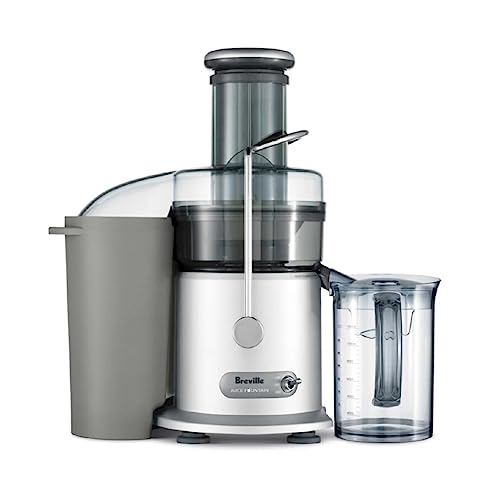
The Juice Fountain Plus is the centrifugal entry in this group, and it is built for speed. Its 850-watt motor drives a titanium-reinforced cutting disc paired with a stainless steel micro mesh filter basket, and the 3-inch feed chute is wide enough for whole apples and large carrot pieces, so prep is mostly a rinse and a rough trim. Two speed settings let you match the disc speed to the produce: the low setting suits softer fruit and leafy vegetables, while the high setting is meant for denser fruit and harder vegetables like carrots and beets.
Juice collects in a 35.2 fluid ounce jug with a built-in froth separator, which pours juice while holding back the foam centrifugal machines tend to produce. Pulp goes into a detachable 2.6-quart container, big enough for a full family batch. The body is heavy grade polymer with a safety locking arm, the cord wraps around the feet under the base, and the removable parts are dishwasher safe. A cleaning brush for the mesh basket is included.
Specs
- 850-watt motor with 2 speed settings (high and low)
- 3-inch extra-wide feed chute for whole fruit
- 35.2 fl oz juice jug with froth separator
- 2.6 qt detachable pulp container
- Titanium-reinforced cutting disc and stainless steel micro mesh filter
- Item weight 10.1 pounds; 120 volts
Omega J8006HDS Juicer and Nutrition System

The J8006HDS is a horizontal masticating juicer that presses produce with a triple-stage auger turning at 80 RPM. The slow pressing action is the reason this style of machine handles leafy greens, wheatgrass, and celery well: instead of shredding, the auger crushes and squeezes, and an automatic pulp ejection system pushes the spent pulp out the front so you can keep feeding produce in for continuous juicing. An adjustable end cap with 3 pressure settings lets you tighten the squeeze for drier pulp or loosen it for softer fruit.
The 200-watt motor uses gear reduction that Omega equates to a 2 HP motor, which is where the torque for hard carrots and beets comes from despite the modest wattage figure. The auger is made of Ultem, a hard-wearing plastic, and the feed tray on top is extra large, which helps when working through a pile of celery stalks. Beyond juice, the listing describes the machine as a nutrition system that can also extrude pasta, grind coffee and spices, mince herbs and garlic, and make nut butters and frozen desserts with the included cones and nozzles.
Specs
- 200-watt motor; auger speed 80 RPM
- Triple-stage masticating auger made of Ultem
- Adjustable end cap with 3 pressure settings
- Automatic pulp ejection for continuous juicing
- 32 fl oz capacity; dimensions 15.74 x 12.7 x 7.56 inches
- Item weight 13 pounds; 120 volts; 1 speed setting
Omega MM900HDS Masticating Celery Juicer

Where the J8006HDS is a general-purpose press, the MM900HDS is tuned for one ingredient above all: celery. It is a horizontal masticating juicer running at 80 RPM with a 200-watt motor, and it ships with two adjustable end caps. The celery end cap, identified by its green insert, is shaped to squeeze fibrous stalks for longer as they pass through, which the listing credits with pulling more juice from celery and leaving drier pulp. The second, standard end cap handles all other fruit and vegetables. Each cap offers 3 adjustable pressure settings, so you can back the pressure off if long fibers begin to clog and tighten it again once the blockage clears.
The extraction is triple-stage, like its sibling, and pulp ejects automatically for continuous juicing. The feed chute and extra-large feed tray are sized for whole, long celery stalks, and Omega suggests feeding stalks in whole rather than cutting them into short pieces. The listing also notes 15-year coverage on parts and performance, the longest coverage figure among the machines in this guide.
Specs
- 200-watt motor; auger speed 80 RPM
- Two adjustable end caps: celery cap with green insert, plus a standard cap
- 3 adjustable pressure settings on each end cap
- Triple-stage masticating extraction
- Automatic pulp ejection for continuous juicing
- 120 volts; large feed chute with extra-large feed tray
Kuvings Whole Slow Juicer B6000S
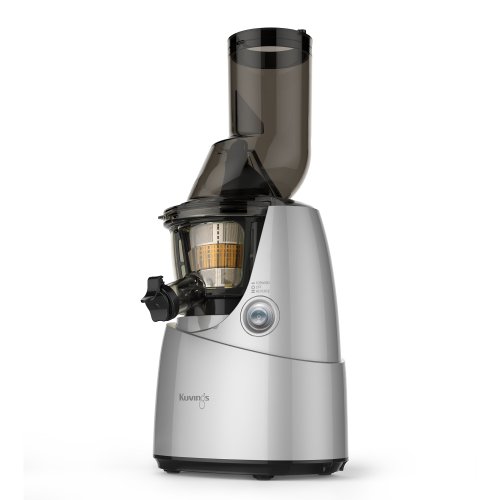
Most masticating juicers ask you to chop produce into small pieces for a narrow chute. The B6000S takes the opposite approach: it is a vertical slow juicer built around a 3-inch by 3-inch feed chute that accepts whole apples and large chunks, which cuts prep time down considerably for a press-style machine. The auger turns at 60 RPM, driven by a 240-watt motor, and the low-speed masticating technology presses produce through a stainless steel strainer with an Ultem auger rather than shredding it.
The juicing bowl holds 400 ml and is fitted with a smart cap, so you can close the spout to mix juices inside the bowl or pre-fill it before pouring. Components that touch food are BPA-free, and the silver Tritan body stands 17.6 inches tall, so check the clearance under your cabinets. In the box, Kuvings includes a blank strainer that works as a sorbet maker, a cleaning tool set, and a recipe book. At 14.1 pounds it is a stay-on-the-counter appliance for most kitchens, and the wide chute plus slow press make it a practical middle ground between centrifugal speed and narrow-chute press yield.
Specs
- 240-watt motor; auger speed 60 RPM
- 3-inch by 3-inch wide feed chute for whole fruit
- 400 ml juicing bowl with smart cap
- Blank strainer (sorbet maker), cleaning tool set, and recipe book included
- Dimensions 8.2 x 9 x 17.6 inches; item weight 14.1 pounds
- BPA-free Tritan components; 120 volts
AMZCHEF SJ-036 Self-Feeding Cold Press Juicer

The SJ-036 is built for batch juicing with as little practical feeding as possible. Its feed chute measures 5.8 inches across, the widest in this guide, and the hopper holds 60.93 fluid ounces of produce. You load the hopper, switch the machine on, and the self-feeding design draws produce down to the large auger on its own, with an auto-cutting mechanism slicing pieces as they descend. That makes it a good fit for juicing a full pitcher of celery, carrots, and greens in one session rather than glass by glass.
Inside, a triple strainer system filters the juice as the auger presses at 60 RPM, powered by a 250-watt motor, the highest wattage figure among the masticating models here. Controls are simple: the listing lists 2 speed settings, which on this machine are the on and reverse functions, the reverse being useful for backing out a jam of fibrous greens. The black housing is stainless steel trimmed, parts are BPA-free, and the anti-drip lid and safety lid lock are listed among its features.
Specs
- 250-watt motor; auger speed 60 RPM
- 5.8-inch self-feeding chute; 60.93 fl oz hopper capacity
- Large auger with triple strainer system
- 2 settings: on and reverse
- Anti-drip lid and safety lid lock
- 120 volts; model SJ-036 PRO
How to Choose
Start with the produce you juice most. If your routine is built on celery, leafy greens, and wheatgrass, a masticating machine is the natural fit, because the pressing action extracts liquid from fibers and leaves that a spinning disc tends to fling into the pulp bin only partly squeezed. If you mostly juice apples, carrots, and citrus for a quick morning glass and you value minutes over yield, a centrifugal model like the Breville finishes the job far faster.
Feed chute width decides how much chopping you do. A 3-inch chute takes whole apples and fat carrots. The narrow chutes on horizontal presses need celery cut into shorter lengths and greens fed in small bunches, though models tuned for celery reward whole stalks. The widest chutes and self-feeding hoppers, like the AMZCHEF design, suit people juicing large batches for several drinkers at once.
Read the speed and wattage figures together. On centrifugal machines, higher wattage and a second, lower speed give control across soft and hard produce. On masticating machines, the RPM figure matters more than wattage: 43 to 80 RPM is the normal range, and torque from gear reduction does the heavy work. Pressure adjustment is the other feature worth having on a press. An adjustable end cap lets you squeeze celery and greens harder for drier pulp, then ease off for soft fruit.
Finally, think about containers and cleanup. A pulp container around 2.6 quarts and a juice jug near 1 liter keep a family batch in one run. Dishwasher-safe parts and an included cleaning brush shorten the least pleasant part of juicing, and a machine you can rinse in two minutes is one you will keep using.
FAQ
Is a masticating juicer better than a centrifugal juicer for celery and leafy greens?
For celery and leafy greens, a masticating juicer usually extracts more of the liquid, because the auger presses and squeezes fibers and leaves instead of shredding them at high speed. The pulp from a press typically comes out drier, a simple sign of how much juice was left behind. A centrifugal juicer still handles greens, especially on its low speed, but it shines with hard produce and finishes much faster.
How much produce should I prepare before putting it in the chute?
It depends on chute width. A 3-inch or wider chute accepts whole apples and thick carrots with little more than a rinse. Narrower horizontal presses work best with celery cut into lengths of a few inches and greens fed in small handfuls, alternating with harder produce to push them through. Very long fibers can wrap around an auger, so shorter pieces keep the flow steady on any press.
Can I store fresh juice, or do I need to drink it right away?
Slow juicer listings commonly state that juice keeps for up to 72 hours in a sealed container in the refrigerator, because the low-speed press introduces less air into the juice. Juice from a centrifugal machine is best poured and drunk soon after making it. Either way, fill the container to the top to leave as little air inside as possible, and keep it cold until you drink it.
What do I do if fibrous greens clog the machine?
Use the reverse function if your juicer has one; a few seconds in reverse usually frees the auger. On presses with an adjustable end cap, loosen the pressure setting, run the clog through, then tighten the cap again. Feeding greens in smaller bunches, alternating them with firm produce like carrot or apple, prevents most clogs.
Conclusion
For a celery and greens routine, the Omega MM900HDS is the specialist pick, with its dedicated celery end cap and adjustable pressure. The Kuvings B6000S pairs slow pressing with a whole-fruit chute, the AMZCHEF SJ-036 suits big self-fed batches, and the Omega J8006HDS adds pasta and grinding attachments beyond juice. If speed matters most, the Breville Juice Fountain Plus remains the quick route to a morning glass. Match the machine to your produce list and batch size, and any of the five will earn its place on the counter.
More from Amazon
Programs that pair well with the guide above. Offers and eligibility are set by Amazon and may change.
Free shipping on eligible items, Prime Video and more. Eligible new members can start with a free trial.
Start a Prime free trialAudiobooks and podcasts to listen to on the go. Eligible new members can start with a free trial.
Try Audible freeAd-free music streaming. Eligible new subscribers can start with a free trial.
Try Music Unlimited freeA free business account with business pricing and bulk-buying tools for work, shop or home office.
Create a business accountAs an Amazon Associate we earn from qualifying purchases.





Write Your Review
No reviews yet. Be the first to share your experience!