

Key takeaways
- Brake feel: cable-operated loop brakes should engage progressively, but they may need adjustment as cables settle or stretch.
- Seat comfort: the seat is convenient for rests, but it is not a substitute for a padded, supportive chair during long waits.
- Storage: the basket is practical for light shopping, although a full grocery load can make steering heavier.
- Outdoor limits: larger wheels improve control on pavement; they do not make the rollator suitable for stairs, deep gravel, or steep unsupported slopes.
Best Rollators for Comfortable Mobility
The best rollators for comfortable mobility are the Drive Medical Nitro for mixed indoor and outdoor use, the NOVA Zoom 18 for a lighter everyday option, and a compact three-wheel rollator for tight indoor spaces.
A rollator is more than a walking frame with wheels: its seat width, handle adjustment, brake response, wheel diameter, folded size, and basket design determine whether it feels stable and convenient in daily use. The right choice depends on where you walk, how often you fold it, and whether you need a genuinely comfortable seat or only occasional support.
Our top picks


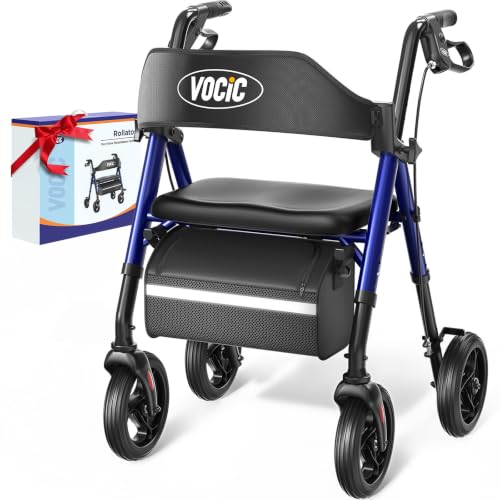
As an Amazon Associate we earn from qualifying purchases at no extra cost to you. Ratings are shown as listed on Amazon.
Best rollators compared
| Rollator or type | Seat width | Handle-height range | Folded dimensions | Wheel size | Approx. weight | Basket capacity | Best suited to |
|---|---|---|---|---|---|---|---|
| Drive Medical Nitro | 18 in | 33–38 in | Approx. 9.5 in wide when folded | 10 in front, 8 in rear | About 17.5 lb | About 11 lb | Mixed indoor/outdoor mobility |
| NOVA Zoom 18 | 18 in | Approx. 33–38 in | Approx. 10 in wide | 8 in | About 16.5 lb | About 10 lb | Daily errands and lighter carrying |
| Three-wheel rollator | Usually no seat | Approx. 31–38 in | Often 8–10 in wide | 7–8 in | About 10–15 lb | Small pouch or basket | Tight hallways and frequent folding |
| Heavy-duty four-wheel rollator | 19–23 in | Approx. 32–39 in | Often 10–13 in wide | 8–12 in | About 20–30 lb | About 10–15 lb | Higher user weight or a wider seat |
Dimensions and capacities can differ by frame size and model revision, so confirm the manufacturer’s current specification sheet before ordering. A basket’s stated capacity is not permission to hang heavy bags from the handles; uneven loads can affect steering and braking.
Drive Medical Nitro: best all-rounder for indoor and outdoor use
The Drive Medical Nitro is a strong choice when one rollator must handle supermarket aisles, sidewalks, building corridors, and occasional uneven pavement. Its larger front wheels help it roll over small surface changes more smoothly than a basic 6-inch-wheel model, while the narrower folded profile is useful for a car trunk or storage closet.
Its approximately 18-inch seat suits many average-sized users, and the height range is broad enough for many adults. The front-wheel design gives it a more natural rolling feel outdoors, but the same longer wheelbase may require slightly more room to turn indoors.
What to know before buying
- Brake feel: cable-operated loop brakes should engage progressively, but they may need adjustment as cables settle or stretch.
- Seat comfort: the seat is convenient for rests, but it is not a substitute for a padded, supportive chair during long waits.
- Storage: the basket is practical for light shopping, although a full grocery load can make steering heavier.
- Outdoor limits: larger wheels improve control on pavement; they do not make the rollator suitable for stairs, deep gravel, or steep unsupported slopes.
NOVA Zoom 18: best lighter four-wheel option
The NOVA Zoom 18 is appealing when lifting the rollator into a vehicle or moving it around the home matters as much as outdoor rolling. Its 8-inch wheels are a useful compromise: large enough for ordinary sidewalks and thresholds, but not so large that the frame feels cumbersome in a kitchen or hallway.
The seat width and handle range are similar to many standard adult rollators. That makes the decision less about headline specifications and more about brake response, frame fit, and whether the available basket is sufficient for the user’s routine.
Who should choose it?
Choose a lighter four-wheel model such as the Zoom 18 when the rollator will be folded several times a week, carried up a short step, or stored in a compact vehicle. It is less attractive if the route regularly includes broken sidewalks, grass, or large door thresholds, where a 10-inch front wheel can feel more forgiving.
When a three-wheel rollator is better
Three-wheel rollators turn more easily and usually weigh less than four-wheel designs. They can work well in narrow apartments, crowded indoor spaces, and short trips where a seat is not important. Their triangular layout, however, offers less passive stability than a four-wheel rollator, and many have smaller storage pouches.
Select one only if the user can control steering and braking confidently and does not need to sit frequently. A four-wheel rollator is usually the safer starting point for someone who wants a built-in seat or has limited experience managing a wheeled mobility aid.
How to choose by situation
| Your situation | Most suitable configuration | Why | Trade-off |
|---|---|---|---|
| Mostly indoors, narrow doors and furniture | Compact four-wheel or three-wheel model | Shorter turning path and easier storage | Smaller wheels can catch on thresholds |
| Daily sidewalks and shopping trips | Four-wheel model with 8–10 inch wheels | Better tracking and smoother pavement control | Heavier and wider than an indoor model |
| Frequent car loading | Lightweight frame under about 18 lb | Less lifting effort | May have a smaller seat or basket |
| Needs a wider, more supportive seat | Heavy-duty four-wheel rollator | More seat and frame width options | Requires more storage and lifting space |
| Limited storage room | Model with a narrow folded width and removable basket | Fits closets and vehicle cargo areas more easily | Check that it remains stable when stored upright |
Fit matters more than a maximum handle number
Handle height should allow the user to stand upright with relaxed shoulders and a slight bend in the elbows. As a starting estimate, measure from the floor to the wrist crease while standing in normal shoes, then compare that measurement with the rollator’s adjustment range. This is only a fitting guide: posture, arm length, footwear, and the user’s walking pattern can change the correct setting.
The seat should allow the user to sit without the thighs being squeezed by the side supports. Measure the widest part of the hips while wearing normal outdoor clothing and leave several inches of practical clearance. A seat that is technically wide enough may still feel uncomfortable if the backrest, handles, or frame rails restrict the sitting position.
A physical therapist or other qualified professional can help check height, posture, brake operation, and whether a rollator is appropriate for the individual’s balance and mobility needs.
Brake feel, wheel size, and real-world comfort
Good brakes should stop the rollator without requiring a hard squeeze or a sudden jerk. Test both sides separately if possible. The parking locks should hold the frame still while the user sits, but the rollator should not be treated as a chair until both locks are fully engaged on a level surface.
Wheel size changes the character of the rollator:
- 6-inch wheels: compact and maneuverable, but more affected by cracks and thresholds.
- 8-inch wheels: a practical everyday balance for homes, shops, and maintained sidewalks.
- 10-inch front wheels: smoother over small pavement changes and more comfortable outdoors, with a slightly larger turning footprint.
Soft tires can reduce rattling but may require more cleaning and can show wear sooner. Solid wheels avoid punctures, yet transmit more vibration over rough ground. Neither wheel type removes the need to slow down at curbs, ramps, wet floors, and uneven transitions.
Ownership costs and maintenance
Basic four-wheel rollators commonly occupy a general market range of roughly $80–$250, while premium lightweight, heavy-duty, and specialty designs can cost more. Consider the cost of replacement hand grips, wheels, brake cables, and seat hardware rather than comparing purchase price alone. A model used five days per week for three years is used about 780 times; paying an additional $60 for better folding, braking, or durability works out to roughly eight cents per use.
Simple maintenance routine
- Wipe the frame and handles with mild soap and water, then dry them fully.
- Inspect wheels weekly for embedded stones, uneven wear, cracks, or loose fasteners.
- Check that both parking brakes lock firmly before every seated rest.
- Keep cables and wheel pivots free of dirt; use only manufacturer-approved lubricant.
- Do not carry loads that make the basket sag or interfere with the front wheels.
- Have weak brakes, a dragging wheel, or a bent frame checked before continued use.
The parts that commonly wear first are tire surfaces, brake cables, hand grips, and folding-joint hardware. Storing a rollator in a damp shed, dragging it up stairs, or leaving it in a hot vehicle can shorten the life of these components.
Bottom line
For most people wanting one versatile rollator, the Drive Medical Nitro offers the strongest indoor-outdoor balance through its larger front wheels, practical seat, and compact fold. The NOVA Zoom 18 is a sensible lighter alternative for routine errands and frequent vehicle loading. Choose a three-wheel design only when tight turning space outweighs the need for a seat and maximum stability, and choose a heavy-duty model when seat width, frame capacity, or long-term comfort is the priority.

Write Your Review
No reviews yet. Be the first to share your experience!