

Our Top Picks
 HomeKit and high-resolution videoArlo Video Doorbell 2K1 Doorbell1.45 x 1.85 x 5.63 inches0.45 PoundsCheck on Amazon
 Budget and simple setupREOLINK Battery Video Doorbell6.3 x 1.89 x 1.16 inches0.5 poundsCheck on Amazon


The best wireless doorbell cameras in 2026 are the Google Nest Doorbell (Battery) for Google Home households, the Ring Battery Doorbell Plus for Alexa homes and easy installs, the Eufy Video Doorbell E340 for avoiding monthly fees, and the Arlo Video Doorbell 2K (2nd Gen) for sharp video and HomeKit support through a compatible hub. Which one fits depends on your smart-home ecosystem, how much you will pay for cloud video each month, and how often the battery must be recharged at your door.
A wireless doorbell camera runs on a rechargeable battery and talks to your router over Wi-Fi, so you can mount it on a rental, a brick wall, or a door with no existing bell wiring. The tradeoff is battery upkeep and slightly slower alerts than wired models. This guide explains the criteria that matter, gives thresholds you can check against your own door, and shows who should skip each model.
Quick answer by situation
- Google Home users: Google Nest Doorbell (Battery).
- Alexa users, easy shopping and accessories: Ring Battery Doorbell Plus, or the entry-level Ring Battery Doorbell.
- No monthly fee, local storage: Eufy Video Doorbell E340.
- HomeKit and high-resolution video: Arlo Video Doorbell 2K (2nd Gen) with a compatible hub.
- Budget and simple setup: Blink Video Doorbell (battery configuration).
- Wide camera field and local recording options: Reolink Battery Video Doorbell and Wyze battery doorbell models, depending on current stock.
How we chose
This is a research-based roundup built from manufacturer pages and 2026 buyer guides. We did not run device trials, so we rank by published specs and the criteria below.
- Wire-free power: the camera must run from a rechargeable or replaceable battery without a transformer.
- Video: at least 1080p, with a taller aspect ratio preferred so packages on the floor appear in frame.
- Subscription clarity: we favor models whose person, package, and vehicle detection works without a plan or that offer local storage.
- Ecosystem fit: Alexa, Google Home, HomeKit, or none.
- Install flexibility: the mount must work on wood, vinyl siding, and brick, with an angled wedge available if the door recess is deep.
- Safety and privacy: encrypted video, two-factor sign-in, and clear local-law guidance for recording audio.
Prices change often, so we use tiers instead of amounts: Blink is entry-level, Ring and Eufy are mid-range, Nest and Arlo sit at the upper mid to premium end depending on bundle.
Comparison table
| Model | Video class | Power | Storage | Ecosystem | Cost tier |
|---|---|---|---|---|---|
| Google Nest Doorbell (Battery) | Tall 3:4 HD, HDR | Rechargeable battery or wired | Cloud plan for longer history, short free event history | Google Home | Upper mid-range |
| Ring Battery Doorbell Plus | High-resolution, head-to-toe view | Removable rechargeable battery | Cloud plan for recordings | Alexa | Mid-range |
| Eufy Video Doorbell E340 | Dual cameras: 2K front plus lower package view | Rechargeable battery or wired | Built-in local storage | Alexa, limited Google | Mid-range |
| Arlo Video Doorbell 2K (2nd Gen) | 2K | Rechargeable battery or wired | Arlo Secure plan for clips | Alexa, Google, HomeKit (hub needed) | Mid-range |
| Blink Video Doorbell | 1080p HD | AA batteries or wired | Sync module with local USB or cloud plan | Alexa | Entry-level |
| Reolink Battery Video Doorbell | High-resolution, wide field | Rechargeable battery | microSD local | Varies by model | Entry to mid-range |
We list specs as classes where manufacturers have updated revisions, because specifications and hubs differ by region. Confirm the current revision before ordering.
The picks in detail
1. Google Nest Doorbell (Battery)
Spec line: Tall 3:4 HDR video · rechargeable battery or wired power · on-device person, package, and animal detection · Google Home integration.
Best for: Households that already use Google Home and Nest displays.
Skip if: You rely on Alexa or HomeKit. Pros: Tall view shows visitors and parcels; smart detection does not require a plan; clean app. Cons: Long recorded history needs a paid plan; limited non-Google integration.
As an Amazon Associate we earn from qualifying purchases at no extra cost to you.

2. Ring Battery Doorbell Plus
Spec line: High-resolution video with head-to-toe field of view · removable rechargeable battery · two-way talk · color night vision.
Best for: Alexa households and renters who want a straightforward install and a large accessory market.
Skip if: You want to avoid a monthly plan for saved video. Pros: Swappable battery means no removing the camera to charge; polished app and Echo integration. Cons: Recordings and many smart alerts need a plan; Alexa-centric.

3. Eufy Video Doorbell E340
Spec line: Dual cameras (2K front plus package-view lens) · built-in local storage · rechargeable battery or wired · person and package detection.
Best for: People who want to avoid a subscription and want a clear look at packages on the ground.
Skip if: You need deep Google Home or HomeKit control. Pros: No required cloud plan for local recording; second lens covers floor-level deliveries. Cons: Third-party integration is limited; local storage means footage stays on the device if it is stolen.
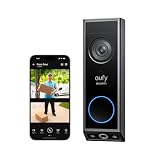
4. Arlo Video Doorbell 2K (2nd Gen)
Spec line: 2K video · rechargeable battery or wired · Alexa, Google, and HomeKit support (HomeKit needs a compatible Arlo hub) · Arlo Secure plan for clips.
Best for: Apple households and anyone who wants sharper video detail.
Skip if: You want free cloud clips. Pros: Broad ecosystem coverage and good picture detail. Cons: HomeKit requires extra hardware, and recorded video needs a plan.

5. Blink Video Doorbell
Spec line: 1080p HD · AA batteries with long run-time or wired option · Sync Module for local storage with optional USB drive.
Best for: Buyers who want the lowest entry cost and already own Blink cameras.
Skip if: You want a tall field of view or advanced detection. Pros: Low cost, AA cells are simple to buy. Cons: Lower resolution; fewer smart features than the others.
6. Reolink Battery Video Doorbell
Spec line: High-resolution wide field · rechargeable battery · local microSD recording · person detection.
Best for: Privacy-focused buyers who want local recording and a wide view.
Skip if: You want the smoothest voice-assistant experience. Pros: Local storage and a low or no monthly fee. Cons: App and integrations vary by model; check current availability.

Criteria and thresholds
Resolution and aspect ratio
1080p is the floor. A 2K camera helps you read a package label or a license plate at the curb. More useful than raw pixels is a tall 3:4 or 1:1 aspect ratio, which shows a person head to toe and any boxes on the floor. A wide 16:9 view needs a wedge or lens that looks downward.
Battery life
Published ranges for wireless doorbells run from roughly two to six months per charge, but that depends on motion events per day. A busy street can cut it to weeks. Choose a model with a removable battery if you cannot easily detach the camera, and consider a second battery or a wired option if your front door sees more than about 30 events per day.
Wi-Fi signal
The doorbell should see at least two bars or about -70 dBm at the door. If your router is more than 30 feet away or behind two walls, a mesh node or extender will matter more than camera quality. Most models use 2.4 GHz Wi-Fi.
Subscription and storage
Decide up front: Nest and Eufy give on-device detection without a plan; Ring and Arlo need a paid plan for stored clips; Blink and Reolink support local storage. Over three years, a monthly plan can exceed the cost of the camera.
Chime compatibility
Wireless means the camera is not wired to your existing bell. You will need an indoor chime, a smart speaker, or app notifications. Check that the model includes or supports a plug-in chime.
All thirteen doorbells at a glance
| Model | Video | Power | Storage | Best fit |
|---|---|---|---|---|
| Google Nest Doorbell (Battery) | Tall HDR | Battery or wired | Cloud plan for history | Google Home |
| Ring Battery Doorbell Plus | Head-to-toe HD+ | Removable battery | Cloud plan | Alexa |
| Eufy Video Doorbell E340 | 2K plus package lens | Battery or wired | Built-in local | No monthly fee |
| Arlo Video Doorbell 2K (2nd Gen) | 2K HDR | Battery or wired | Cloud plan | Sharp video |
| Blink Video Doorbell | 1080p | AA or wired | Sync Module | Entry-level |
| Reolink Battery Video Doorbell | 2K wide field | Battery | microSD | Local recording |
| Eufy Video Doorbell C31 | 2K | Battery or wired | microSD | Entry-level no fee |
| Wyze Duo Cam Doorbell | 2K dual lens | Battery | microSD | Package view value |
| Wyze Wireless Video Doorbell Pro | 1440p, 1:1 | Battery | Local or plan | Weak Wi-Fi |
| Aqara G410 | 2K | Wireless | HomeKit Secure Video | Apple Home |
| Tapo D225 | 2K+, 180 degrees | Battery or wired | microSD | Wide view, small budget |
| Ring Battery Doorbell 2K | 2K wide angle | Battery | Cloud plan | Entry Ring |
| Blink Battery Doorbell 2K+ | 2K | Battery | Sync Module | Blink households |
How to choose: quick thresholds
- Pick the ecosystem first: Google Home leans Nest, Alexa leans Ring or Blink, Apple Home leans Aqara or Arlo with its hub.
- More than about 30 motion events a day: choose a removable battery or a wired-capable model so recharging does not mean removing the camera every few weeks.
- Router more than 30 feet or two walls from the door: add a mesh node first, or favor a dual-band model.
- Plan to avoid monthly fees: choose local storage (E340, C31, Reolink, Tapo, Wyze microSD) and price a card up front.
- Packages left at floor level: a tall 3:4 or square 1:1 view, or a second lens, beats extra resolution.
- 1080p is the floor; step up to 2K only if you want to read labels or plates from a distance.
Worked example: three-year cost and battery planning
Suppose a house on a busy street with 40 motion events a day and a router 25 feet from the door.
- Event load: 40 events per day over 30 days is 1,200 events per month. Models rated for two to six months assume far fewer events, so plan on the low end: about two months per charge.
- Recharges over three years: 36 months divided by 2 months is about 18 recharges. A removable-battery model like the Ring Battery Doorbell Plus turns this into 18 swaps in under a minute each; a fixed-battery model means taking the camera off the wall 18 times, or choosing a wired option.
- Storage: if you want 30 days of video history with a cloud plan, price a monthly plan for 36 months versus a one-time local storage device. For a mid-range doorbell with a plan, the monthly charge over 36 months frequently equals or exceeds the hardware cost, so a local-storage model like the Eufy E340 or Reolink pays off sooner.
- Signal: at 25 feet through one wall you are usually fine; add a mesh node if a second wall sits in the path.
Result: for a busy porch, pick a swappable or wired-capable model and favor local storage unless you need a specific ecosystem.
Motion zones, alerts, and notification fatigue
Most owners disable their doorbell alerts within a few weeks because every passing car triggers a push notification. Before you judge a camera, set it up properly. Draw a motion zone that covers only your porch and walkway, not the street. Set the motion sensitivity to medium first and raise it only if people are missed. Turn on person-only alerts if the model supports them, and use a schedule that mutes routine daytime events while keeping overnight alerts on.
Detection location matters as well. On-device processing, as on the Nest and Eufy models, sends an alert after the camera decides that a person is present, which usually reduces false alerts from branches and shadows. Cloud-based detection can be more capable but depends on a plan and on your internet speed. If your upload speed is under about 2 Mbps, expect delayed clips on any cloud-dependent camera, since a doorbell stream needs a steady upstream link.
Finally, think about what you want to do after an alert. If you plan to talk to couriers through the two-way speaker, check the audio delay on your Wi-Fi and prefer a model with quick-reply messages. If you mostly want evidence for a lost package, the most important feature is a reliable clip with the full approach and departure, which depends on a pre-roll buffer rather than resolution.
Installation and safety tips
- Mount the camera about 48 inches above the floor, or follow the manufacturer’s guidance, and use the angled wedge if the door is recessed.
- Use only the supplied charger and cable when recharging, and never charge the battery outdoors in freezing temperatures; bring it inside and let it reach room temperature first.
- Replace a swollen or damaged lithium battery immediately and do not attempt to open it.
- Turn on two-factor authentication and use a unique password for the account.
- Check local rules on recording audio and on pointing a camera at a neighbor’s property.
- If you convert a wired bell to a wireless camera, turn off power at the breaker before touching existing chime wiring.
Who should skip each model
Use this list as a last filter before you buy; each line names the buyer for whom that model is the wrong fit.
- Nest: skip if you are not in the Google ecosystem.
- Ring: skip if you refuse recurring plans for recorded video.
- Eufy: skip if you want cloud backup of footage by default.
- Arlo: skip if you do not want to buy a hub for HomeKit and a plan for clips.
- Blink: skip if you want a tall view and rich detection.
- Reolink: skip if you want a tightly integrated assistant experience.
More wireless doorbell cameras worth comparing
Buyer guides and consumer labs keep returning to several models that the six picks above do not cover. They are added here so the shortlist spans every ecosystem and storage style. Spec lines follow the maker descriptions; confirm the current revision and plan terms before ordering.
7. Eufy Video Doorbell C31: best entry-level no-fee 2K
Spec line: 2K video · battery or wired power · head-to-toe view · local microSD storage · no subscription required for basic use.
Best for: Buyers who want 2K video and local storage at a lower cost tier than the dual-camera E340. Skip if: You want a second lens for packages on the floor. Pros: Local recording avoids a monthly plan; flexible battery or wired power. Cons: Cloud history is an optional paid extra; integrations are narrower than Ring or Nest.

8. Wyze Duo Cam Doorbell: best dual-lens value
Spec line: 2K main camera plus a package-view lens · battery power · Wi-Fi chime · local microSD slot.
Best for: People who want a head-to-toe plus ground-level view at a mid-range cost and are fine with local storage. Skip if: You depend on smart person and package alerts without paying, since advanced detection typically needs a plan. Pros: Two lenses cover visitors and parcels; quick-release battery. Cons: Premium alerts sit behind a subscription; the app is less polished than the big ecosystems.

9. Wyze Wireless Video Doorbell Pro: best for weak Wi-Fi
Spec line: 1440p HD video · square 1:1 head-to-toe view · wireless chime included · two-way talk · dual-band Wi-Fi.
Best for: Doors far from the router, because 5 GHz plus 2.4 GHz support gives the radio more options. Skip if: You want 2K or HomeKit. Pros: Square view shows packages; the chime ships in the box. Cons: Resolution trails the 2K group; some smart features need a plan.

10. Aqara Smart Doorbell Camera G410: best for HomeKit Secure Video
Spec line: 2K video · HomeKit Secure Video support · built-in Matter hub · two-way audio · wireless power · chime included.
Best for: Apple households that want native Home app control without a separate hub. Skip if: You live in the Alexa-only or Google-only camp. Pros: Matter hub built in; HomeKit recordings use your iCloud plan instead of a camera-maker fee. Cons: Costs more than the entry-level 2K options; HomeKit Secure Video needs a qualifying iCloud tier.

11. Tapo D225: best 2K+ with microSD for a small budget
Spec line: 2K+ video · 180-degree field of view · person, vehicle, and package detection · battery or wired power · microSD slot.
Best for: Budget-minded buyers who want a very wide view and local storage. Skip if: You need Alexa-first or HomeKit control, or you want a long track record of app updates. Pros: Wide field catches parcels near the door; local recording avoids a plan. Cons: Ecosystem support is thinner than Ring or Nest; fisheye distortion at the edges.

12. Ring Battery Doorbell 2K: best low-cost Ring entry
Spec line: 2K wide-angle video · battery power · two-way talk · up to 6x enhanced zoom · night vision.
Best for: Alexa households that want Ring alerts and Echo chimes at the lowest tier of the Ring range. Skip if: You want the removable quick-release battery and head-to-toe field of the Plus line. Pros: Familiar app, easy mounting accessories. Cons: Saved clips need a plan; fewer features than the Plus model.

13. Blink Battery Doorbell 2K+: best for existing Blink owners
Spec line: 2K video · wireless battery power · enhanced audio · requires a Sync Module for connection and local storage.
Best for: Households already running Blink cameras that want the same hub and app. Skip if: You do not want to buy or place a Sync Module. Pros: Entry-level cost tier; works with Alexa. Cons: Needs the extra hub; fewer AI detection features than higher tiers.

Frequently asked questions
What is the best wireless doorbell camera overall?
The Google Nest Doorbell (Battery) suits Google homes, the Ring Battery Doorbell Plus suits Alexa homes, and the Eufy E340 suits buyers who want no monthly fee.
Do wireless doorbell cameras need a subscription?
Not always. Nest and Eufy provide on-device smart detection, and Eufy, Blink, and Reolink support local storage. Ring and Arlo need a plan for saved recordings.
How long does a wireless doorbell battery last?
Typically two to six months per charge, depending on motion events and weather. A busy porch or cold climate shortens it.
Can I install a wireless doorbell camera without drilling?
Yes. Most include an adhesive or no-drill mount for renters, though screws hold better on brick or siding. Check the manufacturer’s guidance for your surface.
Will it work with my existing chime?
Wireless models usually do not trigger a wired chime unless you also wire them in. They use an included or optional plug-in chime, a smart speaker, or phone alerts.
Is a 2K doorbell camera worth it?
Often yes for reading labels and faces from a distance, but a taller aspect ratio and good night vision matter just as much for everyday use.
Does Wi-Fi strength matter for doorbells?
Yes. Weak signal causes delayed alerts and dropped clips. Aim for a solid signal at the door and add a mesh node if the router is far away.
Are wireless doorbell cameras safe from hacking?
No device is risk-free, but you reduce risk with two-factor sign-in, a unique password, current firmware, and encrypted-video models from established brands.
Bottom line
Pick the ecosystem first, then decide how you will pay for video storage, then check battery access at your door. Nest and Ring win on integration, Eufy and Reolink on storage cost, Arlo on resolution and HomeKit reach, and Blink on price. Fix your Wi-Fi coverage before blaming the camera.
More from Amazon
Programs that pair well with the guide above. Offers and eligibility are set by Amazon and may change.
Free shipping on eligible items, Prime Video and more. Eligible new members can start with a free trial.
Start a Prime free trialAudiobooks and podcasts to listen to on the go. Eligible new members can start with a free trial.
Try Audible freeAd-free music streaming. Eligible new subscribers can start with a free trial.
Try Music Unlimited freeA free business account with business pricing and bulk-buying tools for work, shop or home office.
Create a business accountAs an Amazon Associate we earn from qualifying purchases.
Write Your Review
No reviews yet. Be the first to share your experience!