

The best dash cam for most drivers in 2026 is a front-and-rear model such as the Viofo A229 Pro, which several 2026 roundups name as their top overall pick for its Sony STARVIS 2 sensors, 4K front video and 2K rear video. If you want a simpler, brand-supported option, Garmin and Nextbase offer polished cameras with strong apps, and Thinkware and BlackVue lead on parking protection and cloud features. Pick by how you drive and park, not by headline resolution alone.
Our top picks


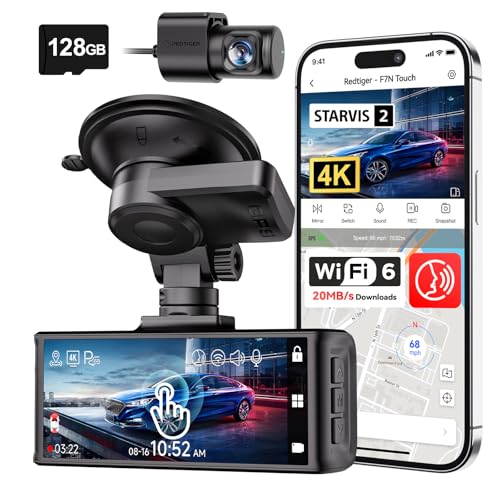
As an Amazon Associate we earn from qualifying purchases at no extra cost to you.
Quick Comparison of the Best Dash Cams
| Pick | Best for | Key specs | Price range |
|---|---|---|---|
| Viofo A229 Pro | Best overall, front and rear | 4K front, 2K rear, Sony STARVIS 2 sensors, CPL filter included | Mid to upper mid |
| Viofo A229 Plus | Affordable two-channel | Front and rear recording | Mid |
| Viofo A119 Mini 2 | Budget, compact | Small front camera | Budget |
| Garmin Dash Cam 67W | City driving, wide view | Widest field of view in Garmin’s range | Mid to upper mid |
| Nextbase 622GW | Remote and emergency features | Alexa support, offline emergency location | Upper mid |
| Thinkware U3000 Pro | Parking protection | Radar-based parking mode | Premium |
| Vantrue N4 Pro | Rideshare drivers | Interior recording | Upper mid |
| BlackVue Elite 9 | Cloud viewing | Cloud parking alerts and remote viewing | Premium |
Specs summarize 2026 roundups and manufacturer spec sheets. Confirm current features and prices before you buy.
Best Overall: Viofo A229 Pro
Reviewers call the A229 Pro a top overall pick in 2026 and note it is Wirecutter’s top choice this year. It pairs a 4K front camera with a 2K rear camera and includes a circular polarizing filter that reduces windshield glare. Who it suits: most drivers who want clear plates and reliable recording. Main trade-off: it needs a hardwire kit for parking mode, and its app is more utilitarian than Garmin’s.
Best Value Two-Channel: Viofo A229 Plus
The A229 Plus is described as the sweet spot for an affordable front and rear camera. Who it suits: commuters who want rear coverage without the top-tier price. Main trade-off: lower resolution than the Pro.
Best Budget: Viofo A119 Mini 2
A small, discreet front camera that gives you the basics of evidence recording. Who it suits: drivers with older cars and tight budgets. Main trade-off: no rear camera and fewer advanced features.
Best for City Driving: Garmin Dash Cam 67W
Garmin describes the 67W as having a very wide lens, which helps in busy city intersections where you want to catch cross traffic. Garmin’s voice control and app make it an easy pick for non-technical drivers. Main trade-off: the single camera does not cover the rear.
Best for Remote Locations: Nextbase 622GW
The 622GW adds Alexa support and an offline emergency location feature, which may be useful in areas with weak signal. Main trade-off: it is less feature-rich on parking mode than Thinkware.
Best for Parking Protection: Thinkware U3000 Pro
Roundups name it the best choice for advanced parking mode, using radar-based motion detection to save battery. Main trade-off: it costs more and needs hardwiring.
Best for Rideshare: Vantrue N4 Pro
Its interior recording makes it popular with rideshare drivers. Check the laws on recording passengers in your state or country, and display any required notice.
Best Cloud Option: BlackVue Elite 9
For remote viewing and parking alerts to your phone, BlackVue is the best-known cloud dash cam brand. Main trade-off: cloud features need a connection and sometimes a subscription.
How to Choose a Dash Cam
Front only or front and rear?
Rear-end collisions are common, so a two-channel system adds meaningful evidence. If you only drive highways, a single front camera may be enough.
Resolution and sensor
4K front video helps with reading plates at a distance, but sensor quality and night processing often matter more. Sony STARVIS sensors are known for low-light performance.
Parking mode and power
Parking mode requires a hardwire kit or a battery pack so the camera can record while the car is off. Check the low-voltage cutoff to protect your car battery.
Storage and loop recording
Use a high-endurance microSD card, and check how much each setting records.
Storage Calculation: How Much Footage Fits
A 4K front camera recording at about 30 Mbps writes roughly 13.5 GB per hour, so a 128 GB card holds about nine hours before it begins overwriting older clips. A 1080p camera at about 10 Mbps writes around 4.5 GB per hour, so the same card holds about 28 hours. A two-channel setup adds the rear stream, so the card fills more quickly. Reduce the bitrate or use a 256 GB card if you want a longer safety buffer.
Ownership Realities
Heat is the biggest long-term enemy. Cameras with supercapacitors handle summer heat better than those with small batteries. Format the memory card monthly, and replace it yearly. Adhesive mounts can loosen in hot weather, so check them periodically.
Frequently Asked Questions
Is a dash cam worth it?
For most drivers, yes. It provides evidence in disputes and supports insurance claims. It also records events while parked when hardwired.
Do dash cams drain the car battery?
Not if you use a hardwire kit with a voltage cutoff. Without it, parking mode can drain the battery.
Are dash cams legal?
Generally, but windshield placement and audio recording rules vary by location. Check local laws.
How long does a dash cam last?
Typically several years. Supercapacitor models tolerate heat better than battery-based ones.
Do I need a rear camera?
If rear-end collisions or tailgating worry you, a rear camera is worth adding.



Write Your Review
No reviews yet. Be the first to share your experience!