

Key takeaways
- Neti pots in ceramic, stainless and squeeze builds for saline sinus rinses, compared by spout shape, capacity and how the flow feels in daily use.
As an Amazon Associate we earn from qualifying purchases.
A neti pot looks like a small teapot, and it works on the same simple idea: you fill it with warm saline, rest the spout against one nostril, and let gravity carry the solution through the nasal passages and out the other side. There is no pump, no battery and no squeezing. The flow comes only from the tilt of the pot, which is why the shape of the spout, the balance of the body and the feel of the handle matter so much in daily use. People reach for these pots to wash away pollen, dust and dried mucus, to moisten passages dried out by indoor heating, and to ease the stuffed feeling that comes with colds and seasonal allergies. One rule outranks every pick below: the FDA advises rinsing only with distilled, sterile, or previously boiled water, never plain tap water, which can carry organisms that are harmless to swallow but dangerous in the nasal passages.
Disclosure: This article may contain affiliate links. If you buy through these links, we may earn a small commission from Amazon.
Baraka Handcrafted Ceramic Neti Pot
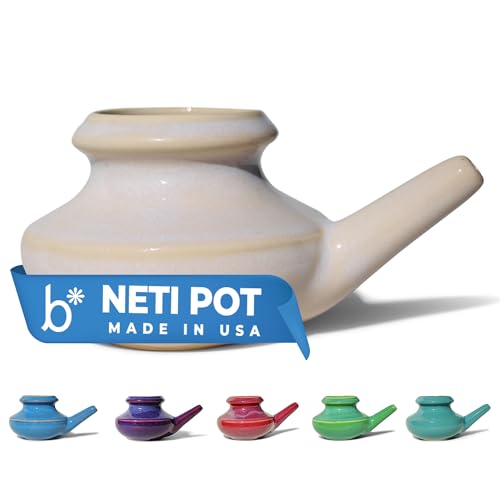
Baraka builds this pot by hand from ceramic and finishes it with food-grade ceramic glazes, and the listing leans on that craft angle: the pot is made in the USA, it is dishwasher safe, and its grip is shaped to sit securely in the hand while you pour. The capacity is a generous 10 ounces, which means a single fill covers both sides for most people without a trip back to the kettle. The spout is a smooth, tapered ceramic tip, so the seal against the nostril depends on gentle contact rather than pressure; hold it lightly and let the tilt do the work. Ceramic holds warmth a little longer than thin plastic, so the solution stays closer to body temperature through a full rinse, and the glazed surface wipes clean without holding residue. The trade-off is the one shared by every ceramic pot: it can chip or crack if it lands on a tile floor, so it suits a settled bathroom shelf better than a gym bag. The listing summary behind this pick showed no featured offers at crawl time, so check the live page for the current seller situation before ordering.
Specs
- Material: handcrafted ceramic with food-grade glazes
- Capacity: 10 oz as printed on the listing
- Dimensions: 6.25 x 3 x 4.25 inches
- Care: dishwasher safe
- Origin: made in the USA, per the listing
NeilMed NasaFlo Unbreakable Neti Pot with 60 Premixed Packets

NeilMed is the name most pharmacies stock, and the NasaFlo is its pour-style pot: a clear, unbreakable plastic body with a lid, sold here with 60 premixed packets of USP grade sodium chloride and sodium bicarbonate. The maker fills it to 240 mL (8 fl oz) of lukewarm distilled, filtered or previously boiled water, then one packet dissolves in with a gentle shake while a finger covers the hole in the cap. The clear walls let you watch the level fall, which helps new users judge the tilt. NeilMed prints clear safety wording on the listing: do not rinse if a nasal passage is completely blocked, or if you have a new ear infection, ear pain or blocked ears, and talk to a physician first after recent ear or sinus surgery. The maker also recommends replacing the pot every three months, a hygiene point worth honoring with any plastic rinse device. The listing crawl showed no featured offers, so confirm the pack count on the live page.
Specs
- Material: clear unbreakable plastic, per the maker
- Fill volume: 240 mL (8 fl oz) per the maker’s directions
- Included: 60 premixed packets of sodium chloride and sodium bicarbonate
- Packet profile: preservative, drug, iodine, BPA, gluten and latex free, per NeilMed
- Care: wash with soap and water, air dry; maker advises replacing the pot every three months
Himalayan Chandra Porcelain Neti Pot

Himalayan Chandra is the brand line that grew out of the Himalayan Institute, which introduced its neti pot in 1972, and this porcelain version is its long-running classic. The body has a distinctive lotus-influenced shape that the maker says dispenses a steady, well-judged flow, and the pot is certified lead-free with a food-grade glaze. The printed directions keep the routine simple: mix a quarter teaspoon of neti salt or non-iodized salt with 8 ounces of warm water, turn the head to one side over the sink, rest the spout in the upper nostril, and raise the pot until the solution flows out of the lower nostril, then repeat on the other side. The listing also prints a sober safety note worth repeating: a nasal wash is not a substitute for medical treatment, and anyone with chronic inflammation of the nasal passages or other ear, nose or throat disorders should seek medical attention. The listing crawl showed no featured offers, so check the live page before buying.
Specs
- Material: porcelain, certified lead-free, with a food-grade glaze
- Shape: distinctive lotus design for a steady flow, per the maker
- Mixing guide: 1/4 teaspoon of neti salt per 8 ounces of warm water, per the printed directions
- Included guidance: pictured instructions in the box
- Water note printed on the listing: always use sterilized water, such as boiled or distilled water
SinuCleanse Soft Tip Neti Pot Nasal Wash System

SinuCleanse was developed with an ear, nose and throat physician, and its pot solves the comfort complaint that puts many people off ceramic spouts: the tip is soft and flexible, so it forms a gentle seal against the nostril instead of pressing a hard rim into it. The listing states plainly that the pot uses the gentle flow of gravity to deliver a controlled stream, and the clear body shows the solution level while you pour. The box includes 30 all-natural, pre-mixed buffered saline packets made in the USA in an FDA registered drug facility; each packet holds pharmaceutical grade sodium chloride and sodium bicarbonate, dissolves at once, and can be mixed to an isotonic or a stronger hypertonic solution following the instruction sheet. The printed directions call for 1 to 2 packets per 8 fl oz of water. One distinction to know: an FDA-posted recall has covered a specific lot of the SinuCleanse squeeze bottle system from the same maker over possible bacterial contamination. That recall named the squeeze bottle, not this gravity-fed pot, but it is a good reason to check lot announcements for any nasal wash product before first use. The listing crawl showed no featured offers, so confirm contents on the live page.
Specs
- Tip: soft, flexible spout tip that seals gently against the nostril
- Flow: gravity-fed pour, no squeezing, per the listing
- Included: 30 pre-mixed buffered saline packets
- Packet ingredients: sodium bicarbonate USP and sodium chloride USP
- Mixing guide: 1 to 2 packets per 8 fl oz, per the printed directions
Himalayan Chandra ECO Neti Pot Complete Sinus Cleansing System Kit

This kit from Himalayan Chandra pairs the brand’s ECO neti pot with the supplies a first-time user needs in one box: the pot itself, a jar of Neti Salt, and two Neti Pot Boost additions, so there is no separate salt order before the first rinse. The pot follows the same pour-style routine as the porcelain model above, which makes this the practical pick for travel bags, second bathrooms, or anyone who does not want a breakable vessel near the sink edge. The listing’s printed safety information is direct: always use sterilized water, such as boiled or distilled water, during nasal cleansing, and a nasal wash is not a substitute for medical treatment. Its directions also give the salt measures many beginners ask about: a slightly rounded half teaspoon for coarse salt such as kosher salt, and a heaping quarter teaspoon for finely ground salt, adjusted to the water volume in the pot. Because this is a kit listing, contents can shift between sellers, and the crawl behind this pick showed no featured offers, so read the live page’s contents line carefully before ordering.
Specs
- Contents: ECO neti pot, a jar of Neti Salt, and 2 Neti Pot Boost additions, per the listing
- Form: pour-style gravity pot, unbreakable build suited to travel
- Salt measures printed on the listing: about 1/2 teaspoon for coarse salt, 1/4 teaspoon for finely ground salt
- Water note printed on the listing: always use sterilized water, such as boiled or distilled water
- Note: non-returnable item per the listing’s returns line
How to Choose
Start with the water, because it decides whether rinsing is safe at all. Follow the FDA guidance every time: use distilled or sterile water bought in a store, tap water boiled for 3 to 5 minutes and cooled until lukewarm, or water passed through a filter designed to trap potentially infectious organisms. Never fill any pot in this guide with plain tap water, and never use plain water without salt, since unsalted water stings the nasal membranes. Wash your hands before you begin, check that the pot is clean and fully dry, and wash and dry it again after each use so nothing grows inside between rinses.
Next, pick a material for your routine. Ceramic and porcelain pots, like the Baraka and the Himalayan Chandra porcelain model, feel stable, hold warmth, and clean up easily, but they break if dropped. Plastic pots, like the NeilMed NasaFlo and the ECO pot, forgive drops and travel well, and their makers advise replacing them on a schedule, which NeilMed puts at three months. Then look at the spout. A soft tip, like the SinuCleanse design, seals with less pressure and suits sensitive noses and beginners. A smooth ceramic spout gives a predictable stream once your tilt is practiced. Capacity matters less than people expect: most routines use about 4 ounces per side, so pots in the 8 to 10 ounce range finish both sides on one fill.
Finally, decide how you want to handle salt. Premixed packets, included with the NeilMed and SinuCleanse picks, remove measuring from the routine and keep the mix buffered so it does not burn. Loose neti salt with a measuring guide, as in the Himalayan Chandra listings, gives you control over strength at the sink. Whichever route you take, stop and talk to a health care provider if you have had recent sinus or ear surgery, a completely blocked passage, recurring ear pain, or symptoms that persist, and treat any recall or lot announcement for rinse products as required reading before the first use.
FAQ
Which water is safe to use in a neti pot?
Only distilled, sterile, or previously boiled water, per FDA guidance. Boil tap water for 3 to 5 minutes, cool it until lukewarm, and use it within 24 hours from a clean, closed container. Plain tap water can carry organisms that are safe to swallow but dangerous in the nasal passages.
How often can I use a neti pot?
Many people rinse once a day during allergy season or a cold, and the printed directions on several listings describe a daily cleansing routine. Follow the directions packed with your pot, and check with a health care provider about long-term daily use for your situation.
Why does the rinse sting, and how do I fix it?
Stinging usually means the mix is off: plain water without salt, water that is too hot or too cold, or too little salt for the volume. Use lukewarm water with the full packet or the printed salt measure for your pot, and the buffered mix should pass with little or no burning.
How do I clean and store the pot?
Wash it with soap and warm water after each use, rinse it with safe water, and let it dry fully, inside and out, before putting it away. Ceramic and porcelain pots from these listings are often dishwasher safe, while plastic pots should be replaced on the maker’s schedule, which NeilMed sets at three months.
Conclusion
For most bathrooms, the Baraka ceramic pot is the comfortable long-term pick, with the Himalayan Chandra porcelain pot close behind for anyone who likes a weightier, classic shape. The NeilMed NasaFlo suits packet users who want the measuring done for them, the SinuCleanse soft tip is the gentlest first pot, and the Himalayan Chandra ECO kit covers travel and spare bathrooms in one box. Choose by material and spout comfort, then hold the safety line that matters more than the pot itself: distilled, sterile, or previously boiled water, a clean and dry device, and salt in every fill.
More from Amazon
Programs that pair well with the guide above. Offers and eligibility are set by Amazon and may change.
Free shipping on eligible items, Prime Video and more. Eligible new members can start with a free trial.
Start a Prime free trialAudiobooks and podcasts to listen to on the go. Eligible new members can start with a free trial.
Try Audible freeAd-free music streaming. Eligible new subscribers can start with a free trial.
Try Music Unlimited freeA free business account with business pricing and bulk-buying tools for work, shop or home office.
Create a business accountAs an Amazon Associate we earn from qualifying purchases.




Write Your Review
No reviews yet. Be the first to share your experience!