

Key takeaways
- Detection distance: how far the outdoor sensor can notice a vehicle or person.
- Wireless range: how far the sensor can transmit an alert to its receiver or hub.
The best driveway alarms for long range are Dakota Alert MURS for dependable property-scale coverage, Guardline for a simpler standalone wireless kit, and YoLink for app alerts and flexible sensor placement. The right choice depends less on the advertised distance than on whether your driveway is open, wooded, sloped, or obstructed—and whether you need a receiver at home, a phone notification, or both.
Our top picks

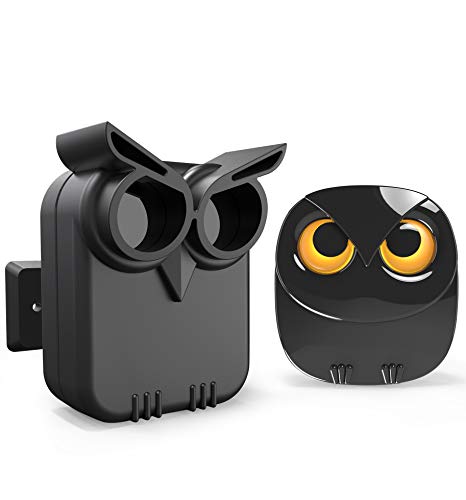


As an Amazon Associate we earn from qualifying purchases at no extra cost to you. Ratings are shown as listed on Amazon.
Best driveway alarms at a glance
| System | Advertised wireless range | Detection distance | Alert method | Best for | Typical market range |
|---|---|---|---|---|---|
| Dakota Alert MURS | Up to 1 mile in suitable conditions | About 100 feet for the DCRH-4000 receiver, depending on target and placement | Dedicated MURS receiver; optional compatible expansion | Long driveways and large rural properties | $180–$300 for a basic sensor and receiver setup |
| Guardline wireless driveway alarm | Up to about 1/4 mile, model and terrain dependent | Common kits cover roughly 40 feet at the sensor | Indoor plug-in receiver | Simple, low-setup vehicle detection | $70–$150 |
| YoLink outdoor motion or driveway sensor | Up to about 1/4 mile open-air sensor-to-hub range | Typically about 20–30 feet for motion-based sensors | Hub, phone app, and optional automation alerts | Remote notifications and multiple sensors | $60–$180 before adding extra sensors or a hub |
| Wired photoelectric beam system | Signal travels through cable rather than radio | Often 30–300 feet between transmitter and receiver | Alarm panel, chime, or smart relay | Permanent installations where reliability matters most | $150–$500 plus trenching or conduit |
Distances above are practical planning figures or manufacturer-style maximums, not guarantees. Trees, metal buildings, hills, wet soil, radio interference, and the height of the receiving antenna can reduce wireless range substantially.
Our picks by driveway situation
Best for a very long or remote driveway: Dakota Alert MURS
Dakota Alert’s MURS platform is the strongest choice when the receiver may be hundreds or thousands of feet from the entrance. MURS radios generally offer more useful range than the small low-power transmitters used in inexpensive driveway kits, and the system supports multiple sensors and receiver locations.
The main advantage is not merely the “up to one mile” claim. MURS equipment uses an external-style radio architecture that is better suited to large properties, and the receiver can often be positioned for clearer communication. It is a good fit for a driveway crossing open pasture, a long private road, or land with no dependable Wi-Fi at the entrance.
Choose it if a missed alert would be costly or inconvenient. Choose something simpler if the driveway is short and you only want a chime when a vehicle passes.
Best simple wireless kit: Guardline
Guardline is a practical middle ground for homeowners who want a dedicated indoor receiver without configuring an app, hub, or home network. Its outdoor sensor is designed for vehicle and pedestrian detection, while the indoor unit provides selectable tones and adjustable volume on many versions.
Its advertised quarter-mile range is most realistic across open ground with the receiver placed near an exterior wall or window. Expect less in a wooded driveway or when the signal must pass through a metal workshop. Guardline is particularly suitable for a 100–500-foot approach where a basic alert is enough and cellular access is not required.
Best for phone notifications and multiple zones: YoLink
YoLink is the better choice when you want an alert while away from home, separate names for several entrances, or automations such as turning on lights. Its low-power long-range sensors communicate with a hub, which then connects to the internet. That two-stage design means the sensor does not need to reach your router directly.
The trade-off is greater dependence on the hub, internet service, and account-based app notifications. A YoLink sensor may still communicate with the hub during a brief internet outage, but remote phone alerts will generally require the hub to regain internet access. It is best for owners who already use smart-home equipment and want a scalable system rather than one indoor chime.
Wireless range is only half the coverage calculation
Manufacturers usually separate two specifications that are easy to confuse:
- Detection distance: how far the outdoor sensor can notice a vehicle or person.
- Wireless range: how far the sensor can transmit an alert to its receiver or hub.
For example, a sensor that detects motion 40 feet away but has a one-quarter-mile radio range will not monitor a quarter-mile-wide area. It only detects activity within its sensing pattern; the radio range determines how far that alert can travel.
For a straight driveway, place the sensor 10–20 feet back from the traffic lane and aim across the approach rather than directly down it. Crossing movement usually produces a longer, more consistent trigger than movement directly toward the sensor. Keep the sensor high enough to avoid splash and drifting snow, but low enough that the detection zone includes bumpers and pedestrians.
Decision matrix: which type fits your use?
| Your situation | Most suitable choice | Why | Main compromise |
|---|---|---|---|
| Under 200 feet, easy installation, low budget | Basic Guardline-style wireless kit | Dedicated receiver and few setup steps | Less flexible away-from-home alerting |
| 200–1,000 feet, trees or outbuildings | Dakota Alert MURS | More appropriate radio range and expandable receivers | Higher initial cost and more configuration |
| Several entrances or frequent remote travel | YoLink with a suitable outdoor sensor | App alerts, zone names, and automations | Requires a hub and dependable internet for remote alerts |
| Permanent property protection or severe radio interference | Wired beam or buried-cable system | Consistent signal and defined detection line | Installation work and higher labor cost |
| Occasional use at a seasonal property | Battery wireless system with local receiver | Works without a monthly service plan | Batteries and weather exposure need attention |
How to estimate whether a system will reach your house
Measure the actual path, not the driveway’s driving distance. If the entrance is 600 feet from the house, the sensor must also transmit through any trees, buildings, and elevation changes along that line. A manufacturer’s 1,320-foot maximum gives a nominal 2.2-to-1 margin in this example, but that margin can disappear when a metal-sided barn blocks the signal.
A useful planning rule is to treat the advertised open-air range as a best case and budget for 25–50% of it when the path contains dense vegetation or multiple structures. Before permanently mounting anything, place the sensor at the proposed gate and the receiver where you normally need the alert. Trigger the sensor repeatedly from the expected direction, including at night and during wet weather.
Weather durability and ownership costs
Look for an outdoor sensor with an IP rating, a sealed battery compartment, UV-resistant housing, and a mounting system that does not leave the enclosure tilted upward into rain. IP ratings are more informative than phrases such as “all weather.” IP65 generally indicates protection from dust and water jets; it does not mean the unit can be submerged or pressure-washed.
The parts most likely to cause trouble are batteries, mounting screws, lens covers, and cable seals. Cold temperatures reduce alkaline battery performance, while cheap rechargeable cells may lose capacity quickly outdoors. Check the battery compartment every few months for condensation or corrosion. Clean the motion lens with a soft damp cloth rather than a solvent, and trim grass or branches that move in the sensing area.
False alerts commonly come from:
- Sunlight shining directly into a passive-infrared sensor at low angles
- Heated pavement, exhaust, or HVAC equipment near the detection zone
- Moving branches, tall grass, flags, and loose reflective objects
- Small animals passing close to a sensor mounted too low
- Rainwater entering an enclosure or pooling in front of the lens
Start with the narrowest sensitivity setting, then increase it only when real vehicles fail to trigger the alarm. Avoid aiming across a busy public road unless the detection area can be restricted; otherwise, the system may alert for traffic you do not control.
Do you need a driveway alarm or a camera?
A driveway alarm answers “something crossed this zone.” A camera can help answer “what crossed it?” For reliable early warning, an alarm often performs better than motion video alone because it uses a simpler trigger and can notify you before a camera finishes recording or uploading. If identification matters, pair the alarm with a camera pointed at a separate, narrower view rather than relying on one device to do both jobs.
Bottom line
Choose Dakota Alert MURS for the longest challenging driveways and the greatest emphasis on dependable local alerts. Choose Guardline for a straightforward receiver-based system at a moderate distance. Choose YoLink when app notifications, multiple zones, and smart-home automation matter more than having a completely standalone alarm. For maximum reliability on a permanent installation, a wired beam system remains the least vulnerable to wireless obstructions, even though it requires more work upfront.

Write Your Review
No reviews yet. Be the first to share your experience!