

Key takeaways
- Backset: Measure from the door edge to the center of the lock bore. Common residential sizes are 2-3/8 inches and 2-3/4 inches.
- Door thickness: Many locks target roughly 1-3/4-inch residential doors, with thicker-door kits sometimes available.
- Door alignment: The bolt should slide into the strike without lifting, pushing, or pulling the door.
- Interior clearance: Check for trim, windows, storm doors, and nearby walls that could obstruct the motor housing.
- Strike depth: A deep or tight-fitting strike can make the motor work harder and shorten battery life.
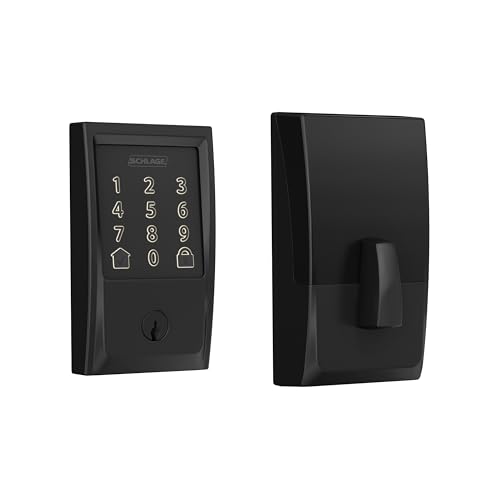
The best smart locks for secure keyless entry are the Schlage Encode Plus for broad deadbolt compatibility and Apple users, the Yale Assure Lock 2 for a flexible modular setup, the Aqara U100 for affordable fingerprint access, and the Ultraloq U-Bolt Pro WiFi when several entry methods matter more than a discreet design.
Our top picks



As an Amazon Associate we earn from qualifying purchases at no extra cost to you.
Best smart locks at a glance
| Lock | Best for | Unlock methods | Power and connectivity | Typical market range |
|---|---|---|---|---|
| Schlage Encode Plus | Apple Home users and strong built-in security | Code, app, physical key, Apple Home Key | 4 AA batteries; Wi-Fi; Bluetooth | $250–$330 |
| Yale Assure Lock 2 | Modular smart-home installations | Code, app, optional key, optional fingerprint depending on version | 4 AA batteries; Bluetooth, with optional Wi-Fi or Matter modules | $180–$300 |
| Aqara U100 | Fingerprint entry at a moderate price | Fingerprint, code, NFC card, app, physical key | 4 AA batteries; Bluetooth; optional hub-based connectivity | $190–$270 |
| Ultraloq U-Bolt Pro WiFi | Households wanting many entry choices | Fingerprint, code, app, key, compatible smart-home control | 4 AA batteries; built-in Wi-Fi and Bluetooth | $180–$260 |
| August Wi-Fi Smart Lock | Renters and users keeping their existing exterior hardware | App, code with separate keypad, existing key | 2 CR123 batteries; built-in Wi-Fi and Bluetooth | $180–$250 |
Prices are broad 2026 market ranges and vary by finish, keypad bundle, and sales. Battery life is affected by temperature, door alignment, Wi-Fi strength, and the number of daily lock cycles.
Our picks by situation
Best overall: Schlage Encode Plus
The Encode Plus is the safest all-round recommendation when you want a conventional deadbolt replacement, built-in Wi-Fi, and strong support for common smart-home platforms. Its keypad accepts individual codes, while Apple users can use an iPhone or Apple Watch with Home Key on compatible configurations.
It fits many standard single-cylinder deadbolt preparations, but “fits a deadbolt” does not mean every door is compatible. Check the backset, door thickness, edge bore, and clearance behind the door before ordering. The interior assembly is relatively substantial, so it may be a poor choice where a storm door, trim, or narrow jamb leaves little room.
Its physical key cylinder is useful during a dead battery or electronics fault. The main compromise is price: it generally costs more than Bluetooth-only locks and has a larger interior housing than retrofit designs.
Best modular choice: Yale Assure Lock 2
The Yale Assure Lock 2 is a good choice if your connectivity needs may change. Depending on the version, it can use Bluetooth alone or accept a separately chosen module for Wi-Fi, Matter, or another supported smart-home ecosystem. That modular approach avoids paying for radios you do not need today.
Choose the keyed version if you want a conventional mechanical backup. The key-free version has a cleaner exterior but makes battery planning more important. Yale’s keypad is particularly convenient for family members and service workers because codes can be created, limited, and deleted without handing out a key.
Before buying, identify the exact module and bundle. Assure Lock 2 variants are not interchangeable in every feature, and a Bluetooth-only model may require a nearby hub or bridge for remote alerts and remote unlocking.
Best fingerprint option: Aqara U100
The Aqara U100 combines a fingerprint reader, keypad, NFC card support, mobile access, and a physical key. That makes it appealing for households where entering a code is inconvenient, such as when carrying groceries or supervising children.
Fingerprint readers work best when the sensor and finger are clean and dry. They are not a substitute for a strong access policy: register only the people who need entry, remove old fingerprints promptly, and keep at least one non-biometric method available. Remote features may depend on an Aqara hub, so include the hub cost if you want off-site control and notifications.
The U100 is a replacement deadbolt rather than a discreet retrofit. Measure interior clearance carefully, especially on doors with glass panels, built-in blinds, or unusually shallow trim.
Best for maximum entry methods: Ultraloq U-Bolt Pro WiFi
The Ultraloq U-Bolt Pro WiFi offers fingerprint, keypad, app, and physical-key access in a compact exterior format. It is useful for a busy household, short-term rental, or workshop where different people need different ways to enter.
More methods also mean more administration. A fingerprint can be forgotten, a code can be shared, and a phone can lose connectivity. Use the app to assign named users where possible, set temporary codes for contractors, and review the event log rather than relying on memory.
Best for renters: August Wi-Fi Smart Lock
The August Wi-Fi Smart Lock replaces the interior thumb-turn mechanism while leaving the exterior lock and key in place. This can reduce landlord concerns and lets you continue using existing keys. A separate keypad adds code entry.
Its compatibility is more dependent on the existing deadbolt brand and interior geometry than a complete replacement lock. Remove the inside thumb-turn and compare the mounting plate before purchase. This design is also less suitable if you want a fingerprint reader, NFC card, or a built-in exterior keypad.
Deadbolt compatibility matters more than brand
Most residential smart locks are designed for a standard single-cylinder deadbolt: a keyed cylinder outside and a thumb-turn inside. They may not fit mortise locks, interconnected locksets, rim cylinders, multipoint locks, narrow-profile European cylinders, or integrated handle-and-deadbolt assemblies.
- Backset: Measure from the door edge to the center of the lock bore. Common residential sizes are 2-3/8 inches and 2-3/4 inches.
- Door thickness: Many locks target roughly 1-3/4-inch residential doors, with thicker-door kits sometimes available.
- Door alignment: The bolt should slide into the strike without lifting, pushing, or pulling the door.
- Interior clearance: Check for trim, windows, storm doors, and nearby walls that could obstruct the motor housing.
- Strike depth: A deep or tight-fitting strike can make the motor work harder and shorten battery life.
A smart lock should not be used to compensate for a sagging door or a misaligned frame. Correct the mechanical problem first; otherwise the motor may stall, produce repeated warning alerts, or fail to lock completely.
Access codes, keys, and security alerts
For most households, unique codes are more useful than one shared code. Give each resident a named code, create a time-limited code for cleaners or contractors, and delete codes when access ends. Avoid birthdays, street numbers, and simple sequences such as 1234.
A physical key remains valuable because batteries, phones, networks, and software can fail. If you choose a key-free lock, store the emergency key, backup battery procedure, or alternate entry plan somewhere accessible but not directly beside the door. Some locks provide emergency power through external contacts or a USB connection; this is not the same as a battery that continues operating normally.
Enable alerts for locked and unlocked events, repeated invalid codes, forced-entry sensors, low battery, and offline status. Treat an “unlocked” notification as an event to investigate, not proof that someone entered. Door-position sensors can improve context, because a lock may report a bolt position without confirming that the door is fully closed.
Battery life and ownership calculation
Manufacturers commonly quote about 6 to 12 months from four AA batteries for full replacement locks, while retrofit models using two CR123 batteries may quote a similar range. Heavy use and weak Wi-Fi can reduce that figure substantially.
For example, suppose four alkaline AA batteries cost $8 per set and last eight months. Over two years, the estimated battery cost is:
24 months ÷ 8 months × $8 = $24.
That excludes the cost of keeping spare batteries available. Rechargeable batteries are not universally recommended because their voltage profile can differ from the lock’s expected range. Follow the manufacturer’s battery guidance, and replace all cells together rather than mixing old and new batteries.
Installation and maintenance checklist
- Photograph the existing deadbolt and measure the backset, door thickness, and interior clearance.
- Install the lock with the bolt retracted, then test the key or thumb-turn before tightening everything fully.
- Calibrate the lock with the door open. This prevents an incorrect locked position from trapping you outside.
- Connect Wi-Fi or the hub close to the lock first; move the router or add a compatible bridge if the signal is weak.
- Create named user codes and test each one while you are still inside.
- Turn on low-battery, offline, and suspicious-entry alerts.
- Every few months, inspect screws, clean the keypad and fingerprint reader with a dry or manufacturer-approved cloth, and confirm that the bolt moves smoothly.
The parts most likely to cause trouble are not usually the metal bolt itself. Batteries, keypad buttons, fingerprint sensors, mounting screws, and door alignment need attention first. Keeping the firmware current, using unique account passwords with two-factor authentication, and retaining a tested backup entry method will do more for dependable security than choosing a lock solely for its number of features.
Final buying advice
Choose the Schlage Encode Plus for a polished replacement deadbolt with strong built-in connectivity and Apple Home Key. Choose the Yale Assure Lock 2 when modular smart-home support and keyed or key-free configurations matter. Choose the Aqara U100 or Ultraloq U-Bolt Pro WiFi when fingerprint access is central to your routine. Choose August when preserving the exterior lock and existing key is the priority.
Whichever model you select, verify the door fit before considering app features. A correctly aligned deadbolt with individual access codes, reliable battery warnings, and a practical backup entry method is more secure and dependable than a feature-rich lock installed on a door that already binds.






Write Your Review
No reviews yet. Be the first to share your experience!