

Key takeaways
- Power adapters and cables: Sunrise clocks generally need continuous mains power. Keep the cable loose rather than sharply bent at the plug, where failures commonly develop.
- Backup batteries: Some conventional models use a coin cell or small backup battery to preserve the time and alarm during an outage. Replace it according to the manual; backup power usually does not operate the bright lamp for long.
- Dust and fingerprints: Wipe the diffuser and display with a dry or slightly damp microfiber cloth. Do not spray cleaner into vents or onto the light surface.
- Software dependence: App-controlled clocks may change features after updates, lose Wi-Fi settings or require a reset when the router changes. Keep the phone app installed until the initial routines are saved.
- Brightness decline: LEDs normally last much longer than incandescent bulbs, but the diffuser can yellow or become cloudy from dust, smoke or harsh cleaners. Keep the lamp away from direct sunlight and heat.
The best sunrise alarm clocks for most bedrooms are the Philips SmartSleep Wake-Up Light HF3520 for bright, feature-rich waking, the Lumie Bodyclock Shine 300 for a simpler no-subscription setup, and the Hatch Restore 3 for people who want a broader bedtime-and-wake routine.
A sunrise alarm clock gradually brightens before the set alarm time, then may add birdsong, white noise, radio, or a conventional alarm. The right choice depends less on the number of sounds than on five practical questions: how much light your room needs, how long the sunrise should last, whether the display can be dimmed fully, what sound you tolerate, and how much bedside space is available.
Our top picks

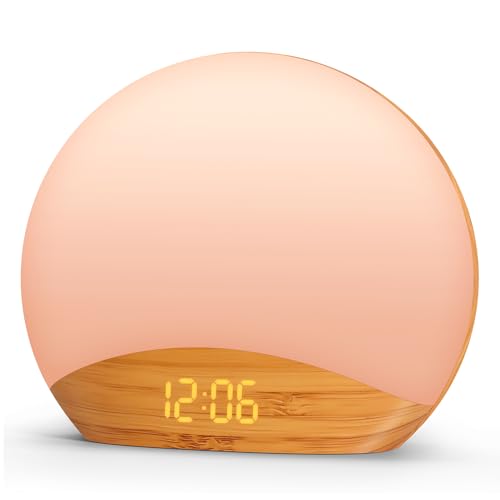
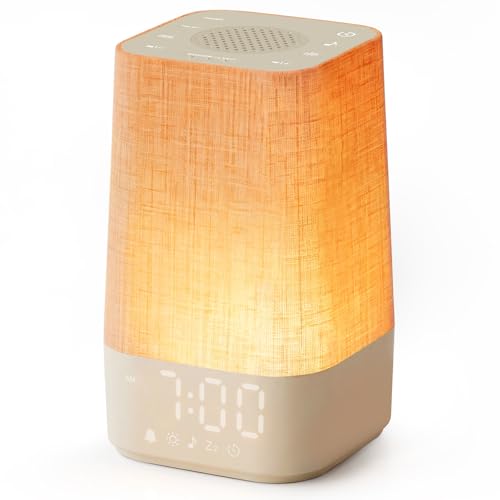
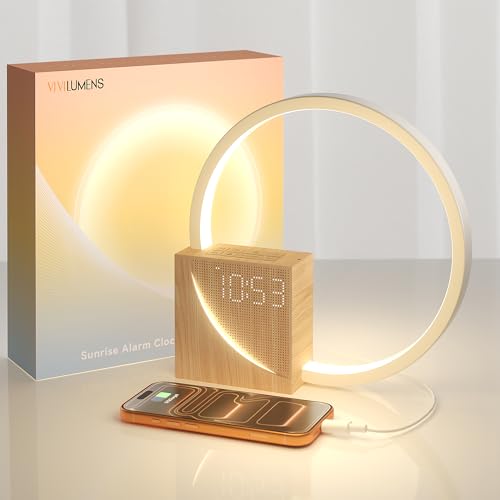
As an Amazon Associate we earn from qualifying purchases at no extra cost to you.
Best sunrise alarm clocks by situation
| Best for | Recommended type or model | Why it fits | Watch-out |
|---|---|---|---|
| Bright, noticeable wake-up | Philips SmartSleep HF3520 | Up to about 300 lux, long adjustable ramp, multiple nature sounds and FM radio | Larger footprint and a relatively prominent clock face |
| Simple daily use | Lumie Bodyclock Shine 300 | 30-minute sunrise, sunset mode, natural sounds and a straightforward physical control layout | Fewer connected features than app-based clocks |
| Bedtime routines and soundscapes | Hatch Restore 3 | Combines sunrise lighting, sleep sounds, routines and a fabric-covered bedside design | Some content and controls depend on the Hatch subscription ecosystem |
| Small nightstand | Compact sunrise-light alarm clock | Usually about 15–20 cm wide and easier to place beside a lamp or phone | Small units may have less light output and weaker speakers |
| Very light-sensitive sleeper | Clock with separate display and lamp controls | Lets you extinguish or heavily dim the time display while retaining the sunrise | Check whether the lowest setting is actually off, not merely “dim” |
Head-to-head: what separates the leading choices?
Philips SmartSleep Wake-Up Light HF3520
The HF3520 is the strongest choice when light intensity is your priority. Philips specifies a maximum of approximately 300 lux, with a gradual sunrise that can be set for up to 40 minutes. It offers two alarm times, five natural wake-up sounds, FM radio and a tap-to-snooze function. Its curved lamp design spreads light across the front rather than producing a narrow beam.
That output is useful in a medium or larger bedroom, especially when the clock sits on a dresser rather than directly beside the pillow. It is not a substitute for room lighting: lux falls rapidly as distance increases, and the light will be less effective if the clock faces away from you or is blocked by furniture.
Choose it if you want a conventional alarm clock with a strong light, physical controls and no requirement for an ongoing app subscription. Its main disadvantages are its larger footprint—roughly 20 cm wide and 20 cm deep—and a display that some people may find too noticeable unless carefully dimmed.
Lumie Bodyclock Shine 300
The Shine 300 is a good middle ground for buyers who want a dedicated sunrise clock rather than a smart-home device. Its 30-minute sunrise is long enough to feel gradual without requiring much planning, and it includes a sunset function, adjustable display brightness, multiple alarm sounds and a colored sunrise sequence.
Lumie’s Bodyclock range is designed around routine rather than extensive connected content. That makes the Shine 300 easier to use after a power interruption or when you do not want another app involved. It is also a sensible choice for a guest room, where the next occupant may not want to create an account or learn a phone-based control system.
The trade-off is that the lamp is less flexible than a connected sleep device. If you want many sound libraries, guided audio or automated schedules that change by day, a smart model may be more convenient.
Hatch Restore 3
The Restore 3 is best viewed as a sleep-routine device with a sunrise alarm, not merely a bright clock. It combines a fabric-covered light, sunset and sunrise routines, sleep sounds and programmable bedtime cues. Its sunrise and sunset timings can be adjusted in the app, and its soft exterior makes it visually quieter than a traditional plastic alarm clock.
The important buying distinction is ownership cost. Some of Hatch’s sound libraries, sleep content and advanced routines require a paid membership, while basic alarm and light functions may remain available without it depending on the account and software terms. Check the current included features before buying rather than assuming every advertised routine is permanent.
Restore 3 makes sense for someone who uses the clock every night and values a complete wind-down sequence. It is less compelling if you only need a bright lamp, a beeping alarm and a few independent sound choices.
Light intensity, duration and bedroom size
Light intensity is normally stated in lux, but manufacturers do not always measure it at the same distance or viewing angle. Treat the number as a useful comparison, not a guarantee of identical brightness in your room.
| Bedroom or placement | Useful target | Recommended setup |
|---|---|---|
| Small room, clock within 1 metre | About 100–200 lux at the pillow | Compact or mid-output clock; 20–30 minute sunrise |
| Medium room, clock 1–2 metres away | About 200–300 lux at the sleeper | Higher-output model such as the HF3520; 30–40 minute sunrise |
| Large room, clock across the room | Prioritize measured output and direct line of sight | Place the clock on a dresser facing the bed; avoid shelves or curtains blocking it |
| Shared bedroom | Moderate light with independent sound and display controls | Use a longer, lower-intensity ramp and a discreet backup alarm |
For a simple fit calculation, suppose the clock is 1.5 metres from your pillow and the manufacturer’s maximum brightness is measured at 0.5 metres. A point-source approximation suggests that illumination could fall by roughly the square of the distance ratio: (0.5 ÷ 1.5)², or about one-ninth. Real lamp diffusers do not behave exactly like point sources, but the lesson is useful: a “300-lux” clock will not deliver 300 lux at every position in the bedroom.
A 30-minute sunrise suits most people who want a noticeable transition. Choose 40–60 minutes if abrupt light is unpleasant or you wake very easily. Choose 15–20 minutes if you sleep through gentle ramps and need the light to become prominent sooner. Sound should remain a backup rather than the first line: a quiet nature sound can preserve the gradual effect, while a buzzer or radio is more reliable when you have an early, non-negotiable start.
Display brightness and sound: overlooked decision points
A clock can have an excellent lamp and still be unsuitable if its display glows across the room. Look for several brightness steps, an automatic night mode and, ideally, a true display-off option. “Low” is not the same as off. If you are sensitive to stray light, avoid models whose controls leave a permanent status indicator.
Sound options vary in usefulness. Nature sounds are less jarring but can become repetitive; white noise is useful for masking intermittent household sounds; FM radio adds variety but may produce static or depend on antenna placement; Bluetooth or app-based audio offers more choice but introduces pairing and software problems. Test the lowest volume before placing the clock beside the bed, because small speakers can sound harsher at close range.
Ownership realities: what wears out first?
- Power adapters and cables: Sunrise clocks generally need continuous mains power. Keep the cable loose rather than sharply bent at the plug, where failures commonly develop.
- Backup batteries: Some conventional models use a coin cell or small backup battery to preserve the time and alarm during an outage. Replace it according to the manual; backup power usually does not operate the bright lamp for long.
- Dust and fingerprints: Wipe the diffuser and display with a dry or slightly damp microfiber cloth. Do not spray cleaner into vents or onto the light surface.
- Software dependence: App-controlled clocks may change features after updates, lose Wi-Fi settings or require a reset when the router changes. Keep the phone app installed until the initial routines are saved.
- Brightness decline: LEDs normally last much longer than incandescent bulbs, but the diffuser can yellow or become cloudy from dust, smoke or harsh cleaners. Keep the lamp away from direct sunlight and heat.
How to set up a sunrise alarm correctly
- Place the clock at eye level or slightly above the mattress, facing the bed. A low position behind a book or lamp wastes much of the output.
- Set the sunrise to 30 minutes for the first week. Move to 40–60 minutes if the change feels abrupt, or shorten it if you regularly sleep through the final brightness.
- Start with the display at its lowest usable setting, then switch it off if the clock supports that option.
- Use a quiet sound at the scheduled wake time and retain a conventional alarm as a backup until you know the routine is reliable.
- After a week, adjust only one variable—light duration, brightness or sound volume—so you can tell what improved the wake-up experience.
Bottom line
Choose the Philips HF3520 when maximum light and traditional alarm controls matter most. Choose the Lumie Shine 300 for a simpler, independent clock with a balanced feature set. Choose the Hatch Restore 3 when you want a connected bedtime routine and are comfortable checking subscription terms. Whichever model you select, prioritize measured light output at your actual sleeping distance, a display that can go genuinely dark, and controls that remain usable without reaching for your phone.



Write Your Review
No reviews yet. Be the first to share your experience!