

Key takeaways
- Best for light-to-medium renovation work: a 10–15 lb corded SDS-Max hammer with about 8–12 J of impact energy, such as the Bosch GSH 5 CE class.
- Best for recurring heavy concrete work: a 20–25 lb corded hammer producing approximately 15–20 J, such as the Makita HM0870C class.
- Best for large slabs and foundations: a 25–35 lb tool in the 20–30 J range, including the Hilti TE 1000-AVR class.
- Best where a power cord is impractical: a high-output cordless SDS-Max or hex hammer, such as the DeWalt DCH892 class, provided you can budget for multiple batteries.
- Best for maximum floor-breaking output: a 60–70 lb electric breaker with a 30–45 J class impact system, used vertically with suitable lifting and transport arrangements.
The best demolition hammers are matched to the material, working position, and amount of concrete you need to remove—not simply chosen by the highest impact-energy number.
For occasional indoor tile beds, mortar, and light concrete, choose a 10–15 lb corded SDS-Max or small hex hammer. For repeated slab, foundation, and masonry removal, step up to a 20–30 lb tool with roughly 15–30 joules of impact energy. The heaviest 60–70 lb-class breakers are productive on floors and roads but are tiring, difficult to control, and excessive for most home projects.
Our top picks
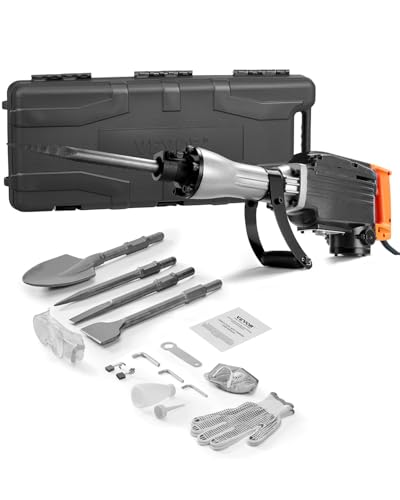


As an Amazon Associate we earn from qualifying purchases at no extra cost to you. Ratings are shown as listed on Amazon.
Quick picks by demolition situation
- Best for light-to-medium renovation work: a 10–15 lb corded SDS-Max hammer with about 8–12 J of impact energy, such as the Bosch GSH 5 CE class.
- Best for recurring heavy concrete work: a 20–25 lb corded hammer producing approximately 15–20 J, such as the Makita HM0870C class.
- Best for large slabs and foundations: a 25–35 lb tool in the 20–30 J range, including the Hilti TE 1000-AVR class.
- Best where a power cord is impractical: a high-output cordless SDS-Max or hex hammer, such as the DeWalt DCH892 class, provided you can budget for multiple batteries.
- Best for maximum floor-breaking output: a 60–70 lb electric breaker with a 30–45 J class impact system, used vertically with suitable lifting and transport arrangements.
Demolition hammer comparison
| Tool class | Typical impact energy | Approximate tool weight | Best uses | Main limitation |
|---|---|---|---|---|
| Compact SDS-Max | 8–12 J | 10–15 lb | Tile beds, brick, mortar, small concrete sections | Slow on thick reinforced concrete |
| Medium SDS-Max or 1-inch hex | 12–20 J | 15–25 lb | Steps, walls, slabs, utility openings | Requires frequent repositioning on large floors |
| Heavy 1-inch hex | 20–30 J | 25–35 lb | Foundations, thick slabs, repeated contractor work | Fatigue and difficult overhead handling |
| Large electric breaker | 30–45 J | 55–75 lb | Roads, floors, substantial masonry demolition | Bulky, noisy, and unsuitable for overhead work |
| High-output cordless SDS-Max | 12–23 J | 15–30 lb including battery | Remote work, short cuts, cord-free access | Battery cost and limited runtime |
Impact energy is the energy delivered by each blow, usually stated in joules. It is useful for comparing tools within the same class, but it does not predict real productivity by itself. Bit sharpness, operator pressure, concrete aggregate, reinforcement, and vibration-related rest periods can matter just as much.
How to match hammer size to the work
Tile, mortar, and small masonry repairs
A compact SDS-Max hammer is usually the sensible choice for removing a bathroom tile bed, opening a brick wall for plumbing, or breaking isolated patches of concrete. A 10–15 lb tool is easier to hold at an angle and less likely to damage surrounding surfaces. Use a wide scaling chisel for adhesive and mortar, then switch to a narrower point only when penetrating hard material.
Do not buy a 60 lb breaker for this work. Its extra force can turn controlled removal into collateral damage, especially near pipes, waterproofing, or structural edges.
Steps, walkways, and moderate slabs
A 15–25 lb hammer in the 12–20 J range is a useful middle ground. It has enough energy for ordinary concrete while remaining manageable for several working positions. For a slab, score or drill relief lines first where possible. Breaking between relief cuts reduces the force needed and makes fragments smaller and easier to remove.
Foundations, thick slabs, and repeated use
Choose a 25–35 lb heavy hammer when productivity matters more than portability. These tools are effective against thick concrete and dense masonry, but they need a stable stance and a planned lifting method. They are generally better for floor-level work than walls, stairs, or overhead demolition.
For structural concrete, first confirm that demolition will not compromise load-bearing elements, utilities, or post-tensioning cables. A qualified professional should assess uncertain structural work before you begin.
Corded versus cordless power
Corded hammers provide sustained output and are normally the better value for long demolition sessions. A typical electric model draws roughly 10–15 amps, so use a properly rated circuit and a heavy-duty extension cord of the length recommended by the manufacturer. Voltage drop from an undersized or excessively long cord can reduce performance and overheat the cable.
Cordless models eliminate cable management and are valuable in unfinished buildings, outdoor locations, and short jobs where moving a generator would be inconvenient. Their weakness is energy capacity. A battery rated at 12 Ah and 36 V contains about 432 watt-hours before accounting for conversion losses:
12 Ah × 36 V = 432 Wh.
If the hammer averages 600 watts while actively breaking, that represents about 0.72 hours of continuous trigger time in ideal conditions. Real work includes repositioning, clearing rubble, and pauses, but hard concrete may reduce practical active runtime further. For a full-day job, two or more large batteries and a rapid charger may cost more than a corded hammer and suitable power distribution.
Battery tools also become heavier as battery capacity increases. Compare the complete operating weight, not just the bare-tool weight.
Bit systems: SDS-Max, hex, and compatibility
- SDS-Max: Common on lighter and medium hammers. Bits are easy to change and widely available for chiseling, scaling, and drilling.
- 1-inch hex: Common on heavier demolition hammers. The larger shank tolerates high impact loads and offers a broad selection of points, bull points, clay spades, and wide chisels.
- Specialized large hex systems: Found on the biggest breakers. They can deliver high output but have heavier and more expensive consumables.
Check the holder before buying accessories. A bit that looks similar may have the wrong shank length, locking groove, or diameter. For controlled surface removal, a wide chisel is usually more useful than a pointed bit. A point penetrates aggressively, while a 2–4 inch scaling chisel can lift material across a wider path once a crack has started.
Vibration control is a productivity feature
Active vibration reduction, sprung handles, and isolated motor housings do not make a hammer quiet or risk-free, but they can make long sessions more manageable. Compare the manufacturer’s vibration figure in m/s² and its stated measurement conditions. Lower is preferable, but the number is not perfectly comparable across brands.
Use the tool in short work periods, keep both hands on the handles, and let the hammer’s impact mechanism do the work. Pushing harder usually increases fatigue and can slow the tool. Hearing protection, eye protection, gloves, sturdy footwear, and suitable respiratory protection for dusty masonry work are essential. Avoid operating a powerful hammer from a ladder or unstable platform.
Ownership costs and maintenance
Bits are normally the first consumable to wear. A rounded point transfers force poorly and encourages excessive operator pressure. Replace or sharpen bits according to the manufacturer’s instructions rather than continuing until the tool overheats.
Before each session, inspect the cord, plug, battery, side handle, retaining mechanism, and housing. Clean dust from vents with dry air or a soft brush, and keep debris out of the bit holder. Grease the shank when the manufacturer specifies it; too much grease can attract abrasive dust, while too little can increase wear.
For a simple ownership estimate, suppose a corded hammer costs $450, is used for 30 projects, and consumes $25 of bits and grease over that period. Its equipment cost is approximately:
($450 + $25) ÷ 30 = $15.83 per project.
A cordless setup may appear similar at the tool level but require batteries, a charger, and replacement packs. Include those items when comparing cost per use.
Decision matrix
| Your situation | Recommended class | Why |
|---|---|---|
| One small indoor repair, limited storage | 10–15 lb corded SDS-Max | Lower purchase cost and easier control |
| Several renovation projects each year | 15–25 lb corded SDS-Max or hex | Good balance of output, durability, and price |
| Daily or weekly concrete demolition | 25–35 lb heavy hex or professional SDS-Max | Higher productivity and robust duty cycle |
| No reliable mains power, short work periods | High-output cordless SDS-Max | Fast setup and no extension cord |
| Large floor areas and thick slabs | 55–75 lb breaker or rental-grade equipment | Maximum output, but transport and handling are demanding |
Bottom line
For most homeowners, the best demolition hammers are medium-sized corded models: powerful enough for concrete and masonry, less expensive to operate than cordless systems, and easier to control than oversized breakers. Choose a compact SDS-Max tool for precision and light demolition, a 20–30 lb hammer for recurring heavy work, and a large breaker only when the scale of the job justifies its weight, noise, and handling demands. The right bit, vibration control, and a realistic plan for debris removal will affect the result as much as the headline joule rating.







Write Your Review
No reviews yet. Be the first to share your experience!