

Key takeaways
- Frequent cooking: 20–25-inch bowl, 8–10 inches deep, with a 3.5-inch drain and removable basket strainer.
- Small balcony or narrow counter: 15–18-inch bowl, preferably with the faucet mounted behind or beside it.
- Maximum durability: 304 stainless steel, 16–18 gauge, with sound-deadening pads and a sloped base.
The best outdoor sinks for most patio kitchens are 304-grade stainless steel models with a 15–25 inch basin, a standard 3.5-inch drain opening, and a faucet deck or mounting hole that matches your chosen outdoor faucet; ceramic suits sheltered, design-led kitchens, while composite works well when you want quieter operation and strong color retention.
Our top picks


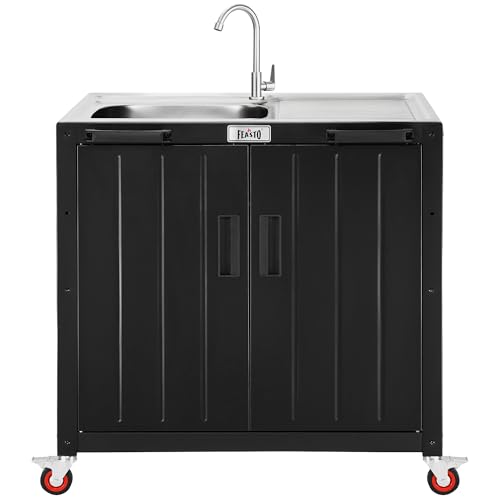
As an Amazon Associate we earn from qualifying purchases at no extra cost to you. Ratings are shown as listed on Amazon.
Quick comparison: which outdoor sink material fits your patio?
| Sink type | Useful basin sizes | Typical weight | Faucet compatibility | Drainage | Freeze protection | Typical market range in 2026 |
|---|---|---|---|---|---|---|
| 304 stainless steel | 15–33 in. wide; 7–10 in. deep | 8–25 lb | Single-hole, 4-in. centerset, or wall-mounted depending on model | Usually 3.5-in. drain; easy to connect to outdoor waste plumbing | Best when paired with shutoff valves and removable supply lines | $100–$700 |
| Fireclay or ceramic | 20–36 in. wide; 8–10 in. deep | 45–100 lb | Deck-mounted or wall-mounted faucet; requires reinforced support | Standard drain sizes are common, but drain alignment is less forgiving | Must be fully drained; exposed standing water can cause cracking | $300–$1,200 |
| Granite or acrylic composite | 15–30 in. wide; 7–9 in. deep | 15–45 lb | Often single-hole or three-hole; check thickness and hole layout | Usually 3.5-in. drain; some utility styles use a basket or removable strainer | Drain completely and protect from repeated hard freezes | $250–$900 |
These are broad buying ranges rather than guarantees. Installation, cabinetry, waste routing, faucet quality, and local plumbing requirements can add substantially to the total cost.
Stainless steel: the practical all-rounder
Stainless steel is usually the safest choice for an exposed patio kitchen. Look for 304 stainless steel, sometimes called 18/8 stainless, rather than an unspecified alloy. A 16- or 18-gauge bowl resists dents better than very thin sheet metal, although thicker steel also increases weight and price.
A compact 15–18-inch sink is suitable for rinsing glasses, washing utensils, and filling a kettle. A 20–25-inch single bowl is more useful for meal preparation and cleaning large cookware. A deep bowl of 8–10 inches holds more dishes, but it also requires a longer faucet neck and may be uncomfortable if the counter is low.
Stainless steel tolerates temperature changes better than ceramic and is easier to modify or replace. Its drawbacks are visible water spots, possible surface scratches, and a louder sound when water hits the bowl. A brushed or satin finish hides marks better than a mirror finish. Avoid steel wool and chlorine-heavy cleaners, which can damage the passive protective layer and encourage rust staining around scratches.
Best stainless configuration
- Frequent cooking: 20–25-inch bowl, 8–10 inches deep, with a 3.5-inch drain and removable basket strainer.
- Small balcony or narrow counter: 15–18-inch bowl, preferably with the faucet mounted behind or beside it.
- Maximum durability: 304 stainless steel, 16–18 gauge, with sound-deadening pads and a sloped base.
Ceramic and fireclay: attractive, heavy, and less forgiving
Ceramic or fireclay sinks make sense when appearance matters as much as utility, especially in a covered outdoor kitchen with masonry, painted cabinetry, or a traditional design. Their glossy surfaces resist ordinary staining and are easy to wipe clean. They also dampen sound better than thin stainless steel.
The trade-off is weight and brittleness. A 30-inch fireclay sink can weigh around 80 pounds before water or dishes are added, so the cabinet and countertop need structural support. Dropping a cast-iron pan or hitting an exposed corner can chip the glaze. Repairs may be visible, and replacing a fitted sink can require dismantling surrounding counters.
Ceramic is also more sensitive to freeze damage. Water trapped in the bowl, drain trap, faucet body, or supply line can expand and crack components. A ceramic sink is a poor choice for an unprotected installation where winterization is likely to be skipped.
Composite: quieter than steel with useful design flexibility
Composite sinks are commonly made from granite particles bonded with resin, or from molded acrylic-based materials. Granite composite generally handles heat, impact, and outdoor wear better than inexpensive acrylic. It is also quieter than stainless steel and available in colors that coordinate with stone-look counters.
Dark composite sinks can show mineral scale and dried soap, while lighter colors may reveal grease or food pigments. Follow the manufacturer’s cleaning instructions, and avoid leaving metal cans, wet leaves, or salty water on the surface for long periods. Resin-bound materials can discolor if exposed to harsh solvents or prolonged high heat.
Composite bowls are often thicker than stainless steel, so verify that the supplied drain and mounting hardware suit the counter thickness. Some models have predrilled faucet holes; others require a fabricator to drill them. Do not assume a standard faucet will fit just because the sink has a familiar outline.
Choose the basin size by the work you actually do
| Patio use | Recommended bowl | Why | Counter space to reserve |
|---|---|---|---|
| Drinks and hand rinsing | 15–18 in. wide × 7–8 in. deep | Fits small counters and handles glasses and tools | At least 18 in. on one side for landing space |
| Occasional food preparation | 20–25 in. wide × 8–9 in. deep | Holds plates, produce, and medium pans | 24 in. beside the bowl is more comfortable |
| Large cookware and frequent entertaining | 25–33 in. wide × 9–10 in. deep | Reduces splashing and accommodates bigger items | Plan for reinforced cabinetry and generous clearance |
A simple fit calculation prevents many installation problems. If your counter run is 72 inches and the grill occupies 30 inches, a 24-inch sink leaves 18 inches of remaining counter. That is workable only if the sink and grill are not forced together; ideally, leave a heat-resistant landing zone between them and at least one clear prep area elsewhere.
Faucet compatibility: check the holes, reach, and water source
Faucet compatibility involves more than matching the number of holes. Confirm the sink’s hole diameter, hole spacing, deck thickness, and clearance behind the basin. A single-hole faucet is compact, while a three-hole faucet may require 4-inch centers or a wider 8-inch spread. A wall-mounted faucet avoids consuming deck space but requires accurately placed plumbing inside the wall or cabinet.
Match the faucet reach to the bowl. The spout should discharge near the center rather than against the rear wall. For a deep 10-inch basin, a high-arc spout is useful, but an excessively tall model can be unstable in wind and may splash. If the patio has only cold water, choose a cold-only faucet rather than trying to cap an unused hot-water connection with unsuitable hardware.
For potable water, use tubing and fittings approved for drinking-water service. A garden hose connected to a non-potable outlet is not an equivalent substitute for a properly designed supply line.
Drainage and plumbing setup
The drain route determines whether the sink is convenient or troublesome. A direct connection to an approved sewer or gray-water system is the most dependable arrangement, but local rules may require a trap, venting, an air gap, or a permit. Outdoor wastewater should not simply discharge onto soil near the foundation or into a storm drain.
- Measure the drain outlet and route. Confirm the sink outlet, trap size, pipe slope, and connection point before buying the cabinet.
- Install a proper trap and cleanout. A cleanout makes it possible to remove food debris without dismantling the whole sink.
- Support the waste pipe. Outdoor movement, frost heave, and cabinet vibration can loosen an unsupported connection.
- Test before sealing the counter. Fill the bowl, drain it completely, and inspect every joint for leaks.
A removable strainer is valuable outdoors because it catches leaves, food scraps, and insects. It should be emptied regularly rather than treated as a substitute for a proper waste system.
Freeze protection: the detail that decides long-term survival
Freezing weather damages the plumbing around a sink more often than the basin itself. Before winter, shut off the supply, open the faucet, disconnect flexible supply hoses where practical, and drain the faucet, filter, trap, and exposed pipe. A low-point drain or compressed-air blowout connection can make this process more reliable, but compressed air should be used carefully to avoid damaging cartridges and valves.
Do not rely on a heated cabinet unless the installation is designed to maintain safe temperatures during a power outage. Insulation slows freezing but does not eliminate it. Ceramic and composite sinks deserve particular care because trapped water can create cracking or delamination, while stainless steel generally tolerates temperature swings better.
Decision guide for common patio situations
- Lowest initial cost and easiest replacement: choose a compact stainless steel sink with a standard drain.
- Small space and occasional use: choose a 15–18-inch stainless or composite bowl and a single-hole faucet.
- Frequent entertaining: choose a 20–25-inch stainless or granite-composite bowl with a deep basin and removable strainer.
- Traditional or upscale covered kitchen: choose fireclay only when the cabinet can support its weight and winterization is dependable.
- Harsh winters or an unattended property: favor stainless steel, minimize exposed pipe, and install accessible shutoffs and drains.
Ownership costs and mistakes to avoid
The sink is only part of the budget. Allow for the faucet, drain assembly, trap, shutoff valves, supply lines, cabinet reinforcement, countertop cutout, waste connection, and possible winterization hardware. A basic sink may cost $100–$250, yet a complete professionally installed setup can reach $700–$2,000 or more depending on excavation and drainage.
The most common mistakes are choosing a basin too large for the counter, overlooking faucet-hole dimensions, routing wastewater without checking local requirements, and leaving water in the plumbing over winter. Stainless steel typically has the lowest ownership risk; ceramic offers the strongest visual appeal but the highest breakage risk; composite sits between them, provided it is protected from harsh chemicals and standing debris.
For most buyers, the best outdoor sink is therefore a 304 stainless steel model sized to the counter and connected to a properly trapped, drainable plumbing system. Select ceramic for a sheltered, carefully supported kitchen, or composite when quieter operation and coordinated color are worth the additional cost and maintenance attention.

Write Your Review
No reviews yet. Be the first to share your experience!