

Key takeaways
- 1/16-inch electrodes: approximately 20–45 amps; useful for thin sheet and small tack welds.
- 3/32-inch electrodes: approximately 60–100 amps; a practical size for light repair work and material around 1/8 inch thick.
- 1/8-inch electrodes: approximately 90–150 amps; the most useful general-purpose size for brackets, equipment frames, gates, and heavier repairs.
- 5/32-inch electrodes: approximately 130–210 amps; useful for thicker steel and faster deposition, but demanding more power and technique.
- 3/16-inch electrodes: approximately 180–260 amps; generally better suited to 240-volt or industrial machines and properly prepared thick plate.
The best stick welders for most buyers are a 160–200 amp inverter with 120/240-volt input, a usable 20%–35% duty cycle at maximum output, and support for common 3/32-inch and 1/8-inch electrodes; the right choice depends on whether you value low cost, portability, thick-steel capacity, or easier beginner control.
Our top picks

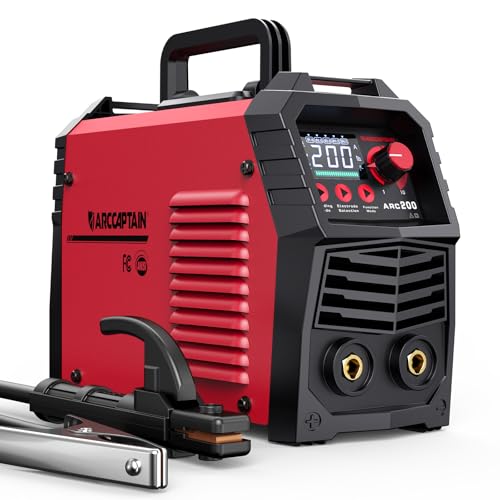


As an Amazon Associate we earn from qualifying purchases at no extra cost to you. Ratings are shown as listed on Amazon.
Quick picks by situation
| Situation | Best welder type or example | Useful target specifications | Why it fits |
|---|---|---|---|
| First welder for occasional repairs | Compact dual-voltage inverter | 120/240 V, 140–180 A, 3/32-inch electrode support | Works from household power and handles brackets, gates, trailers, and mild-steel repairs |
| Frequent farm or workshop repairs | 200-amp dual-voltage inverter | 30% duty cycle at 200 A, 1/8-inch electrodes, hot start and arc force | Provides more heat reserve and rest time between repairs |
| Remote work with no reliable outlet | Portable inverter generator welder | 180–250 A, generator output, 1/8-inch electrodes | Combines welding and job-site power, though it costs more and weighs more |
| Heavy plate and long welds | 240-volt transformer or industrial inverter | 200–250 A or more, 40%–60% duty cycle | Better suited to sustained output and larger electrodes |
| Very tight budget | Basic 120-volt inverter | 90–140 A, 10%–20% duty cycle, 1/16- or 3/32-inch electrodes | Affordable and portable, but limited on thick material and low-voltage circuits |
What amperage do you actually need?
Amperage determines electrode size and, to a large extent, the thickness of steel you can join in one pass. A machine advertised at 200 amps is not automatically better than a 160-amp model: the important questions are how much current it can deliver from your available outlet, at what duty cycle, and with which electrodes.
- 1/16-inch electrodes: approximately 20–45 amps; useful for thin sheet and small tack welds.
- 3/32-inch electrodes: approximately 60–100 amps; a practical size for light repair work and material around 1/8 inch thick.
- 1/8-inch electrodes: approximately 90–150 amps; the most useful general-purpose size for brackets, equipment frames, gates, and heavier repairs.
- 5/32-inch electrodes: approximately 130–210 amps; useful for thicker steel and faster deposition, but demanding more power and technique.
- 3/16-inch electrodes: approximately 180–260 amps; generally better suited to 240-volt or industrial machines and properly prepared thick plate.
For a first machine, 140–180 amps is enough for many household and light agricultural repairs. Choose 200 amps or more if you expect to weld 1/4-inch steel regularly, use 1/8-inch electrodes for extended periods, or want room to grow. A single-pass rating should not be confused with the ability to fuse thick steel completely; beveling, multiple passes, preheating, and proper joint design may be required.
Best stick welders by skill level
Best for beginners: a dual-voltage inverter with simple controls
A compact inverter that accepts both 120 and 240 volts is usually the most forgiving purchase. On 120 volts, it can handle small repairs and practice plates without requiring a new circuit. On 240 volts, it can access higher output for 1/8-inch electrodes and thicker material.
Look for a large, clearly marked amperage dial, hot start, and arc-force adjustment. Hot start briefly increases current when the electrode first touches the work, helping beginners avoid sticking. Arc force adds current when the arc length becomes short, which can prevent the electrode from going out during awkward starts. Anti-stick protection can reduce the chance of an electrode remaining welded to the workpiece.
The Lincoln Electric Square Wave 200 is an example of a versatile multiprocess machine with stick capability, while the Hobart Stickmate 160i offers a simpler portable stick-welding format. These are different kinds of purchases: the Lincoln is aimed at buyers who may also want TIG or other welding functions, while a dedicated stick machine keeps the controls and maintenance simpler.
Best for regular repairs: a 180–210 amp inverter
For trailers, implements, structural brackets, outdoor equipment, and repeated repair jobs, a 180–210 amp inverter is a useful middle ground. It normally supports common 6010, 6011, 6013, and 7018 electrodes, depending on the model and its open-circuit voltage.
The ESAB Rogue ES 180i Pro is an example of a compact inverter in this class. Models in this range are easier to carry than traditional transformer machines and often offer hot start, arc force, and lift-arc TIG. Check the included leads before buying: a machine may have an impressive output rating but short or light-duty electrode and work cables that are inconvenient at a repair site.
Best for remote work: a generator welder
If you repair fencing, machinery, or farm equipment away from buildings, a generator welder can be more useful than a small inverter. It supplies welding current and can run lights, grinders, or chargers. The tradeoff is weight, fuel, engine maintenance, noise, and a much higher purchase price.
Choose this format when mobility and independence matter more than compact storage. For occasional driveway work, an inverter powered by a suitable generator is often less expensive, but the generator must provide clean enough power and sufficient continuous output for the welder’s input demand.
Electrode compatibility matters more than the amp number
Common electrode choices have different starting behavior and results:
- E6011: penetrates well and tolerates less-than-perfectly-clean steel; useful for repair work and many AC-capable machines.
- E6013: easier to start, with a smoother-looking bead; suitable for general mild-steel work and practice.
- E6010: favored for deep penetration and root passes, but many small inverters do not run it well. Confirm explicit E6010 compatibility.
- E7018: produces strong, low-hydrogen welds when stored and handled correctly; it needs a stable arc and clean preparation.
Do not assume that “DC stick” means every electrode will perform equally well. Read the manual for minimum and maximum electrode sizes, recommended polarity, open-circuit voltage, and whether the machine is rated for E6010. For a beginner, E6013 is often easier to learn with, while E6011 is valuable for rusty or painted repair steel after removing contamination as far as practical.
Duty cycle: the specification that changes real productivity
Duty cycle is the percentage of a 10-minute period a welder can operate at a stated output before it needs to cool. A 30% duty cycle at 200 amps means six minutes of welding followed by four minutes of cooling at that output. The rating falls or rises with amperage, so a machine rated at 20% at maximum output may provide a much longer cycle at 120 amps.
Consider a repair requiring twelve minutes of actual arc time. At a 30% duty cycle, the theoretical schedule is six minutes welding, four minutes cooling, six minutes welding, and four minutes cooling: about twenty minutes of arc-and-cool time, excluding electrode changes and repositioning. In practice, short beads and natural pauses often make small jobs easier than this calculation suggests.
For occasional repairs, a 20% duty cycle can be adequate. For long fillet welds, production work, or repeated passes on thick plate, prioritize 40% or more at the current you actually expect to use.
Portability and electrical requirements
Inverter welders commonly weigh about 10–25 pounds, while traditional transformer stick welders may weigh 40–100 pounds or more. The lighter option is easier to carry up stairs and to a gate, but its cooling fan, circuit boards, and controls can be less tolerant of dust, moisture, and generator power problems.
A 120-volt machine is convenient but draws substantial current. A 140-amp welder may require a 20-amp circuit, and extension cords can cause voltage drop if they are long or undersized. A 240-volt circuit generally delivers higher output with lower input current, but installation should be handled according to local electrical rules. Never use a damaged cord, bypass grounding, or weld near flammable vapors.
Ownership costs and maintenance realities
Electrodes are the main recurring cost. A 5-pound package of common mild-steel rods generally costs about $15–$35, depending on type and brand. If a repair uses 1.5 pounds of electrodes, the rod cost is roughly $4.50–$10.50. Add grinding discs, wire wheels, gloves, and replacement leads when comparing a cheap machine with a better-equipped one.
Electrode holders, work clamps, and cables usually wear before the power source. Replace loose clamps, cracked insulation, overheated connectors, and holders with damaged jaws. Keep the machine’s air inlets clear, blow out dust only as recommended by the manufacturer, and store electrodes dry. Moisture is especially problematic for low-hydrogen E7018 rods, which may require controlled storage or rebaking according to the package instructions.
A beginner-friendly setup sequence
- Clean mill scale, paint, oil, and rust from the joint area; contamination increases porosity and unstable arcs.
- Select the electrode and polarity specified on its package and the welder manual.
- Set amperage near the electrode manufacturer’s range, then adjust in small steps after observing the arc and bead.
- Clamp the work lead to clean metal close to the joint to reduce resistance.
- Practice striking the arc on scrap of the same material before welding the repair.
- Keep a short, consistent arc and travel steadily; excessive arc length causes spatter and an irregular bead.
- Chip and brush slag between passes, then inspect for cracks, undercut, incomplete fusion, and trapped slag.
Bottom line
For most first-time buyers, the best stick welders are compact dual-voltage inverters rated around 160–200 amps, with hot start, adjustable arc force, and confirmed support for 6011, 6013, and 7018 electrodes. Choose a simpler 120-volt model for light repairs and limited storage, a 200-amp machine with a stronger duty cycle for frequent work, and a generator welder only when remote power is central to the job. Match the machine to your outlet, electrode sizes, duty cycle, and repair material rather than choosing by maximum amperage alone.

Write Your Review
No reviews yet. Be the first to share your experience!