

Key takeaways
- Attachment method: elastic edges and hook-and-loop fasteners are quicker than threading a cloth through narrow clips.
- Pad price and availability: proprietary pads may clean well but cost more to replace.
- Drying time: two pads allow one to wash while the other is in use.
- Scrubbing action: rotating pads can loosen marks more effectively, but they may add noise, weight, and replacement cost.
The best steam mops depend on your floor type and cleaning routine: choose the BISSELL PowerFresh Slim for a light, versatile corded mop, the Shark Steam & Scrub for powered pad movement and tougher sealed floors, or the Kärcher SC 3 Upright EasyFix when fast refill-free cleaning matters more than a long cord.
Our top picks
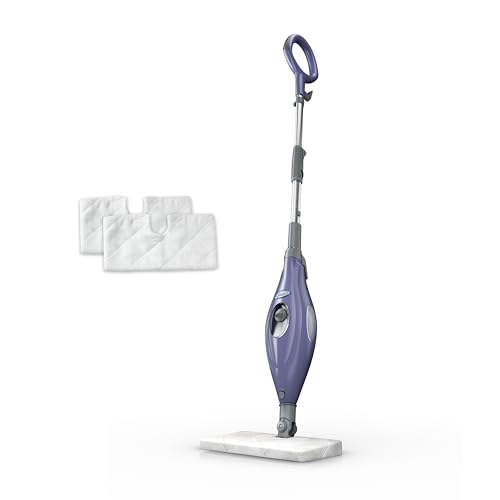


As an Amazon Associate we earn from qualifying purchases at no extra cost to you. Ratings are shown as listed on Amazon.
Best steam mops compared
Steam mops are most useful on sealed hard floors where you want to loosen everyday grime without carrying a bucket. They are not interchangeable, however. A small water tank may be convenient in an apartment but frustrating in a large home, while a cordless design may be easier to steer but less suitable for a whole-house cleaning session.
| Model or type | Heat-up time | Water capacity | Power and reach | Pad system | Best suited to |
|---|---|---|---|---|---|
| BISSELL PowerFresh Slim | About 30 seconds | 12 oz / 355 ml | Corded; approximately 25 ft cord | Washable microfiber pads; detachable handheld unit | Small and medium homes, stairs, kitchens, and occasional detail work |
| BISSELL PowerFresh Deluxe | About 30 seconds | 19 oz / 560 ml | Corded; approximately 25 ft cord | Washable microfiber mop pads | Longer cleaning sessions with fewer refills |
| Shark Steam & Scrub S7001 | About 30 seconds | Approximately 0.42 qt / 400 ml | Corded; approximately 22 ft cord | Rotating washable scrub pads | Sealed floors needing more agitation than a static pad provides |
| Kärcher SC 3 Upright EasyFix | About 30 seconds | 0.4 L / 13.5 oz | Corded; approximately 16.4 ft cord | Washable EasyFix microfiber floor cloth | Fast refills and compact storage |
| Typical cordless steam mop | About 20–60 seconds | Usually 200–400 ml | Battery powered; commonly 15–30 minutes | Often proprietary washable pads | Quick spot cleaning where cord management is the main nuisance |
Specifications can vary by country and revision, so check the manufacturer’s regional page before buying. The table is most useful for understanding the trade-offs: corded machines generally deliver predictable power for as long as the tank lasts, while cordless models exchange unlimited electrical runtime for easier movement.
Which steam mop is right for your situation?
| Your situation | Best choice | Why | What to accept |
|---|---|---|---|
| Small flat or limited storage | BISSELL PowerFresh Slim | Light, narrow, and useful as both a floor mop and handheld steamer | The 12-ounce tank may require a refill during a full-home clean |
| Frequent cleaning of a larger sealed-floor area | BISSELL PowerFresh Deluxe | Larger tank and long cord reduce interruptions | More water means a slightly heavier machine |
| Dried-on marks and preference for active scrubbing | Shark Steam & Scrub S7001 | Rotating pads add mechanical agitation | Replacement pads are more specialized than standard microfiber cloths |
| You dislike waiting or stopping to refill | Kärcher SC 3 Upright EasyFix | Rapid heating and a refillable design support continuous work | The shorter cord makes outlet planning more important |
| Only occasional spills or small areas | A compact cordless steam mop | No cord to unpack for a five-minute job | Battery aging, shorter runtime, and less consistent power |
Heat-up time, tank size, and real cleaning coverage
Heat-up time matters most when a mop is used for quick jobs. A 30-second start is effectively immediate for a kitchen spill, but it becomes less important during a long cleaning session. Tank size has a more practical effect.
As a rough planning estimate, a steam mop may use around 10–20 ml of water per minute depending on the steam setting, floor speed, and how often the trigger is pressed. A 355 ml tank could therefore provide roughly 18–35 minutes of intermittent operation. At a moderate pace of 2–3 minutes per 100 square feet, that may cover approximately 600–1,000 square feet before refilling. This is an estimate, not a guaranteed coverage figure: heavily soiled floors and continuous steam use will reduce it.
A larger tank is not automatically better. More water adds carrying weight and increases the time needed to cool and store the mop. For a 500-square-foot apartment, a compact tank may be the better compromise. For a 1,000-square-foot or larger sealed-floor home, a 19-ounce tank or refillable canister-style design is more convenient.
Corded versus cordless steam mops
Corded models
Corded steam mops are usually the safer default for regular floor cleaning. They do not stop when a battery is depleted, and their heating performance is generally consistent throughout the session. A 22- to 25-foot cord can cover several rooms if outlets are sensibly positioned.
The disadvantages are practical rather than technical: the cord can drag across clean areas, catch on furniture, or make stairs awkward. A cord-management hook and a swiveling head help, but neither removes the need to unplug before moving between floors.
Cordless models
Cordless steam mops are convenient for kitchens, entryways, and homes where outlets are inconvenient. Look for a removable battery, a stated runtime at the selected steam level, and a charging system that does not require the mop to occupy a damp storage position.
Do not compare a cordless mop’s advertised runtime directly with a corded model’s cleaning time. Battery figures are often measured with steam used intermittently. High steam output, repeated starts, and an aging battery can shorten the usable session. If you clean several rooms at once, a corded model is usually less frustrating.
Maneuverability and pad design
A low-profile head is valuable because it reaches beneath cabinets and furniture. A swivel joint makes it easier to follow baseboards and clean around chair legs. Weight distribution matters too: a mop that is light overall can still feel tiring if the water tank sits high in the handle.
Most steam mops use washable microfiber pads. Check four details before buying:
- Attachment method: elastic edges and hook-and-loop fasteners are quicker than threading a cloth through narrow clips.
- Pad price and availability: proprietary pads may clean well but cost more to replace.
- Drying time: two pads allow one to wash while the other is in use.
- Scrubbing action: rotating pads can loosen marks more effectively, but they may add noise, weight, and replacement cost.
Steam does not replace physical soil removal. Vacuum or sweep first, then steam. Otherwise, grit can be dragged across the floor and embedded in a damp pad.
Floor compatibility: where caution matters
Steam mops are generally intended for sealed hard floors, including glazed ceramic tile, porcelain tile, and some sealed stone surfaces. Always follow the flooring manufacturer’s care instructions, particularly with natural stone, because sealers and finishes differ.
Use extra caution with laminate, engineered wood, hardwood, bamboo, luxury vinyl, and painted or waxed surfaces. Some manufacturers permit controlled steam; others prohibit it because heat and moisture can enter joints, soften finishes, cause swelling, or create dull patches. “Water-resistant” does not mean “steam-approved.” If the flooring documentation is unclear, use a lightly damp microfiber mop instead.
Never leave a hot steam mop stationary on one spot. Use the lowest effective steam setting, keep the mop moving, and avoid flooding seams. Test an inconspicuous area first and stop if the finish changes, edges lift, or moisture remains visible after a short interval.
Ownership costs and maintenance
The main consumables are microfiber pads, filters on models that use them, and sometimes descaling cartridges. A practical estimate is two to four pads per year for light use and four to eight for frequent use, depending on washing habits. If a replacement pad costs roughly $10–$20 and you use six annually, pad ownership adds about $60–$120 per year.
Rinse or launder pads after every session according to the care label. Do not use fabric softener, which can reduce absorbency. Let pads dry fully before storage. Empty leftover water from the tank, especially if the mop will sit unused for several days.
Hard-water areas deserve special attention. Mineral deposits can reduce steam output and clog internal passages. Use only the water type specified by the manufacturer; do not add detergent, fragrance, disinfectant, or essential oils unless the manual explicitly permits it. Descale at the stated interval rather than waiting for steam performance to fail.
Bottom line
For most buyers, a corded steam mop with a 12- to 19-ounce tank, a washable microfiber pad, a long cord, and a low swiveling head offers the best balance. Choose the BISSELL PowerFresh Slim when storage and versatility come first, the PowerFresh Deluxe for longer sessions, the Shark Steam & Scrub S7001 for powered agitation, and the Kärcher SC 3 Upright EasyFix for rapid, refill-friendly cleaning. Before choosing any of them, confirm that your specific sealed flooring is approved for steam and budget for replacement pads as carefully as the purchase price.

Write Your Review
No reviews yet. Be the first to share your experience!