

Our Top Picks
 SentrySafe Fireproof Safe Box with Key Lock0.25 cu. ft.12.1 x 15.3 x 6.3 inches16 poundsCheck on Amazon
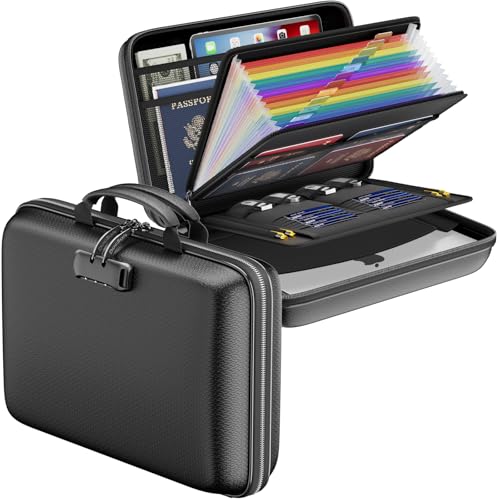 DocSafe Fireproof File Organizer with Lock15.5" x 11.5" x 3"(colorful)15.55 x 11.5 x 3 inches2 PoundsCheck on Amazon

The SentrySafe 1-Hour Fireproof Safe with a digital keypad (1.2 cu ft, STW123GDC) is the best overall choice for most households that want a real fire-rated home for original paperwork. A fireproof document safe is a lockable container built to keep its interior cool enough that paper survives a house fire for a stated length of time. This model carries a UL-classified one-hour rating in its listing and has room for deeds, titles, passports and tax files without folding anything. If you need something you can pick up and carry out the door, or a smaller box for only the essentials, the other five picks below cover those jobs.
Quick List
- SentrySafe 1-Hour Fireproof Safe, Digital Keypad – best for a permanent, rated home for original documents
- SentrySafe Fireproof Box with Key Lock and Handle – best for a small grab-and-go box for a few essentials
- SentrySafe Fireproof and Waterproof Document Safe – best for flat, letter-size storage with water protection
- DocSafe Hard-Shell File Organizer, 13 Pockets – best for sorted, portable paperwork
- DocSafe 5200°F Document Organizer Box, 8 Layers – best for lightweight storage with a heat-insulated shell
- Fieetra Fireproof Document Box with Lock – best for passports, certificates and a lightweight hard case
Which One Is Right for You?
| If you… | Choose |
|---|---|
| want a certified one-hour fire rating and a keypad | SentrySafe 1-Hour Fireproof Safe (STW123GDC) |
| need to grab one box and leave quickly | SentrySafe Fireproof Box with Carrying Handle |
| store flat files and worry about water from sprinklers or hoses | SentrySafe Fireproof and Waterproof Document Safe |
| want folders already sorted into pockets | DocSafe Hard-Shell Organizer, 13 Pockets |
| prefer a light case that travels easily | DocSafe 5200°F Organizer Box or Fieetra Document Box |
| keep mostly passports, birth certificates and a few small items | Fieetra Fireproof Document Box |
The first decision is how much certification matters to you. A UL-classified safe has a documented fire-endurance rating, while a fireproof case or bag usually lists material temperatures that do not describe how long the contents stay cool. The second decision is portability: a heavy safe protects more but stays put, and a handled box can leave with you.
All 6 Picks in Detail
1. SentrySafe Fireproof Box with Key Lock and Handle – Best for a Small Grab-and-Go Box
As an Amazon Associate we earn from qualifying purchases at no extra cost to you.

If your list of truly irreplaceable items is short, this compact chest-style box is easy to live with. The listing calls out a key lock, a carrying handle and 0.25 cubic feet of space, and lists money, jewelry and documents as intended contents. The exterior starts at 6.3 x 15 inches according to the truncated listing name, so confirm the remaining dimension and whether letter-size pages lie flat or must be folded.
- Capacity: 0.25 cu ft per the listing
- Lock: keyed, with the keys kept elsewhere in the house
- Carry: built-in handle for quick removal
- Fire rating: confirm the duration and classification on the listing, since the name does not state them
- Fit: best for a passport folder, a few certificates and small valuables
Pros
- Small footprint fits on a closet shelf
- The handle makes evacuation simple
Cons
- Limited room for thick folders or binders
- A key lock can be lost, and the box is light enough to be carried off by a thief
Next to the keypad SentrySafe it is the quicker box to carry, but you will need to decide carefully what earns a place inside.
2. DocSafe Hard-Shell File Organizer, 13 Pockets – Best for Sorted, Portable Paperwork

This is a fire-resistant case rather than a safe. Its listing describes a hard-shell body, a lock and a 13-pocket accordion file folder inside, aimed at home office and travel use. The accordion layout makes it practical for people who want tax years, medical records and insurance papers already sorted and ready to grab.
- Organization: 13 pockets in an accordion file per the listing
- Shell: hard case with a lock
- Portability: designed to be carried between rooms or on trips
- Intended contents: important documents and a laptop, per the listing
- Rating: confirm whether any fire duration is stated, because a material claim is not a time-rated certification
Pros
- Built-in sorting saves time during a stressful evacuation
- Light enough to carry with one hand
Cons
- No formal fire-endurance classification is stated in the listing name
- Not a theft deterrent the way a bolted safe is
It is the better organizer of the two DocSafe cases, while its sibling leans harder on the heat-insulation claim.
3. SentrySafe Fireproof and Waterproof Document Safe – Best for Flat, Letter-Size Storage
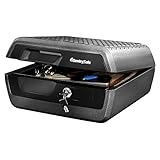
This long, low safe is shaped for papers that should stay flat: a stack of letter-size originals, a passport and an envelope of cash or spare keys. The listing gives exterior measurements of 16.5 inches wide and 14.8 inches deep, with the height truncated, and advertises both fireproof and waterproof construction with a key lock. A flat interior is easier on documents than a tall one because pages are not forced to curl.
- Exterior: 16.5 in wide by 14.8 in deep per the listing; confirm height and interior size
- Protection: fire and water resistance advertised in the listing name
- Lock: key lock
- Contents named: cash, passports, jewelry and documents
- Fire duration and classification: confirm on the product page
Pros
- Low profile fits under a bed or on a closet shelf
- Water protection helps if sprinklers or a burst pipe are the bigger worry
Cons
- Key operation only, with no keypad option
- Interior depth limits storage of binders or tall items
It suits flat paperwork better than the compact handled box, though it has no quick-carry design of its own.
4. SentrySafe 1-Hour Fireproof Safe, Digital Keypad – Best for a Permanent Home for Originals

This is the pick for anyone building a proper home archive: property deeds, vehicle titles, wills, insurance policies, birth certificates and passports. The listing describes a 1.2 cubic foot interior, a digital keypad and a UL-classified one-hour fire protection rating, which is the most formal fire claim of the six products in this guide. Because it is a full-size safe, it can hold letter-size folders upright or a stack of binders without bending anything.
- Capacity: about 1.2 cu ft per the listing; confirm the interior dimensions before you plan folder layout
- Fire protection: UL-classified one-hour rating as stated in the listing name
- Lock: digital keypad; check the listing for the backup key and battery details
- Form: floor or shelf unit that is heavy enough to resist casual carrying
- Water protection: not stated in the listing name, so confirm on the product page
Pros
- Formal fire-endurance classification rather than a marketing temperature
- Roomy enough for folders, binders and small valuables together
Cons
- Too large and heavy to carry out in an emergency
- Keypad locks depend on batteries and a backup key, so keep both current
Compared with the handled SentrySafe box, it offers far more room and a stronger rating, but it trades away portability.
5. DocSafe 5200°F Document Organizer Box, 8 Layers – Best for Lightweight Heat-Insulated Storage

The listing highlights a 5200°F figure, eight layers of heat-insulating material, a lock and fire-and-water resistance. That temperature describes what the material is claimed to withstand, not how long the inside of the box stays under paper-damaging temperatures, so treat it as a protective upgrade over an open file box rather than a stand-in for a UL-rated safe.
- Insulation: eight layers advertised in the listing
- Heat figure: 5200°F is a material claim; no duration is given in the listing name
- Lock: included, per the listing
- Portability: described as a portable organizer
- Water protection: listed as water resistant; confirm whether it resists splashes or submersion
Pros
- Light enough to move quickly
- Multilayer construction adds protection over a plain cardboard file
Cons
- No stated fire-endurance rating or duration
- Padlock-style security is modest, and the case is easy to carry away
Compared with the 13-pocket DocSafe, it puts the emphasis on insulation rather than built-in filing.
6. Fieetra Fireproof Document Box with Lock – Best for Passports and Certificates
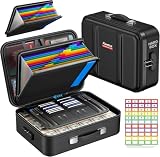
Fieetra describes this as a hard-case document box with a lock, water resistance and an organizer layout meant for passports, certificates and other important papers. It is a sensible option for a family that keeps a short stack of identity documents and wants them in one place without paying for a heavy safe. As with other cases in this group, the listing does not name a fire-endurance classification, so confirm the details before relying on it.
- Shell: hard case with a lock
- Protection: advertised as fireproof and water resistant
- Layout: organizer for passports and certificates, per the listing
- Rating: not stated in the listing name; confirm on the product page
- Size: confirm interior dimensions for letter-size pages
Pros
- Compact enough for a closet shelf or a suitcase
- Organizer layout keeps small documents from sliding around
Cons
- Less formal certification information than the SentrySafe models
- Limited capacity for bulky paperwork
It sits closest to the DocSafe cases and is the most passport-focused of the three.
Specs Compared
| Product | Type | Lock | Fire protection (per listing) | Water protection (per listing) | Size (per listing) |
|---|---|---|---|---|---|
| SentrySafe 1-Hour Fireproof Safe (STW123GDC) | Safe | Digital keypad | UL-classified one-hour rating | Confirm on listing | 1.2 cu ft |
| SentrySafe Fireproof Box with Handle | Chest-style box | Key lock | Confirm on listing | Confirm on listing | 0.25 cu ft; exterior starts 6.3 x 15 in |
| SentrySafe Fireproof and Waterproof Document Safe | Low-profile safe | Key lock | Fireproof; duration confirm on listing | Waterproof per listing name | Exterior 16.5 W x 14.8 D in; height confirm on listing |
| DocSafe Hard-Shell Organizer, 13 Pockets | Hard case with accordion file | Lock (type confirm on listing) | Fire-resistant; rating confirm on listing | Confirm on listing | 13 pockets; dimensions confirm on listing |
| DocSafe 5200°F Organizer Box | Insulated organizer box | Lock (type confirm on listing) | 5200°F material claim; 8 layers | Water resistant per listing name | Confirm on listing |
| Fieetra Fireproof Document Box | Hard case | Lock (type confirm on listing) | Fireproof per listing; rating confirm on listing | Water resistant per listing name | Confirm on listing |
How We Chose These
We started from the product set listed for this guide and compared what each listing states: lock type, size, fire and water claims, and whether a recognized rating is named. Products with a formal classification in the listing name ranked above products that cite only material temperatures. We then weighed storage shape, portability and how well each design fits common document needs such as passports, titles and folders. Where a listing does not name a value, we say so and ask you to confirm it on the product page. This is a research-based comparison built from listings and manufacturer information, not a laboratory ranking.
What to Look For
Understand What a Fire Rating Actually Means
Paper begins to char and become unreadable at roughly 350°F inside a container. Fire-rated safes are typically classified under UL 72, where a rating such as 350 for one hour means the interior stayed below that temperature for an hour of exposure to a rising furnace temperature. A listing that simply says “fireproof” or quotes a high exterior temperature, like 5200°F, does not tell you the interior temperature or how long it lasts. Look for a stated duration, such as 30 minutes, one hour or two hours, along with a named classification. A safe with a classification is meaningfully different from a case with insulation claims alone.
Size Your Safe by the Paper You Have
A ream of 500 sheets stands about two inches high, so a rule of thumb is that a folder holding 250 pages is roughly one inch thick. Suppose you keep six folders averaging one inch each, plus a passport pouch and a small flash drive. You need around six inches of stacked height, or a safe with a wide enough floor to stand folders upright. Always compare interior dimensions rather than exterior ones, because fire insulation takes up a large share of a safe’s outer size. Many safes show a cubic-foot figure, but a 0.25 cu ft box and a 1.2 cu ft safe differ more than the numbers suggest because of their shape.
Choose a Lock You Will Maintain
Key locks have no batteries to replace, but keys get lost and are often stored in the same drawer as the box. Digital keypads give quick access and let you change the code, though they rely on batteries, usually with an override key. Whichever lock you choose, put a calendar reminder to swap the batteries yearly and keep the backup key away from the safe. Keep in mind that lightweight cases can be carried off whole; if theft is a concern, a heavy safe that can be anchored to the floor is the better choice.
Think About Water, Magnetic Media and Digital Backups
Fire is only part of the risk. Sprinklers and fire hoses can soak a safe, so a listing with a water rating, often described by depth and time, matters if your papers sit near the ground floor. Digital media such as USB drives, hard drives and photos are damaged at far lower temperatures than paper, around 125°F inside the container, so check that a safe is rated for media if you plan to store them. The simplest backup plan is to scan key documents and store encrypted copies off-site or in secure cloud storage, then keep only originals that cannot be replaced in the safe. Using a combination of originals in a rated safe, copies elsewhere and digital scans offers the most resilient setup.
Rule of Thumb: Match the Container to the Value
Ask what it would take to replace each item. A passport can be replaced with time and fees, but a notarized deed or a family record might be difficult to recreate. Store the hardest-to-replace originals in the rated safe, keep working copies in an accessible folder, and place small portable items in a light grab box. If your home contains firearms or medications, follow local rules and keep those storage needs separate from document storage.
Where to Put It Once You Own It
Placement matters nearly as much as the rating. Heat rises, so a safe on a lower floor or in a basement closet generally sees less exposure than one in an upstairs bedroom, though a basement raises the flood question and makes a water rating more useful. Avoid the kitchen and utility room, where ignition risks are highest, and keep the safe away from exterior walls that could collapse inward. Store it where you can reach it within seconds, since a box you cannot find quickly is not much help during an evacuation. Write down the code or the key location in a separate secure place so another trusted family member can open it if needed.
Common Mistakes Buyers Make
The most frequent error is buying by exterior size and discovering that the usable interior is much smaller. The second is assuming that any product labeled fireproof carries a rating, when many only describe insulation. A third is overfilling a case so that the lid presses on the contents, which can compromise the seal that provides protection. Finally, many owners forget to update the contents after major life events such as a move, a new vehicle or a change in insurance. Treat the safe as a living archive and revisit it on a regular schedule.
Fireproof Does Not Mean Theft-Proof
Fire-rated boxes use insulation to protect contents, and that insulation does not make the lock or the walls hard to break into. A lightweight case with a small lock can be pried open or simply carried away, which is why important originals sometimes belong in a heavy safe that is bolted down. If theft is a bigger worry than fire, look for thicker steel, live-locking bolts and a mounting option, or consider a bank safe-deposit box for the rarest items. Keep the location of the safe out of casual conversation and avoid placing it where visitors might see it. For most households, a layered approach works best: a rated safe for originals, a portable case for the essentials, and secure digital copies stored elsewhere.
Questions
Is a fireproof bag or case as good as a rated safe?
Not usually. A rated safe has a named classification and duration, while most cases and bags list only material claims. Cases are useful for light protection and portability, but a rated safe is the more dependable choice for irreplaceable originals.
What documents belong in a fireproof safe?
Store items that are difficult or slow to replace: birth and marriage certificates, passports, property deeds, vehicle titles, wills, insurance policies and tax records. Keep a list of what is inside, and keep copies somewhere else. Everyday paperwork can stay in a regular file cabinet.
Do fireproof safes protect against water?
Only if the listing says so. Fire and water ratings are separate, and a safe can resist one without the other. If a product does not state a water rating, confirm it on the product page rather than assuming protection.
Can I store USB drives and photos in a document safe?
Only if the safe is rated for digital media. Paper tolerates higher temperatures than USB drives, discs and hard drives, so a document-rated safe may not protect them. Keep encrypted backups in a separate location as well.
Should I bolt the safe down?
If theft is a concern, yes, anchoring a heavy safe to a floor or wall stud makes it much harder to remove. For fire protection alone, the weight of a full-size safe already keeps it in place. Lightweight boxes are easier to steal, so place them out of sight.
How often should I check what is inside?
Review the contents once a year, replace keypad batteries, and refresh any documents that have expired. A yearly check also gives you a chance to update copies and confirm the key or code still works.
Update History
- October 20, 2026 – Initial publication; product set drawn from current catalog listings.
- Check the product page for current specifications and availability before buying.
Sources
- Manufacturer product and specification pages for SentrySafe and DocSafe
- Retailer listing titles and specification fields for each product
- UL 72 fire-endurance classification guidance, for how fire ratings are defined

Write Your Review
No reviews yet. Be the first to share your experience!