

Key takeaways
- Electronic keypad: Usually the best balance for frequent access. Choose a model with a mechanical override, low-battery warning, nonvolatile code memory, and a keypad that works with a gloved finger if necessary. Replace batteries on a schedule rather than waiting for failure.
- Mechanical combination: A durable option with no batteries or circuit board. It requires deliberate dialing and can be inconvenient in darkness or an emergency. Buy from a manufacturer that specifies a certified lock rather than merely calling it “mechanical.”
- Biometric: Convenient when it works, but fingerprints can be rejected by moisture, dirt, cuts, gloves, or a depleted battery. Treat it as a convenience layer, not the only reason to choose a safe. A keypad or key override is important.
- Keyed lockboxes: Appropriate for simple transport or limited storage, but a portable pistol box is not equivalent to a heavy burglary-resistant safe. A cable is useful against casual theft, not a determined attack.
Best Gun Safes for Secure Home Storage
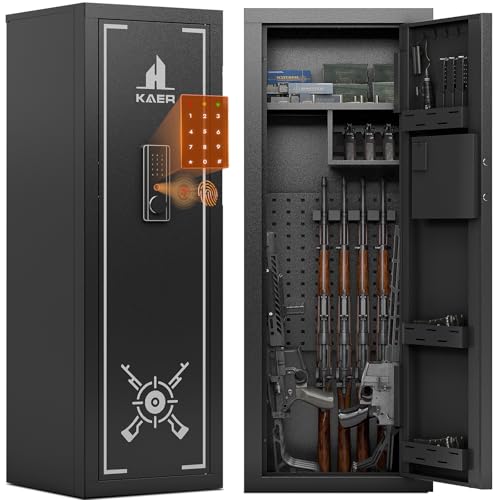
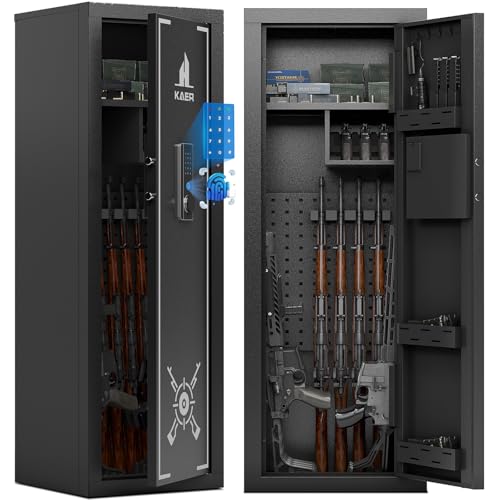
The best gun safe for most homes is a UL-listed or independently certified steel safe with a real fire rating, a dependable electronic or mechanical lock, enough interior width for your actual collection, and solid anchoring to the floor or wall. A small handgun safe suits quick access and one or two pistols; a full-size 30- to 40-long-gun safe is the better choice for rifles, shotguns, optics, and ammunition.
Best gun safes by situation
| Situation | Most suitable safe | Useful target specifications | Why it fits |
|---|---|---|---|
| One or two handguns in a bedroom | Steel pistol safe with approved quick-access lock | 8–14 gauge steel, 5–20 lb, 0.2–0.5 cubic feet | Compact and easy to anchor, while keeping unauthorized users out |
| Small collection in an apartment | Compact upright safe or cabinet | 12–14 gauge steel, 25–45 long-gun capacity, 100–250 lb | Uses less floor space; check building rules and transport limitations |
| Several rifles and shotguns with optics | Wide fire-rated rifle safe | 10–12 gauge steel, 60–72 inches high, 30–42 inches wide | Extra width prevents scoped firearms from consuming two nominal slots |
| Growing collection and ammunition storage | Heavy full-size safe with adjustable shelving | 600–1,000 lb, 60–90 minute fire rating, 12–24 cubic feet | More useful capacity and better resistance to tipping and forced entry |
| Frequent access without batteries | Mechanical combination lock | UL-listed Group 2M or equivalent certified lock | No battery maintenance, though opening is slower and combinations require practice |
What separates a serious safe from a locking cabinet?
Product listings often emphasize the number of rifles a cabinet can hold. That number is usually optimistic: it assumes thin, bare firearms with no scopes, slings, suppressors, cases, or shelving. Construction and installation matter more than the advertised capacity.
Our top picks


As an Amazon Associate we earn from qualifying purchases at no extra cost to you. Ratings are shown as listed on Amazon.
Steel thickness and door construction
Many residential gun safes use a steel body with a thicker door, reinforced locking side, and multiple steel bolts. Gauge numbers can be confusing because a smaller gauge number generally indicates thicker steel. As a practical comparison, 14-gauge steel is about 0.075 inches thick, 12-gauge is about 0.105 inches, and 10-gauge is about 0.135 inches, although painted finishes and composite door structures complicate direct comparisons.
A burglary-resistant safe should have more than a thin sheet-metal shell, exposed hinges, or a simple tubular latch. Look for protected hinge-side bolts, anti-pry door overlap, hardened components around the lock, and a door that cannot be removed when open or closed. These features do not make a safe invulnerable, but they increase the time, noise, and tools required to attack it.
Fire ratings: compare the test, not just the minutes
A “90-minute fire rating” is meaningful only when the manufacturer identifies the test conditions and certification. Common claims refer to maintaining an interior temperature below approximately 350°F during a furnace test at a stated external temperature. Paper documents and many household contents can be damaged well below the temperature at which steel fails, so fire protection is not the same as guaranteed protection for every item.
For ordinary home storage, a verified 60- to 90-minute rating is a sensible target. A 120-minute rating can be worthwhile when the safe is in a garage, near a kitchen, or in a densely built neighborhood, but it usually adds substantial weight and cost. Check the rating for the complete safe rather than assuming that an insulated door alone protects the contents.
Electronic, mechanical, and biometric locks
- Electronic keypad: Usually the best balance for frequent access. Choose a model with a mechanical override, low-battery warning, nonvolatile code memory, and a keypad that works with a gloved finger if necessary. Replace batteries on a schedule rather than waiting for failure.
- Mechanical combination: A durable option with no batteries or circuit board. It requires deliberate dialing and can be inconvenient in darkness or an emergency. Buy from a manufacturer that specifies a certified lock rather than merely calling it “mechanical.”
- Biometric: Convenient when it works, but fingerprints can be rejected by moisture, dirt, cuts, gloves, or a depleted battery. Treat it as a convenience layer, not the only reason to choose a safe. A keypad or key override is important.
- Keyed lockboxes: Appropriate for simple transport or limited storage, but a portable pistol box is not equivalent to a heavy burglary-resistant safe. A cable is useful against casual theft, not a determined attack.
For a safe that several authorized adults use, an electronic keypad generally creates fewer access problems than a shared mechanical combination. For a safe opened only occasionally, a mechanical lock avoids battery neglect. Whichever type you select, confirm that the lock has a recognized certification and that replacement parts or service are available.
Capacity: calculate for the collection you will actually store
Start with the largest firearm and measure from the muzzle to the furthest protruding accessory. Then measure the usable shelf or barrel-rack width, not the outside width. A scoped rifle may require 3 to 4 inches of horizontal space, while a bare rifle might fit in 2 inches. Shotguns with pistol grips, lever actions, suppressors, and wide recoil pads can need still more room.
A useful planning rule is to buy at least 50% more nominal capacity than your present long-gun count. If you own eight rifles and expect to add two more, a safe advertised for at least 15 to 20 long guns is more realistic than an “8-gun” cabinet. Remove or reposition factory shelves if they block long-gun storage, and check that the interior height accommodates optics without forcing the firearm against the ceiling.
Do not store ammunition in a way that prevents the door from closing or blocks the locking mechanism. A separate locking ammunition container can make organization and weight distribution easier. Follow local requirements and the ammunition manufacturer’s storage guidance.
Mounting is part of security
A heavy safe is harder to steal, but weight alone does not prevent a burglar from tipping or moving it. Anchor an upright safe through its predrilled holes into a suitable concrete slab or structural wood framing. Use hardware appropriate to the substrate and follow the manufacturer’s instructions; an anchor placed only in flooring underlayment may provide little resistance.
Before drilling, check for wiring, plumbing, radiant heating, and post-tension cables. In a rental property, obtain permission and consider a professionally installed solution. Place the safe where the door can open fully, the keypad is reachable, and the route to the location does not require turning the safe sideways through a stairwell. A safe that cannot be delivered or opened comfortably is a poor purchase regardless of its specifications.
Representative price and ownership expectations
| Safe category | Typical market range | Common first-year maintenance | Important limitation |
|---|---|---|---|
| Portable pistol lockbox | $40–$180 | Battery replacement if electronic; inspect cable and hinge | Limited burglary resistance and capacity |
| Small upright safe | $250–$700 | Battery, bolt lubrication, anchor inspection | Nominal long-gun capacity may be much higher than practical capacity |
| Mid-size fire-rated safe | $700–$1,800 | Lock battery, gasket inspection, bolt lubrication, dehumidifier upkeep | Often too narrow for many scoped firearms |
| Large reinforced safe | $1,500–$4,000 or more | Professional delivery, anchoring, humidity control, lock service | Very heavy; floor loading and delivery route must be evaluated |
The components most likely to need attention are batteries, keypad covers, door gaskets, hinge lubrication, and internal power supplies. A dehumidifier rod can reduce condensation in a large safe, but it needs a nearby power source and should not be positioned where it can contact stored items. In humid areas, use a hygrometer and aim for a stable, moderate interior environment rather than relying on a desiccant pack indefinitely.
Setup checklist after delivery
- Confirm that the safe arrived without a bent door, damaged seal, or misaligned boltwork.
- Change any factory code or combination before storing anything.
- Test the lock repeatedly with the door open. Never experiment with a new combination while the door is closed.
- Anchor the safe to an appropriate structural surface.
- Arrange firearms so that optics, magazines, and accessories do not interfere with the door or bolts.
- Record the model, serial number, combination recovery instructions, and warranty information in a secure location separate from the safe.
- Inspect the safe twice a year, replace batteries proactively, and verify that authorized users still know the opening procedure.
Bottom line
Choose a compact quick-access pistol safe for a small handgun collection, a certified fire-rated upright safe for several firearms, and a wide, heavily constructed safe when optics and future purchases matter. Give greater weight to verified fire testing, steel and bolt construction, practical interior dimensions, certified lock quality, and proper anchoring than to headline capacity. The safest storage setup is one that remains locked from unauthorized users, is accessible to the authorized owner, and is maintained consistently over its service life.




Write Your Review
No reviews yet. Be the first to share your experience!