

Key takeaways
- Keep the door seal clean. Dust and adhesive residue can prevent a fire seal from closing evenly. Wipe it with a dry or slightly damp cloth and avoid solvents unless the manufacturer permits them.
- Lubricate only approved parts. Oil in an electronic keypad or lock cylinder can attract grit. Follow the lock maker’s maintenance instructions; many bolt mechanisms need only occasional suitable lubricant.
- Inspect batteries and hinges. Battery leakage, loose hinge screws and sagging doors are common causes of lockouts or poor sealing.
- Avoid overloading shelves. Excess weight can bend shelf supports, obstruct bolt travel or pull the safe out of alignment.
- Expect a lockout procedure to cost money. Keep the model, serial number and ownership documentation. Forced entry by a locksmith can damage the safe and may void a warranty.
- Keep an inventory. Photograph valuables and record serial numbers separately from the safe. A safe protects the objects; it does not automatically document ownership for insurance or recovery.
The best home safes match the threat you are trying to manage: choose a fire-rated document safe for records, a burglary-resistant steel safe with a certified lock for valuables, or a purpose-built gun safe for firearms rather than expecting one compact box to do every job well.
Our top picks


As an Amazon Associate we earn from qualifying purchases at no extra cost to you. Ratings are shown as listed on Amazon.
Best home safes by situation
| Situation | Best safe type | Useful target specifications | Why it fits |
|---|---|---|---|
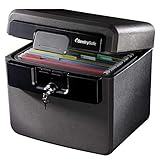
| Small budget and occasional access | Portable fire-resistant document safe | 30-minute fire rating, 14–16 gauge body, key or electronic lock | Affordable protection for passports, birth certificates and backup drives |
| Regular access to jewelry and cash | Bolted home burglary safe | 12–14 gauge steel, two or more live bolts, pry-resistant door, 0.8–2.0 cubic feet | Heavier construction and anchoring make theft more difficult |
| Several firearms and accessories | Full-size gun safe | 12–10 gauge steel, UL-listed or comparable electronic lock, 60–90 minute fire rating | Provides organized storage, stronger anchoring and room for compliant firearm separation |
| Apartment or frequent relocation | Compact steel safe | 14–16 gauge steel, under 50 pounds, pre-drilled mounting holes | Manageable to install without sacrificing basic lockout and theft resistance |
| Fast access to a bedside firearm | Purpose-built quick-access handgun safe | Steel enclosure, tether or mounting option, tamper alarm, mechanical backup entry | Designed for controlled access while reducing unauthorized handling |
Fire ratings: what the number actually tells you
A fire rating usually states how long the safe can keep its interior below a specified temperature during a standardized test. A common document-safe rating is 30 minutes at approximately 1,550°F, while larger safes may offer 60, 90 or 120 minutes. The rating is not a promise that the safe will survive every house fire; heat exposure, fire duration, smoke, water and the safe’s position in the building all matter.
Paper ignites at roughly 350°F, so document safes are designed to keep their interiors much cooler than the surrounding fire. Media have different requirements: magnetic tapes, some optical discs and hard drives can be damaged at temperatures that paper tolerates. If digital backups matter, look for a media-specific rating rather than assuming a paper rating is sufficient.
Check whether a claimed rating comes from a recognized test standard, such as UL 72 for records protection, and distinguish that from vague phrases such as “fireproof.” Fire-resistant insulation also adds weight and can make the door seal harder to maintain. A safe with a damaged or compressed seal may no longer perform as intended.
Lock types: security versus convenience
Mechanical combination locks
Mechanical dial locks do not need batteries and can provide long service with little routine maintenance. They are slower to open, especially in darkness, and changing the combination normally requires a locksmith or manufacturer procedure. They are a strong choice for valuables accessed infrequently.
Electronic keypad locks
Electronic locks are quicker for regular access and commonly allow one primary code plus temporary or secondary codes. Look for a protected keypad, an audit trail if accountability matters, low-battery warning, and external emergency power contacts. A battery override does not necessarily mean the safe can be opened without the correct code; it should only restore power.
Use fresh alkaline batteries from a reputable manufacturer and replace them before their expected end of life. Do not store the emergency key inside the safe. Keep it in a discreet, separately secured location, because an obvious key hiding place can defeat the lock.
Biometric locks
Fingerprint entry is convenient, but performance can vary with wet, dirty or injured fingers and with inexpensive sensors. Prefer a model that stores multiple fingerprints, offers keypad or mechanical backup entry, and records failed attempts. Biometric access should supplement, not replace, a physically strong safe and careful code management.
Steel gauge, bolts and burglary resistance
Steel gauge runs backward: a lower number means thicker steel. A 10-gauge panel is thicker than a 14-gauge panel. Many compact home safes use 14- to 16-gauge steel, which can deter casual theft but is not equivalent to a heavy burglary safe. For meaningful resistance to prying and cutting, look for 12-gauge or thicker steel, reinforced door edges, concealed hinges and multiple steel bolts.
| Safe construction | Approximate steel thickness | Typical use | Ownership trade-off |
|---|---|---|---|
| 16 gauge | About 0.060 inch | Portable document or small personal safe | Light and economical, but vulnerable to determined cutting or prying |
| 14 gauge | About 0.075 inch | Basic anchored home safe | Better resistance while remaining manageable to install |
| 12 gauge | About 0.105 inch | Higher-security valuables safe or entry-level gun safe | Heavier, stronger and usually more expensive |
| 10 gauge | About 0.135 inch | Heavy-duty gun or burglary-resistant safe | Substantially heavier; delivery and floor loading need planning |
Gauge alone is not a complete security rating. A thick front door cannot compensate for a thin body, weak boltwork, exposed hinges or an unanchored cabinet. A 200-pound safe that can be carried away may provide less practical protection than a smaller safe firmly bolted to structural framing or a concrete floor.
Interior capacity: size for the items you will add later
Manufacturers describe capacity in cubic feet, but usable space is reduced by insulation, shelves, door hardware and boltwork. Measure the largest item and the doorway before buying. A letter-size document folder needs an interior width of at least 12 inches, while legal-size folders need roughly 15 inches. Allow extra depth for protective sleeves and the door’s internal shelving.
For firearms, measure the actual overall length with the optic, muzzle device, sling hardware and magazine inserted if that is how you store the firearm. A safe advertised for a certain number of long guns often assumes slim, unscoped firearms with no accessories. A practical planning rule is to use only 60–70% of the stated gun capacity when rifles have optics or bulky stocks.
For example, a safe advertised for 24 long guns may realistically hold 14–16 equipped rifles without crushing scopes or blocking access. Shelving that can be removed or repositioned is more useful than a larger nominal capacity.
Firearm-safe selection and installation
Choose a purpose-built firearm safe with protected boltwork, a reliable lock, interior racks that prevent muzzle damage, and enough space to keep firearms unloaded and separated as required by local law. A small handgun safe is not a substitute for a full-size safe when several firearms, ammunition or children’s-access concerns are involved.
-
Confirm the location. Choose a dry area away from routine public view. Check floor loading for heavy safes and avoid locations where floodwater commonly collects.
-
Find structural material. Use the manufacturer’s specified anchors in concrete or structural wood, not only drywall or thin flooring.
-
Anchor before filling. A safe is easiest to move and align while empty. Tighten anchors evenly so the door does not shift out of alignment.
-
Set and record access procedures. Program codes with the door open, test them several times, and store the emergency key separately. Do not use a birth date or address.
-
Control humidity. In damp locations, use a safe dehumidifier or desiccant according to the manufacturer’s instructions, particularly for firearms and paper.
Brands and product categories worth comparing
SentrySafe and Honeywell offer recognizable compact fire-resistant and personal-security safes. Yale sells electronic home safes in several formats. Vaultek is known for compact quick-access and portable handgun safes. Liberty Safe and Browning Safe Company are established names in larger gun-safe categories. These brands span different construction levels, so compare the exact model’s steel gauge, certification, lock supplier, boltwork and anchoring provisions rather than choosing by brand alone.
Ownership realities that affect long-term security
- Keep the door seal clean. Dust and adhesive residue can prevent a fire seal from closing evenly. Wipe it with a dry or slightly damp cloth and avoid solvents unless the manufacturer permits them.
- Lubricate only approved parts. Oil in an electronic keypad or lock cylinder can attract grit. Follow the lock maker’s maintenance instructions; many bolt mechanisms need only occasional suitable lubricant.
- Inspect batteries and hinges. Battery leakage, loose hinge screws and sagging doors are common causes of lockouts or poor sealing.
- Avoid overloading shelves. Excess weight can bend shelf supports, obstruct bolt travel or pull the safe out of alignment.
- Expect a lockout procedure to cost money. Keep the model, serial number and ownership documentation. Forced entry by a locksmith can damage the safe and may void a warranty.
- Keep an inventory. Photograph valuables and record serial numbers separately from the safe. A safe protects the objects; it does not automatically document ownership for insurance or recovery.
Bottom line
For passports and paper records, prioritize a verified fire rating and usable folder dimensions. For jewelry, cash and small valuables, prioritize thicker steel, pry-resistant construction, quality boltwork and anchoring. For firearms, select a purpose-built safe sized around the equipment you actually own, with secure installation and compliant access control. The best home safes are not necessarily the largest or most expensive; they are the ones whose fire protection, lock, steel construction and capacity match the risks and habits of your household.


Write Your Review
No reviews yet. Be the first to share your experience!