

Key takeaways
- For a small apartment: Choose a compact UL 72 Class 350 document safe with a 30- to 60-minute rating, a removable shelf, and a mounting plan that does not depend on hiding it. Keep the weight low enough for safe delivery, but anchor it to a suitable structural point.
- For a family home: A 0.8-to-1.5-cubic-foot model with a 60- or 90-minute paper rating is a practical balance. Prioritize folders and shelf layout over a large jewelry compartment if documents are the main concern.
- For a home office: Select a 60-minute-or-longer Class 350 safe with space for current files and growth. If it stores digital backups, add a Class 125 media compartment or use a separate media-rated container.
- For a small business: Use a heavier, anchored cabinet with adjustable shelves and a documented fire rating. Consider a burglary rating separately if cash, controlled keys, or high-value equipment will be stored.
- For frequent access: An electronic keypad can be convenient, but retain the emergency key or override procedure securely and replace batteries before they fail. A mechanical combination lock avoids batteries but takes more practice to operate.
The best fireproof safes for most homes and offices are UL 72 Class 350 models with at least a 60-minute fire rating, enough interior capacity for documents without forcing overpacking, and a design that can be anchored where its weight alone will not prevent removal.
The right choice depends less on the word “fireproof” on the box than on three practical questions: what must remain below a safe temperature, how much you need to store, and whether the safe can be carried away before firefighters arrive. A compact document safe may suit an apartment, while an office handling contracts, personnel records, and backup drives usually needs a larger, heavier cabinet or a dedicated fire-rated records room.
Our top picks


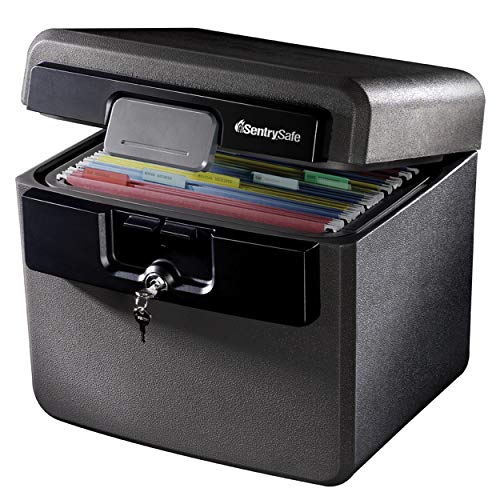
As an Amazon Associate we earn from qualifying purchases at no extra cost to you. Ratings are shown as listed on Amazon.
What a UL fire rating actually tells you
UL 72 is the important standard for record-protection equipment. It evaluates a safe’s ability to limit interior temperature during a controlled fire exposure, along with resistance to impact and explosion hazards in applicable tests. The rating is not a promise that the contents will survive every real-world fire, nor does it describe burglary resistance.
| Rating or label | Designed to protect | Typical maximum interior temperature | Best use |
|---|---|---|---|
| UL 72 Class 350 | Paper documents | 350°F (177°C) | Passports, deeds, contracts, certificates |
| UL 72 Class 150 | Temperature-sensitive media | 150°F (66°C) | Some film, older media, and specialized records |
| UL 72 Class 125 | Computer media and data storage | 125°F (52°C) | Magnetic media and selected electronic storage |
| Unrated “fire-resistant” box | Varies by manufacturer | Not independently established by the label alone | Short-term, lower-consequence storage only |
For ordinary paper, Class 350 is usually the relevant benchmark. USB drives, external hard drives, memory cards, and other digital media can require lower-temperature protection than paper. A Class 350 safe should not automatically be treated as suitable for every digital backup.
Look for a complete certification statement rather than a vague “two-hour fireproof” claim. Confirm the testing organization, protected contents class, duration, and whether the rating applies to the whole safe or only a separate media compartment. Fire duration is normally stated as 30, 60, 90, or 120 minutes. A longer rating can be useful, but construction quality, installation, and the fire’s location also affect the outcome.
Capacity: choose by documents, not exterior dimensions
Safe capacity is commonly expressed in cubic feet. Calculate usable volume from the interior measurements:
Width × depth × height ÷ 1,728 = cubic feet.
For example, an interior measuring 14 by 12 by 10 inches provides 1,680 cubic inches, or about 0.97 cubic feet. Shelves, door pockets, drawer mechanisms, and thick insulation reduce practical capacity, so a published interior volume is more useful than the exterior size but still does not tell the whole story.
As a planning guide, a 0.3-to-0.6-cubic-foot safe can hold essential household papers if they are stored in folders rather than bulky binders. A 0.8-to-1.5-cubic-foot model is more comfortable for a family’s records, several passports, insurance files, and small valuables. Offices should generally start around 1.5 cubic feet for a small number of critical files and move to 2.5 cubic feet or more when multiple employees, clients, or years of records are involved.
Do not fill every inch. Fire insulation works as a system, and tightly packed contents can make retrieval difficult and encourage the door to remain open. Leave room for folders, an inventory envelope, and approximately 15% to 20% future growth.
Comparison by size, weight, and anchoring requirement
| Safe type | Typical usable capacity | Typical weight | Good location | Anchoring advice |
|---|---|---|---|---|
| Portable document box | 0.15–0.35 cu. ft. | 15–35 lb | Closet shelf or low cabinet | Strongly recommended; carry-away risk is high |
| Compact home safe | 0.35–0.8 cu. ft. | 40–90 lb | Bedroom closet or interior room | Anchor to wall studs or floor where permitted |
| Mid-size fire-rated safe | 0.8–1.8 cu. ft. | 90–220 lb | Home office or secured utility room | Use manufacturer-specified anchors; verify floor loading |
| Large office record safe | 2–6 cu. ft. | 250–700+ lb | Commercial office or records room | Professional delivery and installation are often worthwhile |
Weight is not a substitute for anchoring. A 70-pound safe may be difficult for one person to carry, but two people with a dolly can remove it. A 300-pound safe is harder to steal, yet it may still be tipped, dragged, or attacked if it is not secured. Anchoring also reduces the chance of injury from tipping.
Before buying, check whether the safe is designed for floor or wall attachment. Some fire-rated models cannot be drilled anywhere except designated anchor points because drilling can compromise insulation or the fire seal. In a rented property, ask the landlord before drilling. For a heavy office safe, have the installer confirm doorway width, stair access, elevator capacity, floor loading, and the final anchoring surface.
Best choices by situation
- For a small apartment: Choose a compact UL 72 Class 350 document safe with a 30- to 60-minute rating, a removable shelf, and a mounting plan that does not depend on hiding it. Keep the weight low enough for safe delivery, but anchor it to a suitable structural point.
- For a family home: A 0.8-to-1.5-cubic-foot model with a 60- or 90-minute paper rating is a practical balance. Prioritize folders and shelf layout over a large jewelry compartment if documents are the main concern.
- For a home office: Select a 60-minute-or-longer Class 350 safe with space for current files and growth. If it stores digital backups, add a Class 125 media compartment or use a separate media-rated container.
- For a small business: Use a heavier, anchored cabinet with adjustable shelves and a documented fire rating. Consider a burglary rating separately if cash, controlled keys, or high-value equipment will be stored.
- For frequent access: An electronic keypad can be convenient, but retain the emergency key or override procedure securely and replace batteries before they fail. A mechanical combination lock avoids batteries but takes more practice to operate.
Fire protection is not burglary protection
Many buyers treat “fireproof” and “secure” as interchangeable. They are not. A fire rating concerns heat exposure and the survival of specified contents. Burglary resistance concerns steel thickness, bolt design, attack tools, lock protection, relock mechanisms, and independent security classifications.
If the safe will contain cash, firearms, medication, business checks, or valuable jewelry, compare burglary and access features separately. A light fire box with a basic key lock may protect papers from heat but offer little resistance to forced entry. For firearms, follow applicable local storage laws and use a purpose-designed, access-controlled container rather than relying on a document safe.
Installation and maintenance that affect real-world performance
- Measure the route, not just the cabinet. Record door, hallway, stair, elevator, and closet dimensions. Add clearance for the door swing and ventilation requirements.
- Choose a low-risk location. An interior room away from windows may reduce exposure to weather and opportunistic theft. Avoid damp basements unless the area is suitable for the safe’s corrosion protection.
- Anchor according to the manual. Use the specified fasteners and substrate. Do not drill through the door, hinges, fire barrier, or an unapproved panel.
- Organize by retrieval frequency. Put passports and emergency documents in a front folder. Store rarely used deeds and archives behind them, without blocking the door gasket.
- Inspect twice a year. Check the door seal for cuts or compression damage, test the lock, remove dust from the jamb, and replace keypad batteries on a schedule rather than waiting for a low-battery warning.
- Control moisture. Use a small desiccant product if the manufacturer permits it, and avoid storing wet papers. Open the safe periodically in humid climates to inspect for condensation or corrosion.
The door gasket and lock batteries are often the first user-serviceable items to wear. Hinges can sag when an overloaded door shelf is used, and shelves may bend under binders. Never store heavy objects in the door unless the manual gives a load limit. After a fire, flood, forced-entry attempt, or major impact, do not assume the safe remains fire-rated; have it assessed or replace it.
Bottom line
For most households, the best fireproof safes are properly certified UL 72 Class 350 models with a 60-minute rating, roughly 0.8 to 1.5 cubic feet of usable capacity, and secure anchoring. Choose a lower-temperature media rating for digital storage, size the interior for future growth, and treat burglary resistance as a separate buying decision. The most dependable safe is the one whose rating matches its contents, whose capacity fits the records, and whose installation prevents both removal and unsafe tipping.


Write Your Review
No reviews yet. Be the first to share your experience!