

Key takeaways
- For a small home, start with a foldable basin whose interior dimensions fit your feet and whose empty weight is easy to manage. For frequent use, a heated model with a clear temperature control and a practical drain is worth considering. Choose rollers only if…
Best foot baths: choose a roomy basin with dependable heat retention and rollers you’ll actually use
The best foot baths balance enough interior space for your feet, manageable weight when filled, and a smooth path for emptying and cleaning; for most people, a foldable basin with adjustable warmth and optional rollers is the most practical choice. If you want a simple soak, prioritize capacity and easy draining over extra massage features. If you want active massage, check that the rollers fit your feet comfortably and can be removed or cleaned around.
Compare the main types before you buy
Product specifications vary, and many makers don’t publish interior dimensions or usable water capacity. The figures below are typical shopping ranges, not measurements of one specific model. Confirm the fill line and dimensions on the model you’re considering.
Our top picks


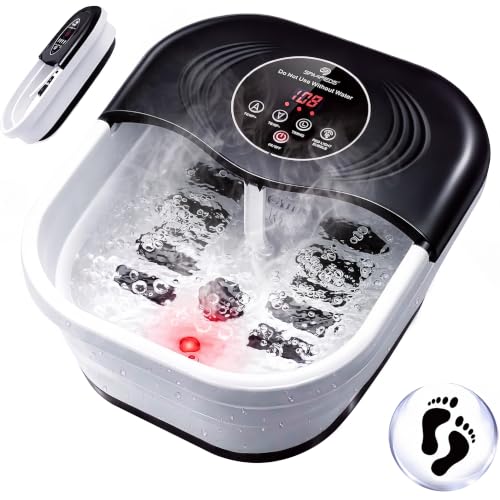

As an Amazon Associate we earn from qualifying purchases at no extra cost to you. Ratings are shown as listed on Amazon.
| Type | Typical interior length | Typical usable capacity | Heat approach | Best fit |
|---|---|---|---|---|
| Basic collapsible basin | 35–40 cm (14–16 in) | 8–12 L (2.1–3.2 gal) | Warm water cools naturally | Small storage spaces and occasional soaking |
| Heated basin with rollers | 36–42 cm (14–16.5 in) | 10–15 L (2.6–4 gal) | Thermostat maintains or gently warms water | Regular soaks and people who enjoy rolling massage |
| Deep, non-collapsible spa basin | 38–45 cm (15–18 in) | 12–18 L (3.2–4.8 gal) | May include water heating or temperature control | More legroom and a dedicated storage spot |
| Compact foot soak tub | 30–35 cm (12–14 in) | 5–8 L (1.3–2.1 gal) | Usually no heating | Minimal storage, provided the fit is comfortable |
Pick by your room, routine, and comfort preferences
| Your situation | What to prioritize | A sensible choice |
|---|---|---|
| Tight storage or a shared bathroom | Folded height, low empty weight, and a stable base | Collapsible basin, with rollers only if they detach or fold away |
| Frequent soaks | Temperature control, a smooth interior, and simple drainage | Heated basin with a clear fill line and accessible drain |
| Wide feet or a larger shoe size | Interior floor width and length, not outer dimensions | Roomy, deep basin; check the manufacturer’s internal measurements |
| New to foot baths or unsure about massage | Easy returns, removable rollers, and uncomplicated controls | Basic basin or a model with optional, low-profile rollers |
| Limited grip or difficulty lifting a full basin | Drain hose, low fill volume, and a stable placement location | Lightweight basin with a drain; avoid carrying it full |
What matters most when comparing features
Basin size: check your feet, not just the product footprint
Outer dimensions include the walls and controls, so they don’t tell you how much room your feet have. Look for interior length and width, then compare them with the length of your foot and the space needed to move it. A useful fit check is to add roughly 2–3 cm (about 1 in) to your foot length and allow a little extra width for relaxed positioning. This is a starting point, not a guarantee: molded massage bumps can take up usable floor space.
If a listing omits interior measurements, ask the seller or manufacturer before buying. A basin that technically fits but presses the toes against one end can make a soak uncomfortable, especially when rollers or raised ridges limit movement.
Heat retention: distinguish warming from maintaining warmth
“Keeps water warm” can mean different things. A basic basin retains heat for a while but cannot replace heat lost to the room. A heated model uses electricity to regulate or raise water temperature, though performance depends on the starting temperature, water volume, room temperature, and the unit’s controls. Check whether the product specifies a temperature range, a maintain-only setting, or a heating function—and whether it requires adding warm water to start.
Use water within the manufacturer’s stated range, and don’t assume a display guarantees that the temperature is comfortable for you. People with reduced ability to sense heat should ask a healthcare professional about safe use and check water temperature carefully.
Massage rollers: comfort is personal
Fixed rollers can be a useful extra, but they aren’t right for everyone. Prominent or closely spaced rollers may feel intense underfoot; smoother, removable rollers are easier to skip or clean. Check whether rollers turn freely, whether they’re powered or simply move when your feet press them, and whether the basin can be used without them. Treat the massage function as an optional comfort feature, not a substitute for professional care.
Drainage and cleaning are part of the buying decision
Water becomes heavy quickly: 10 L (about 2.6 gallons) weighs approximately 10 kg (22 lb), before adding the basin. A low drain port or hose can make emptying safer than lifting and tipping the unit. Check where the drain empties, whether a stopper is included, and whether the hose reaches a suitable sink or floor drain. A drain still needs to be positioned close enough to the outlet; it won’t eliminate every lift.
Setup and care: a five-step routine
-
Choose a level, water-safe spot. Set the basin near an outlet only if the manufacturer permits it, and keep plugs and connections away from splashes.
-
Inspect before filling. Check the cord, plug, basin, drain, and seals for damage. Don’t use an electrical unit if any component is cracked or frayed.
-
Fill to the marked line. Avoid overfilling; water can spill when feet enter or when rollers move. Follow the manual’s instructions on water temperature and additives.
-
Unplug before emptying or cleaning. Let the unit cool as directed, then use its drain or carefully empty it without straining. Never submerge an electrical base unless the instructions explicitly allow it.
-
Rinse, dry, and store open. Remove debris around rollers and drain, wipe the interior, and let the basin dry fully before folding or storing it. Trapped moisture can lead to odors and mildew.
Ownership details that can save frustration
Rollers, drain stoppers, hose connections, and folding joints are common wear points because they’re repeatedly moved, exposed to water, or compressed in storage. Before purchase, check whether replacement parts are available and whether the warranty covers the heating element separately from the basin. Don’t force a collapsible basin flat if it resists; repeated bending beyond its designed fold can weaken seams.
Use only cleaning products allowed by the manufacturer. Oils, salts, and bath additives can leave residue, clog drains, irritate skin, or damage certain plastics and seals. If additives are permitted, rinse the basin promptly after each use rather than leaving residue to dry around the rollers.
Bottom line
For a small home, start with a foldable basin whose interior dimensions fit your feet and whose empty weight is easy to manage. For frequent use, a heated model with a clear temperature control and a practical drain is worth considering. Choose rollers only if they feel comfortable in principle, can be bypassed when needed, and won’t make the basin harder to clean. The best fit is the one you can fill, empty, dry, and store without turning a relaxing soak into a chore.

Write Your Review
No reviews yet. Be the first to share your experience!