

Our Top Picks

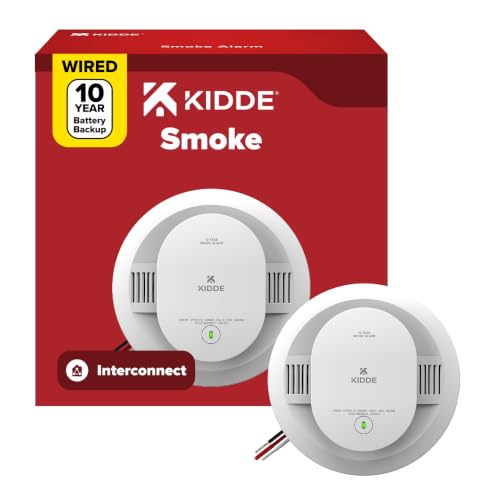


The best hardwired smoke detectors for most houses are the First Alert SM300-AC for dual-sensor coverage, the Kidde i12010SCO for a voice-alert smoke and carbon monoxide combo, and the Kidde 20SA10 for a smoke-only unit with a sealed 10-year lithium backup battery. The right pick depends less on brand prestige than on three practical facts: whether your existing ceiling boxes use a compatible wiring harness, which brand already sits on your interconnect circuit, and whether you need carbon monoxide sensing in the same housing.
A hardwired alarm runs on 120-volt household power, keeps a battery as backup during an outage, and talks to its neighbors over a dedicated interconnect wire so that one alarm triggers every alarm in the house. That last feature is the reason code-driven homes use them: a fire in the basement is announced in the bedroom upstairs before smoke reaches it. This guide compares eight current models by sensor type, carbon monoxide capability, backup battery design and interconnect capacity, then walks through a worked calculation for counting how many alarms a typical two-story house needs.
Quick answer: which hardwired smoke detector fits which home
- Whole-house default: First Alert SM300-AC, a dual-sensor smoke alarm with 120V power and battery backup.
- Smoke plus carbon monoxide in one unit: First Alert SC9120B or Kidde i12010SCO.
- No battery changes for a decade: Kidde 20SA10 with its sealed lithium backup.
- Replacing an older First Alert or BRK unit with no rewiring: First Alert SMI100-AC, designed as a drop-in replacement.
- Bedroom hallways where cooking nuisance alarms are a problem: a photoelectric model such as the Kidde 20SA10.
How we chose these models
This is a research-based comparison built from manufacturer specification pages, published installation instructions and the current model lineups sold in the United States. We looked for alarms listed to UL 217 for smoke alarms (and UL 2034 where carbon monoxide sensing is included), that offer interconnect, and that remain in production in 2026. Where a specification could not be confirmed, the entry below describes the feature class rather than quoting a number. We did not rank by brand reputation, and we did not rely on shopper ratings.
Selection criteria, in order of weight:
- Safety listing and sensor type (photoelectric, ionization, dual, or smoke plus carbon monoxide).
- Interconnect capacity and brand compatibility.
- Backup battery design and how often it needs attention.
- Fit with an existing wiring harness, which determines whether the swap is a ten-minute job.
- Nuisance-alarm management, such as a hush feature.
Comparison table
| Model | Sensing | CO | Backup power | Interconnect | Best for |
|---|---|---|---|---|---|
| First Alert SM300-AC | Photoelectric + ionization | No | 2 AA batteries | Up to 18 devices, max 12 smoke alarms | General whole-house coverage |
| First Alert SC9120B | Photoelectric smoke + electrochemical CO | Yes | Battery backup | Up to 18 First Alert and BRK alarms | Homes with wired ceilings and fuel-burning appliances |
| First Alert SMICO100-AC | Smoke + CO | Yes | Battery backup | Compatible First Alert units | Combo swap using an included adapter plug |
| First Alert SMI100-AC | Ionization | No | 9V battery | Compatible units | Direct replacement of an older unit |
| Kidde i12010SCO | Photoelectric smoke + CO | Yes | Battery backup | Kidde hardwired interconnect, up to 24 devices (12 smoke) | Premium combo with a hush button and voice alert |
| Kidde 20SA10 | Photoelectric | No | Sealed 10-year lithium | Kidde hardwired interconnect | Low-maintenance smoke-only bedrooms |
| Kidde 30CUAR | Smoke + CO | Yes | AA batteries | Kidde hardwired interconnect | Combo with replaceable AA backup |
| Kidde PI2010 | Photoelectric + ionization | No | Battery backup | Kidde hardwired interconnect | Dual-sensor coverage in Kidde-wired homes |
Interconnect limits are published by the manufacturers and vary by series. Always confirm the limit printed in the installation sheet for the exact model before you plan a circuit.
Criteria that matter, with concrete thresholds
Sensor type: photoelectric, ionization or dual
Photoelectric sensors respond faster to smoldering fires, the slow, smoky kind that starts in upholstery or a wiring fault. Ionization sensors respond faster to fast-flaming fires but are more prone to nuisance alarms near kitchens and bathrooms. Dual-sensor alarms such as the First Alert SM300-AC and Kidde PI2010 pair both technologies in one housing. For bedrooms and hallways, a photoelectric or dual-sensor alarm is the stronger default; ionization-only units are mostly worth keeping where they already exist and replacement is a like-for-like swap.
Carbon monoxide: combo or separate
A smoke and carbon monoxide combo saves ceiling boxes and wiring, but the carbon monoxide sensor sets a shorter or equal service life in many designs, so read the end-of-life behavior. Carbon monoxide is a gas from fuel-burning appliances, so the alarm belongs on each level and outside sleeping areas, not necessarily in the kitchen. If your home has a gas furnace, gas water heater, fireplace or attached garage, a combo unit in the sleeping-area hallway is a practical choice. If your home is all electric with no garage, smoke-only units are enough on the fire side, though some households still add carbon monoxide protection.
Backup battery: AA, 9V or sealed lithium
Every model on this list holds a battery to keep working during a power cut or a tripped breaker. Replaceable AA and 9V designs cost less up front but need attention, typically once a year. A sealed 10-year lithium cell, as on the Kidde 20SA10, removes that chore and the low-battery chirp at three in the morning, but it means the whole alarm is replaced at the end of its life. Because smoke alarm sensors themselves age out at about ten years regardless, the sealed-battery approach matches the real service life.
Interconnect capacity and brand compatibility
The First Alert and BRK hardwired line supports up to 18 devices on a circuit, with a limit of 12 smoke alarms. Kidde’s hardwired system supports up to 24 devices, of which 12 can be smoke alarms. The two families use different signaling, so do not mix brands on the same interconnect wire unless the manufacturer states compatibility in writing. Pick a single brand for the whole house. If your home already has working alarms from one brand, buying the same brand avoids a full rewire of the harness.
Wiring harness and mounting plate
Most hardwired alarms ship with a quick-connect pigtail that plugs into a mating harness in the ceiling box. Many replacement models include an adapter plug so they fit a competing harness, as with the First Alert SMICO100-AC. A model described as a drop-in replacement, like the SMI100-AC, plugs straight into an existing harness from the same family. Confirm this before opening the box: it decides whether the job is a plug-in swap or a splice.
The eight models
First Alert SM300-AC
Specs: 120V hardwired · photoelectric + ionization dual sensor · 2 AA backup · interconnect up to 18 devices (12 smoke).
Best for: General whole-house use where you want both sensing technologies and no carbon monoxide module.
Skip if: You want carbon monoxide in the same unit, or your existing alarms are Kidde.
- Pros: Covers both flaming and smoldering fires; fits the large First Alert and BRK ecosystem.
- Cons: Dual sensors can still trigger on heavy cooking steam if placed too close to the kitchen; replaceable batteries require an annual check.
As an Amazon Associate we earn from qualifying purchases at no extra cost to you.

First Alert SC9120B
Specs: 120V hardwired · photoelectric smoke + electrochemical CO · interconnect up to 18 First Alert and BRK alarms · battery backup.
Best for: Houses already wired for interconnect that need a combo alarm in the sleeping-area hallway.
Skip if: Your circuit is Kidde, or you prefer separate CO alarms placed at different heights.
- Pros: One unit handles both hazards; electrochemical CO sensing is the common technology for residential alarms.
- Cons: The CO cell can set the replacement date, so the whole unit may be retired earlier than a smoke-only alarm.

First Alert SMICO100-AC
Specs: 120V hardwired · smoke + CO · included adapter plug for harness compatibility · interconnect with compatible First Alert units.
Best for: Upgrading an older alarm to a combo where the existing harness does not match.
Skip if: You want a sealed lithium battery or a voice alert.
- Pros: The adapter plug avoids splicing; one device replaces two.
- Cons: Backup battery type was not confirmed in the sources we reviewed, so check the box before relying on a specific cell type.

First Alert SMI100-AC
Specs: 120V hardwired · ionization sensing · 9V backup · drop-in replacement for compatible harnesses.
Best for: Like-for-like replacement of an expiring alarm in a compatible First Alert or BRK circuit.
Skip if: You are outfitting bedrooms from scratch; photoelectric or dual-sensor models respond better to smoldering fires.
- Pros: Fast, low-effort swap; ionization responds quickly to flaming fires.
- Cons: More nuisance alarms near kitchens; single sensing technology.

Kidde i12010SCO
Specs: 120V hardwired · photoelectric smoke + CO · voice alert · hush button that silences nuisance alarms temporarily · Kidde interconnect.
Best for: Buyers who want a spoken warning, since a voice that names the hazard helps children and light sleepers act correctly.
Skip if: You run a First Alert circuit, or you want a smoke-only detector for a bedroom.
- Pros: Combo coverage with voice; the hush function reduces the temptation to disable the alarm.
- Cons: Mid-range to premium tier; the CO element limits overall service life.
Kidde 20SA10
Specs: 120V hardwired · photoelectric · sealed 10-year lithium backup · Kidde interconnect.
Best for: Bedrooms and hallways where you want fewer maintenance tasks and fewer nuisance alarms.
Skip if: You need CO sensing in the same housing.
- Pros: No battery swaps; photoelectric sensing suits sleeping areas.
- Cons: The backup cell cannot be replaced, so the whole alarm retires at end of life.
Kidde 30CUAR
Specs: 120V hardwired · smoke + CO · AA backup · Kidde interconnect.
Best for: Combo coverage with a replaceable backup battery you can service yourself.
Skip if: You want the lowest-maintenance option or a voice alert.
- Pros: Combo in the Kidde family; common AA cells are easy to source.
- Cons: Annual battery attention; harness details were not confirmed, so check compatibility before buying.

Kidde PI2010
Specs: 120V hardwired · photoelectric + ionization · battery backup · Kidde interconnect.
Best for: A dual-sensor counterpart for homes already wired with Kidde alarms.
Skip if: You need carbon monoxide detection or a sealed battery.
- Pros: Both sensing technologies; the Kidde system supports larger networks.
- Cons: No CO sensing; confirm the installation sheet for the exact backup battery type.
All fourteen models compared
This table merges the eight models from the main list with the six added above. Backup and interconnect details come from manufacturer listing information; confirm the interconnect limit on the installation sheet for the exact model before planning a circuit.
| Model | Sensing | Carbon monoxide | Backup power | Extras | Cost class |
|---|---|---|---|---|---|
| First Alert SM300-AC | Photoelectric + ionization | No | 2 AA | Interconnect | Mid-range |
| First Alert SC9120B | Smoke + CO | Yes | Battery | Adapter plugs for replacement | Mid-range |
| First Alert SMICO100-AC | Smoke + CO | Yes | 9V | Quick Connect style plug | Mid-range |
| First Alert SMI100-AC | Ionization smoke | No | 9V | Drop-in for older units | Entry-level |
| Kidde i12010SCO | Photoelectric smoke + CO | Yes | Battery | Hush, voice alert | Premium |
| Kidde 20SA10 | Smoke | No | Sealed 10-year lithium | Kidde interconnect | Entry-level |
| Kidde 30CUAR | Smoke + CO | Yes | AA | Kidde interconnect | Mid-range |
| Kidde PI2010 | Photoelectric + ionization | No | Battery | Kidde interconnect | Mid-range |
| Kidde 20SAR | Smoke | No | AA | LED status lights | Entry-level |
| Kidde 30CUA10 | Smoke + CO | Yes | Sealed 10-year lithium | Kidde interconnect | Mid-range |
| Kidde 30CUAR-V | Smoke + CO | Yes | AA | Voice alerts | Mid-range |
| SITERWELL GS562A class | Photoelectric | No | 9V | Test and silence button | Entry-level |
| First Alert SC5 | Smoke + CO | Yes | Battery | Phone app | Premium |
| Kidde RGCUAR-RW | Smoke + CO | Yes | AA | Ring app, wireless interconnect | Premium |
How to choose: decision thresholds
- Existing wiring: if your ceiling boxes already hold a First Alert or BRK harness, stay in that family for up to 18 devices per circuit; if they hold Kidde, stay in Kidde. Switching brands means rewiring the harness and losing the shared interconnect.
- Fuel-burning appliances: one or more gas appliances, a fireplace or an attached garage means at least one combo alarm on every level that has a bedroom, outside the sleeping area.
- Battery tolerance: if you will not change batteries once a year, choose a sealed 10-year lithium model and budget to replace the whole alarm at the decade mark.
- Kitchen and bath proximity: within about 10 feet of a cooking appliance, use photoelectric sensing to cut nuisance alarms.
- House size: more than 12 smoke alarms on one circuit is beyond the published limit for most families of these alarms, so split large homes into zones.
- Remote notification: only pay for a smart model when someone needs an alert while away; otherwise a plain interconnected alarm protects equally well.
For a typical three-bedroom house, a sensible default is one photoelectric or dual-sensor alarm in each bedroom hallway and on each level, plus combo units where fuel-burning equipment sits.
Worked example: how many alarms does a two-story house need?
Use the widely adopted placement approach from NFPA 72 and the model codes: one alarm in every sleeping room, one outside each sleeping area, and one on every additional level including the basement. Here is a house with three bedrooms upstairs, a living area and kitchen on the main floor, and a finished basement.
- Bedrooms: 3 alarms, one inside each.
- Upstairs hallway outside the bedrooms: 1 alarm.
- Main level, near the bottom of the stairs, away from the kitchen: 1 alarm.
- Basement, at the bottom of the stairs: 1 alarm.
Total: 6 smoke alarms. If the house burns gas or has an attached garage, make two of those units (the upstairs hallway and the basement, near the furnace) combo smoke and CO alarms. That keeps the alarm count at 6 while adding CO coverage on two levels. Six alarms is well under the 12 smoke alarm ceiling and the 18 or 24 device limits, so the circuit has room to grow. If you later add a wired carbon monoxide-only alarm or a heat detector, count it toward the total device limit but not the smoke alarm limit.
Placement rules that prevent nuisance alarms
- Mount on the ceiling at least 4 inches from any wall, or on a wall with the top edge 4 to 12 inches below the ceiling.
- Keep at least 10 feet from a cooking appliance when possible. A photoelectric alarm can sit closer than an ionization one, but 6 feet is a common minimum.
- Stay away from bathroom doors, supply vents, ceiling fans and windows where drafts disturb airflow.
- In rooms with peaked ceilings, place the alarm within 3 feet of the peak but not in the dead air space at the apex, following the manufacturer sheet.
Installation safety
Hardwired alarms connect to your home’s branch circuit wiring. Turn off power at the breaker, confirm the circuit is dead with a non-contact voltage tester, and connect only according to the instructions. The standard interconnect cable carries a black hot, white neutral and red interconnect conductor, which is why many installations use three-conductor cable. If you are unsure about the existing wiring, or the ceiling box shows scorching or aluminum conductors, hire a licensed electrician. Never power a smoke alarm from a dimmer or a switched circuit; it should be on a circuit that is always live.
After installation, press the test button on each alarm and confirm every unit sounds. Test monthly. Replace smoke alarms ten years from the manufacture date printed on the back, and replace combo units when the end-of-life signal sounds even if that comes sooner. A smoke alarm that is painted, covered or removed provides no protection.
Common questions about hardwired smoke detectors
Can I mix First Alert and Kidde alarms on the same interconnect?
Generally no. The two families signal differently, so mixing brands can leave some alarms silent. Pick one brand for the whole circuit unless a manufacturer states compatibility in writing.
If you must transition, replace all alarms at once rather than one at a time. Keep the old units off the circuit until the new set is verified.
Do hardwired smoke detectors need a battery?
Yes. A backup battery keeps the alarm working during a power outage or tripped breaker, and building codes in most states require it. Sealed lithium versions last about ten years.
How long do hardwired smoke detectors last?
Replace them ten years after the manufacture date printed on the unit. Sensors lose sensitivity over time even when the alarm still chirps and responds to the test button.
Is a dual-sensor alarm better than photoelectric alone?
Dual-sensor alarms cover both fast-flaming and smoldering fires in one unit. Photoelectric-only alarms respond better to smoldering fires and produce fewer cooking nuisance alarms.
For bedrooms, either works well. Near kitchens, photoelectric tends to be the quieter choice.
Do I need a carbon monoxide alarm if I have smoke detectors?
Yes, if you burn fuel. Smoke alarms do not detect carbon monoxide, so homes with gas appliances, fireplaces or attached garages need CO alarms or smoke and CO combos outside sleeping areas.
Can I install a hardwired smoke detector myself?
Replacing an alarm on an existing harness is a common DIY job if you shut off the breaker and verify the circuit is dead. New wiring or damaged cable calls for a licensed electrician.
Why is my hardwired alarm chirping with a fresh battery?
The most common causes are an expired alarm, a loose harness connection, a battery not seated properly, or residual charge. Cycle the breaker, reseat the battery and check the manufacture date.
What does the interconnect limit mean?
It is the maximum number of alarms the system can link on one circuit. First Alert lists up to 18 devices with 12 smoke alarms, and Kidde lists up to 24 devices with 12 smoke alarms. Confirm the number for your exact model.
Final recommendation
If your ceilings already carry one brand, stay with that brand and choose a dual-sensor or photoelectric model for sleeping areas. Choose the Kidde 20SA10 when you want to stop thinking about batteries, the First Alert SM300-AC for general coverage, and a combo such as the Kidde i12010SCO or First Alert SC9120B for hallways near fuel-burning appliances. Count your alarms with the worked example above, then buy the full set together so every unit shares a manufacture date and replacement schedule.
Six more hardwired alarms worth comparing
The eight models above cover the core First Alert and Kidde lines. The six below fill gaps that come up often: a sealed-battery combo, a voice-alert combo, a budget Kidde, a third-party photoelectric option and two smart-connected units. Each is described from manufacturer listing details, with spec classes used where an exact figure could not be confirmed.
Kidde 20SAR
Specs: Hardwired 120V · AA battery backup · wired interconnect · LED status lights
This is a smoke-only Kidde alarm with replaceable AA backup cells and a status light that shows power and alert state. It is generally described as the current Kidde replacement for the older i4618AC style of unit, so it is a common pick when a house already has Kidde ceiling boxes and a budget limit. Because the backup uses ordinary AA cells, the yearly battery swap stays on your calendar.
Best for: Kidde-wired homes that want a low-cost smoke-only swap. Skip if: you want a sealed battery that never needs changing, or carbon monoxide sensing in the same housing.
Pros: Entry-level cost class; standard AA cells are easy to find; joins a Kidde interconnect circuit.
Cons: Battery chore returns every year; smoke-only, so carbon monoxide needs a separate device.

Kidde 30CUA10
Specs: Hardwired 120V · smoke and carbon monoxide · sealed 10-year battery backup · wired interconnect
This combo pairs smoke and carbon monoxide sensing with a sealed lithium backup, so there is no battery door and no annual swap. The whole alarm is replaced at the end of its service life, which lines up with how long the sensors last anyway. It suits a sleeping-area hallway on a level that has a gas furnace, water heater or attached garage below.
Best for: Homes that want combo sensing with zero battery maintenance. Skip if: your existing ceiling boxes use a First Alert harness, since the plug and the interconnect belong to the Kidde family.
Pros: No battery changes; one device covers smoke and carbon monoxide; Kidde interconnect.
Cons: Mid-range cost class; the full unit is discarded at end of life.

Kidde 30CUAR-V
Specs: Hardwired 120V · smoke and carbon monoxide · AA battery backup · voice alerts · wired interconnect
A spoken message names the hazard, which helps in a bedroom hallway where a bare siren can be confusing, especially for children. It is the voice-equipped sibling of the 30CUAR listed earlier, with the same replaceable AA backup, so it costs a little more to buy and still needs attention once a year.
Best for: Households with children or older adults who respond better to a spoken warning. Skip if: you want the cheapest combo, since voice adds cost over the base model.
Pros: Voice identifies smoke versus carbon monoxide; replaceable AA backup; Kidde interconnect.
Cons: Annual battery check; combo units still need replacement on the sensor schedule.
SITERWELL photoelectric hardwired alarm (GS562A class)
Specs: Hardwired 120V · photoelectric smoke sensor · 9V battery backup · interconnect · test and silence button
This is a third-party photoelectric alarm sold singly and in multi-packs, popular with buyers who want to fill a large house without paying for a name-brand multi-pack. Photoelectric sensing is the calmer choice near kitchens and bathrooms. The caution is compatibility: third-party alarms generally interconnect with their own brand, not with First Alert or Kidde, so plan the whole circuit around one brand.
Best for: New-build or full-circuit replacements where every alarm can be the same brand. Skip if: you are adding a single unit to an existing First Alert or Kidde circuit.
Pros: Photoelectric sensing; lower cost per alarm class; replaceable 9V backup.
Cons: Cross-brand interconnect should not be assumed; less published installer guidance than the major brands.

First Alert SC5 (SMCO600NV-AC)
Specs: Hardwired 120V · smoke and carbon monoxide · smart app connectivity · battery backup
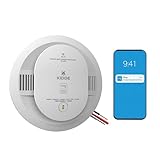
This is the hardwired version of First Alert’s smart combo alarm. It reports alerts to a phone app, which is useful for a second home, a rental or a basement unit that nobody hears from upstairs. It sits in the premium cost class for a single alarm, so most owners use it where remote notification actually changes the outcome rather than on every ceiling.
Best for: Owners who want a phone alert when nobody is home. Skip if: you only need a local alarm; the app adds cost without improving the siren.
Pros: Phone notifications; smoke and carbon monoxide in one housing; hardwired power.
Cons: Premium cost class; depends on home Wi-Fi for the smart features.

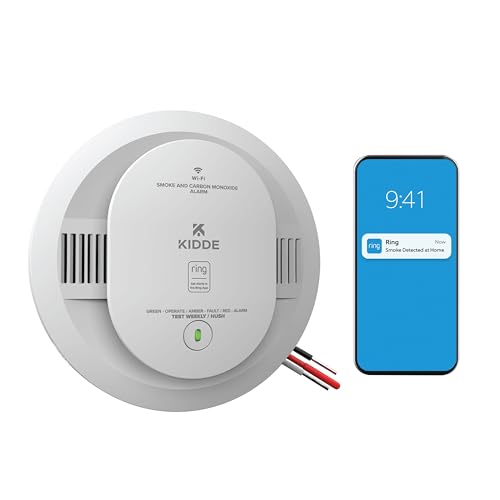
Kidde Ring-enabled smoke and CO alarm (RGCUAR-RW)
Specs: Hardwired 120V · smoke and carbon monoxide · AA battery backup · Ring app support · wireless interconnect · voice alerts
This Kidde combo adds Ring app notifications and wireless interconnect to an otherwise conventional hardwired alarm. The wireless link is aimed at homes where pulling a dedicated interconnect wire is not practical, and the voice message names the hazard. It is the better fit if the household already runs Ring devices.
Best for: Ring households and retrofits where interconnect wiring is missing. Skip if: you want a plain wired alarm with no app or wireless setup.
Pros: Wireless interconnect option; voice alerts; works with an existing Ring app.
Cons: Setup is more involved than a plain alarm; AA backup needs yearly attention.
More from Amazon
Programs that pair well with the guide above. Offers and eligibility are set by Amazon and may change.
Free shipping on eligible items, Prime Video and more. Eligible new members can start with a free trial.
Start a Prime free trialAudiobooks and podcasts to listen to on the go. Eligible new members can start with a free trial.
Try Audible freeAd-free music streaming. Eligible new subscribers can start with a free trial.
Try Music Unlimited freeA free business account with business pricing and bulk-buying tools for work, shop or home office.
Create a business accountAs an Amazon Associate we earn from qualifying purchases.





Write Your Review
No reviews yet. Be the first to share your experience!