

Our Top Picks
 First Alert 10-Year Battery Smoke Alarm Slim Profile1-Pack5.13 x 5.13 x 1 inches0.37 PoundsCheck on Amazon
 Homes with fuel-burning appliances or an attached garageKidde Smoke & CO Detector1 Pack1.88 x 5 x 5 inches0.7 poundsCheck on Amazon
 X-Sense Smoke Detector Carbon Monoxide Detector Combo1-Pack2 x 5.7 x 5.7 Inches1 PoundsCheck on Amazon


The best smoke detectors for most homes are the Kidde 30CUD10-V (combined smoke and carbon monoxide with voice alerts), the First Alert SM210 (photoelectric, sealed 10-year battery), and the Kidde 20SD10 for a low-cost sealed-battery unit; for a whole-house wireless network, the X-Sense XS01-M pairs well, and hardwired homes should look at the Kidde PI2010. The right pick depends on how your house is wired, whether you want carbon monoxide detection in the same housing, and whether you need alarms that sound together.
This guide groups detectors by the decisions that actually change the outcome: sensor type, power source, interconnection, and combo smoke/CO coverage. Every threshold below ties to widely published fire-safety practice, and where a model-level spec could not be confirmed we describe it by spec class instead of guessing.
Quick answer: which smoke detector fits which home
- Bedroom and hallway replacement, no wiring: Kidde 20SD10 or First Alert SM210 (sealed 10-year photoelectric).
- Homes with fuel-burning appliances or an attached garage: Kidde 30CUD10-V (smoke plus CO).
- Larger homes without hardwired alarms: X-Sense XS01-M wireless interconnected set.
- Existing hardwired ceiling circuits: Kidde PI2010 with battery backup.
- Dual-sensor sealed option: First Alert SM310 (photoelectric plus ionization).
How we chose
This is a research-based comparison built from manufacturer specification sheets, listing standards, and published 2026 buyer guides. We did not run fire exposure experiments. Our shortlist rules were:
- The alarm must be listed to the current smoke alarm standard (UL 217) and, if it includes carbon monoxide detection, to UL 2034 or UL 2075.
- Photoelectric sensing is preferred as the primary sensor because it responds earlier to slow, smoldering fires, which are the type that most often occur while people sleep.
- Models with a sealed 10-year battery or hardwired power with backup score higher than 9-volt units that need yearly attention.
- A clear end-of-life warning and a hush or silence button are mandatory, since nuisance alarms are the top reason people remove batteries.
- Availability in 2026: only models currently sold by the manufacturer or major retailers made the list. Google discontinued the Nest Protect in 2025, so it is not recommended here as a new purchase.
Rankings on some review sites contradict themselves, so we cross-checked model names and power types against manufacturer pages before including them. Always confirm the current listing and manufacture date on the box before buying.
Sensor types explained
Photoelectric
A light beam inside the chamber scatters when smoke particles enter. This type is slower to react to fast, flaming fires but notably quicker on smoldering fires from upholstery or bedding, and it is far less prone to false alarms from cooking. Most fire-safety organizations suggest photoelectric alarms in every sleeping area and hallway.
Ionization
A tiny radioactive source ionizes air in the chamber, and smoke interrupts the current. It reacts quickly to fast-flaming fires but is more likely to nuisance-trip from toast or shower steam. Because of this, ionization-only alarms are the weaker choice near kitchens and bathrooms.
Dual sensor
These combine both technologies, sometimes in a single housing (First Alert SM310) and sometimes through multi-criteria algorithms. They cost more but cover both fire profiles.
Combination smoke and carbon monoxide
Carbon monoxide is odorless, so a combination alarm adds a second hazard to the same ceiling or wall spot. Combo units have shorter or different end-of-life timelines for the CO cell, so read the label.
Comparison table
| Model | Sensor | Power | CO included | Interconnect | Best placement |
|---|---|---|---|---|---|
| Kidde 30CUD10-V | Photoelectric smoke + CO | Sealed 10-year battery | Yes | Standalone (check box for wireless variant) | Bedroom hallways, near garage entry |
| First Alert SM210 | Photoelectric | Sealed 10-year battery | No | Standalone | Bedrooms, living areas |
| Kidde 20SD10 | Photoelectric | Sealed 10-year battery | No | Standalone | Budget whole-house coverage |
| First Alert SM310 | Photoelectric + ionization | Sealed 10-year battery | No | Standalone | Dual-sensor coverage in key rooms |
| X-Sense XS01-M | Photoelectric | Sealed 10-year battery | No | Wireless (set of linked alarms) | Multi-story homes, no wiring |
| Kidde PI2010 | Photoelectric (hardwired) | 120V AC with battery backup | No | Hardwired interconnect | New builds, replacing existing hardwired |
| X-Sense SC07-W | Photoelectric smoke + CO | Sealed battery | Yes | Wi-Fi app alerts | Renters wanting phone notifications |
Battery life, sensitivity, and approved layouts vary by revision. Spec classes shown are what the manufacturers publish for the model family; verify the revision on the package.
The seven picks
1. Kidde 30CUD10-V: best combination smoke and CO alarm
Spec line: Photoelectric smoke · electrochemical CO · sealed 10-year battery · voice location and hazard announcements · end-of-life chirp.
Best for: Homes with a gas furnace, water heater, fireplace, or attached garage, where a single ceiling device saves one hallway fixture.
Skip if: You already have a separate CO alarm in good date and want the cheapest smoke-only hardware.
Pros: Voice alerts tell you whether it is smoke or CO and which part of the house; sealed battery eliminates yearly changes. Cons: CO sensors wear out, so check the printed replacement date; a combo unit hides both hazards behind one failure point.
As an Amazon Associate we earn from qualifying purchases at no extra cost to you.

2. First Alert SM210: best everyday photoelectric alarm
Spec line: Photoelectric · sealed 10-year battery · hush button · end-of-life signal · UL 217 listed.
Best for: Bedrooms and living rooms in homes without hardwiring.
Skip if: You need interconnected alarms; this is a standalone design. Pros: Simple, quiet in daily life, no yearly battery swap. Cons: No CO or smart alerts; only one alarm sounds when triggered.

3. Kidde 20SD10: best budget sealed-battery alarm
Spec line: Photoelectric · sealed 10-year battery · LED status light · end-of-life signal · UL 217 listed.
Best for: Filling every bedroom and level inexpensively.
Skip if: You want voice alerts or wireless linking. Pros: Low cost per fixture makes full coverage realistic. Cons: No smart features and no CO sensing.

4. First Alert SM310: best dual-sensor sealed alarm
Spec line: Photoelectric plus ionization · sealed 10-year battery · hush function.
Best for: Rooms where you want coverage for both fast-flaming and smoldering fires in one device.
Skip if: You mostly face cooking-related nuisance alarms; the ionization element can be more sensitive to kitchen fumes. Pros: Broad fire-type coverage. Cons: Costs more than single-sensor sealed units; keep it away from kitchens.

5. X-Sense XS01-M: best wireless interconnected set
Spec line: Photoelectric · sealed 10-year battery · wireless interconnect in a linked set · hush button.
Best for: Two-story homes and large floor plans where a basement fire must wake someone upstairs.
Skip if: A single-level apartment is all you need. Pros: No wiring, all alarms sound together. Cons: Mix only compatible models from the same family; confirm the pairing count on the box.

6. Kidde PI2010: best for hardwired homes
Spec line: Photoelectric · 120V AC · battery backup · hardwired interconnect · hush.
Best for: Houses that already have ceiling junction boxes and a wired alarm circuit.
Skip if: You are not comfortable working with household wiring; hire a licensed electrician. Pros: No sealed-unit disposal every decade for the AC supply; interconnect across floors. Cons: Backup battery still needs periodic replacement on many revisions; installation needs power shut off at the breaker.
7. X-Sense SC07-W: best for phone alerts without a hub
Spec line: Photoelectric smoke plus CO · sealed battery · Wi-Fi app notifications.
Best for: Renters and travelers who want to be told about an alarm while away.
Skip if: You want a local-only setup. Pros: Combines two hazards with phone notification. Cons: A phone alert is a supplement, not a substitute for being woken by the siren.

Choosing by criteria and thresholds
Placement count
A widely used baseline is one alarm inside every bedroom, one outside each sleeping area, and one on every level including the basement. A typical three-bedroom, two-story house with a basement therefore needs at least eight alarms: three bedrooms, one hallway outside them, one in the living area, one at the top of the stairs landing if separate, one in the basement, and one more near the kitchen outskirts.
Distance from cooking and steam
Keep ionization or dual-sensor alarms at least 10 feet from the stove or oven. Keep any alarm several feet away from bathroom doors so shower steam does not trigger it.
Ceiling versus wall mount
Mount on the ceiling at least 4 inches from the nearest wall, or on a wall with the top of the alarm 4 to 12 inches below the ceiling. Avoid peaks of vaulted ceilings, where dead air can delay detection.
Power and lifespan
Sealed 10-year units are replaced as a whole when the date on the back expires, regardless of how well they chirp. Alarms with 9-volt batteries need the battery changed on a calendar schedule, and many people forget.
All fourteen alarms at a glance
| Model | Detects | Power | Interconnect | Best fit |
|---|---|---|---|---|
| Kidde 30CUD10-V | Smoke + CO | Sealed 10-year battery | Standalone | Fuel-burning appliances |
| First Alert SM210 | Smoke | Sealed 10-year battery | Standalone | Bedrooms |
| Kidde 20SD10 | Smoke | Sealed 10-year battery | Standalone | Entry-level full coverage |
| First Alert SM310 | Smoke, dual sensor | Sealed 10-year battery | Standalone | Dual-sensor rooms |
| X-Sense XS01-M | Smoke | Sealed battery | Wireless set | Multi-story homes |
| Kidde PI2010 | Smoke | 120V AC plus backup | Wired | Existing circuits |
| X-Sense SC07-W | Smoke + CO | Sealed battery | Wireless set | Linked combo alarms |
| First Alert SMCO210V | Smoke + CO | Sealed 10-year battery | Standalone | Voice alerts, slim body |
| Kidde 30CUA10-V | Smoke + CO | Hardwired plus 10-year backup | Wired | Hardwired combo |
| Kidde 20SA10 | Smoke | Hardwired plus 10-year backup | Wired | Hardwired smoke only |
| First Alert SM300 | Smoke, dual sensor | Hardwired plus AA backup | Wired | Dual-sensor circuits |
| First Alert SMCO100V-AC | Smoke + CO | Hardwired plus AA backup | Wired | Voice-location combo |
| X-Sense XP0H-WN | Smoke + CO | Sealed 10-year battery | Wireless set | Renters |
| X-Sense SC07 | Smoke + CO | Sealed 10-year battery | Standalone | Single rooms |
How to choose: quick thresholds
- Two or more floors, or any floor far from the bedrooms: pick an interconnected family (wired or wireless) so every alarm sounds together.
- Any gas furnace, gas water heater, fireplace, or attached garage: add CO coverage on every level that has bedrooms, either as combination alarms or as separate CO units.
- Fewer than four alarms in the whole home: spend on sealed 10-year units; with more than eight alarms, the lowest cost per fixture matters most.
- Existing ceiling junction boxes and a wired circuit: replace like with like; mixing brands on one wired line can stop the interconnect from working.
- Alarm within 10 feet of a stove: use photoelectric only, never ionization or dual sensor.
- Rental with no wiring changes allowed: choose a wireless-linked sealed set.
Worked example: how many alarms and what it costs to maintain
Take a 2,000-square-foot, two-story house with four bedrooms and a finished basement.
- Four bedrooms need one alarm each: 4.
- Hallway outside the sleeping area (all bedrooms upstairs): 1.
- Main floor living area or stair landing: 1.
- Basement: 1.
- Total: 4 + 1 + 1 + 1 = 7 alarms.
- If they are sealed 10-year units, that is 7 replacement events once a decade and zero yearly battery changes. If they use 9-volt batteries, that is 7 battery swaps every year, or 70 over ten years.
This is why the sealed or hardwired options usually win over time, even if each unit costs more up front. Add a wireless-linked set, and a fire at the far end of the basement is announced throughout the house.
Safety guidance you should not skip
- Press the test button monthly and replace any alarm that fails to sound.
- Write the install date on the back of every alarm and replace the whole device at the printed end of life, typically 10 years from manufacture.
- Never disable an alarm because of cooking nuisance; use the hush button or relocate the alarm.
- Do not paint an alarm or cover it with plastic bags during renovations unless you plan to remove it first and reinstall it afterward.
- Carbon monoxide alarms should be on each level and near bedrooms; if one sounds, move to fresh air and call emergency services.
- Practice a home escape plan with two exits from each bedroom, and agree on a meeting spot outside.
Common mistakes that make alarms less effective
The most common failure is not a bad product but a bad setup. People remove an alarm that chirps in the kitchen and never put it back. They mount a unit beside a bathroom door, where steam sets it off, then pull the battery. They buy a cheap alarm for the main hall but leave the bedroom doors with nothing. Some homeowners replace the batteries in an expired alarm and assume the job is done, although the sensor itself degrades with age and dust.
Avoid these by treating alarms as a system. Put photoelectric alarms in sleeping areas and halls, move any nuisance-prone unit instead of disabling it, and keep a simple log: the install date written in marker on the back, and a phone reminder set to the replacement year. When you vacuum, use a soft brush attachment on the vents of each alarm, because dust and insects are a leading cause of false alarms. Finally, close bedroom doors at night; a closed door slows fire spread and gives alarms in the hallway more time to wake you.
If you rent, ask the landlord who is responsible for the alarms and whether the building uses a centrally monitored system, since tampering with those can be a violation of your lease and local regulations.
Who should skip each category
- Ionization-only alarms: skip them for bedrooms and kitchen adjacent hallways.
- Hardwired alarms: skip them if you rent and cannot change the electrical system.
- Combination smoke and CO alarms: skip them if you want to place the CO sensor at a different height or location than the smoke alarm.
- Smart alarms: skip them if reliable Wi-Fi at the alarm location is not available, since the base siren function should never depend on the internet.
More smoke and CO alarms worth shortlisting
The seven picks above cover the main decisions, but several other current models fit specific wiring, voice-alert, or interconnect needs. These sections add them so you can compare the full field. Spec lines follow the model descriptions published by each maker; confirm the revision on the package before you buy.
8. First Alert SMCO210V: best slim combination alarm with voice
Spec line: Smoke plus carbon monoxide · sealed 10-year battery · voice alerts · slim profile.
Best for: Bedrooms and hallways where you want one low-profile device that announces whether the hazard is smoke or CO. Skip if: You already own separate, in-date CO alarms and only need smoke coverage, or you want alarms that sound together. Pros: Sealed battery removes yearly changes; spoken alerts help children and heavy sleepers understand what is happening. Cons: Standalone design, so only the alarm that detects the hazard sounds; the CO cell has its own replacement date to check on the label.

9. Kidde 30CUA10-V: best hardwired combination alarm
Spec line: Smoke plus CO · hardwired with 10-year battery backup · wired interconnect · voice alerts.
Best for: Homes with an existing alarm circuit that want smoke and CO in one fixture and an interconnect that links every floor. Skip if: You rent or are unwilling to hire an electrician for ceiling-box work. Pros: Wired link triggers every unit at once; the backup battery keeps it working during an outage. Cons: Installation needs the breaker off and compatible wiring; mixing brands on one interconnect line can fail, so match the family.

10. Kidde 20SA10: best hardwired smoke-only alarm
Spec line: Smoke detection · hardwired with 10-year battery backup · wired interconnect.
Best for: Replacing worn hardwired smoke alarms in bedrooms and hallways when CO is covered elsewhere. Skip if: You want CO in the same housing or a battery-only retrofit. Pros: Sealed backup battery means no yearly swap; fits new-build and renovation circuits. Cons: Smoke only; check the label for the sensor type before placing it near a kitchen.
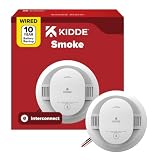
11. First Alert SM300: best hardwired dual-sensor alarm
Spec line: Dual-sensor smoke detection · hardwired · AA battery backup · interconnect-ready.
Best for: Hardwired homes that want both fast-flame and smoldering-fire sensing in one ceiling device. Skip if: Your alarm sits close to a stove or bathroom, where a dual sensor can nuisance-trip. Pros: Two sensing technologies in a single fixture; AA backup is easy to find. Cons: The AA cells still need a calendar reminder; installation requires power off at the breaker.

12. First Alert SMCO100V-AC: best hardwired voice combo
Spec line: Smoke plus CO · hardwired · AA battery backup · voice and location alerts.
Best for: Whole-house hardwired upgrades where a spoken location such as “basement” saves time during an alarm. Skip if: You prefer sealed-battery units with no wiring. Pros: One fixture covers two hazards; the voice names the room. Cons: Backup batteries need regular replacement; a single fixture means one failure point for both hazards.

13. X-Sense XP0H-WN: best low-cost wireless combo
Spec line: Smoke plus CO · sealed 10-year battery · wireless interconnect with other compatible X-Sense alarms.
Best for: Renters and multi-level homes that want linked smoke and CO coverage without touching the wiring. Skip if: You need a hardwired circuit or a mix of brands. Pros: Simple mounting with no electrician; alarms in a linked set sound together. Cons: Only pairs with its own family; confirm how many units one network can hold.

14. X-Sense SC07: best standalone smoke and CO value
Spec line: 2-in-1 smoke and CO · sealed 10-year battery · not hardwired.
Best for: Single rooms or small apartments where one self-contained unit is enough. Skip if: You need alarms that trigger each other; choose the wireless-linked variants instead. Pros: Entry-level to mid-range cost for two hazards; no wiring. Cons: Standalone, so a fire in another room does not sound this one.

Frequently asked questions
What is the best smoke detector overall?
A photoelectric, sealed 10-year alarm such as the First Alert SM210 or Kidde 20SD10 suits most homes. Add a combo smoke and CO unit like the Kidde 30CUD10-V where fuel-burning appliances exist.
Are photoelectric or ionization smoke detectors better?
Photoelectric alarms are generally preferred for bedrooms and hallways because they react sooner to smoldering fires and cause fewer cooking false alarms. Dual-sensor units cover both fire types.
How often should I replace smoke detectors?
Replace the entire alarm at the end-of-life date, typically 10 years from manufacture. The date is printed on the back; do not rely on the chirp alone.
Do I need hardwired smoke detectors?
No. Wireless interconnected alarms with sealed batteries give the same whole-house alert without wiring, though new construction codes often require hardwired units with battery backup.
How many smoke detectors does a house need?
Install one in each bedroom, one outside each sleeping area, and one on every level. A typical two-story, four-bedroom home needs roughly seven to eight alarms.
Why does my smoke detector chirp every minute?
A single chirp usually signals a low battery, while a pattern of chirps may mean end of life or a fault. Check the label, replace the battery if possible, or replace the whole alarm if it is expired.
Is the Nest Protect still a good buy?
Google discontinued it in 2025, so new stock is limited and support may fade. Look at its First Alert successor or the models above if you are buying now.
Should I get a combination smoke and carbon monoxide alarm?
Yes where gas appliances, fireplaces, or an attached garage exist. Confirm the CO sensor has its own printed end-of-life date and follow the manufacturer’s placement instructions.
Bottom line
Choose photoelectric sensing, sealed 10-year power or hardwiring with backup, and interconnection that matches your floor plan. Fill every bedroom first, then hallways and levels, then add combination CO coverage where fuel-burning equipment is present. A cheaper alarm in every required spot protects better than a premium alarm in only one.
More from Amazon
Programs that pair well with the guide above. Offers and eligibility are set by Amazon and may change.
Free shipping on eligible items, Prime Video and more. Eligible new members can start with a free trial.
Start a Prime free trialAudiobooks and podcasts to listen to on the go. Eligible new members can start with a free trial.
Try Audible freeAd-free music streaming. Eligible new subscribers can start with a free trial.
Try Music Unlimited freeA free business account with business pricing and bulk-buying tools for work, shop or home office.
Create a business accountAs an Amazon Associate we earn from qualifying purchases.




Write Your Review
No reviews yet. Be the first to share your experience!