

Key takeaways
- The best integrated amplifiers depend on room size and source needs: choose the Rotel A11 MKII or Audiolab 6000A for a small room and modest budget, the Cambridge Audio CXA81 Mk II for versatile digital listening, the Marantz Model 50…
The best integrated amplifiers depend on room size and source needs: choose the Rotel A11 MKII or Audiolab 6000A for a small room and modest budget, the Cambridge Audio CXA81 Mk II for versatile digital listening, the Marantz Model 50 for a phono-led system, and the Yamaha A-S1200 or NAD C 3050 for larger rooms and more demanding speakers.
Our top picks

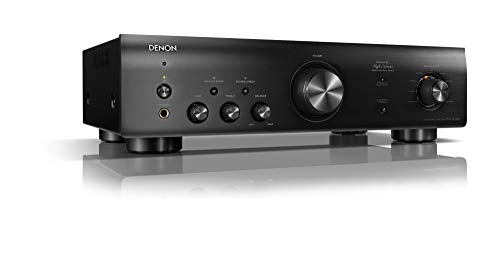

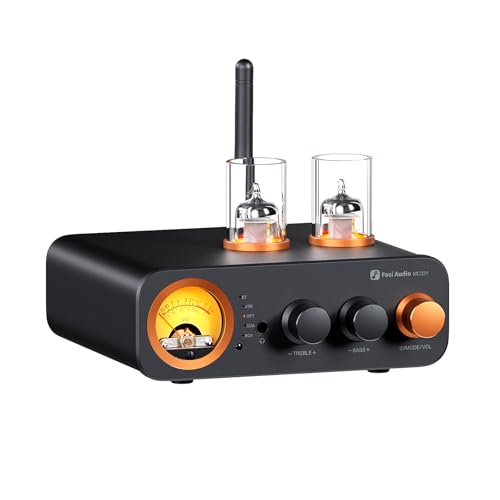
As an Amazon Associate we earn from qualifying purchases at no extra cost to you. Ratings are shown as listed on Amazon.
Best integrated amplifiers by listening situation
| Situation | Recommended amplifier | Why it fits | Typical market range |
|---|---|---|---|
| Small room, easy-to-drive speakers | Rotel A11 MKII | 50 watts per channel, built-in DAC, Bluetooth and moving-magnet phono | About $700–$900 |
| Most flexible digital and analogue system | Cambridge Audio CXA81 Mk II | 80 watts per channel, balanced input, high-resolution DAC and Bluetooth | About $1,200–$1,500 |
| Vinyl-focused two-channel system | Marantz Model 50 | 70 watts per channel, useful analogue inputs and a refined moving-magnet phono stage | About $1,400–$1,800 |
| Large room or difficult speakers | Yamaha A-S1200 | 90 watts per channel, substantial power supply, balanced input and excellent analogue connectivity | About $2,800–$3,500 |
| Streaming, TV and future expansion | NAD C 3050 | 100 watts per channel, HDMI eARC and BluOS-capable expansion through MDC2 | About $1,500–$2,000 |
How much amplifier power does your room need?
Power output is important, but it is not a simple “more watts is always better” decision. Speaker sensitivity, listening distance and volume matter just as much. A compact room with 90dB-sensitive bookshelf speakers may be comfortable with 30–50 watts per channel, while a large room, low-sensitivity floorstander or three-metre listening distance benefits from a stronger power supply and greater current delivery.
As a practical guide, 50 watts per channel is suitable for many small and medium rooms when paired with reasonably sensitive speakers. Around 70–100 watts gives more headroom for larger rooms and dynamic music such as orchestral recordings. If your speakers dip to a low impedance or are known to be difficult to drive, prioritize an amplifier with a robust power supply rather than comparing the headline wattage alone.
Consider the difference between average listening and musical peaks. If you normally listen around 75dB but want occasional peaks 15dB louder, the amplifier needs roughly 32 times the power for those peaks. A system that uses only 1 watt during quiet passages may briefly demand more than 30 watts. This is why an amplifier with spare headroom can sound cleaner even when its average output is low.
Head-to-head: the main contenders
Rotel A11 MKII: the sensible small-room choice
The Rotel A11 MKII is a compact, affordable route into a complete stereo system. Its 50-watt-per-channel output is well matched to bookshelf speakers and smaller floorstanders, while its moving-magnet phono input avoids the need for a separate phono preamplifier. It also includes digital inputs, Bluetooth and a subwoofer output.
Its DAC and digital connectivity are convenient rather than unusually expansive. Choose it when ease of use, moderate cost and a straightforward combination of streaming, vinyl and conventional line-level sources matter more than balanced connections or very high output power. It is less suitable for a large room or inefficient speakers played loudly.
Audiolab 6000A: strong value for mixed sources
The Audiolab 6000A combines 50 watts per channel with a detailed digital section, Bluetooth, several line inputs and a moving-magnet phono stage. It is a particularly useful option for someone moving from a soundbar or entry-level receiver to serious two-channel listening without abandoning digital sources.
Its built-in DAC supports high-resolution playback through compatible digital inputs, and its preamplifier output can be useful if you later add a more powerful power amplifier. The phono stage is appropriate for moving-magnet cartridges, but moving-coil users will need an external phono stage or step-up solution.
Cambridge Audio CXA81 Mk II: the connectivity specialist
The CXA81 Mk II offers 80 watts per channel and is a strong middle-ground choice for medium rooms. It includes a high-resolution DAC, Bluetooth, optical and coaxial digital inputs, analogue inputs and a balanced XLR input. That combination makes it easy to connect a streamer, television, computer, CD transport and a higher-quality balanced source.
It does not include a built-in phono stage, so vinyl adds the cost of an external phono preamplifier. That is not a disadvantage if you already own one or want to choose a phono stage separately, but it makes the total system cost higher than the amplifier price suggests.
Marantz Model 50: best for an analogue-first system
The Marantz Model 50 is a 70-watt-per-channel integrated amplifier designed around analogue sources. It provides a moving-magnet phono input, multiple line-level inputs, a subwoofer output and a dedicated headphone circuit, but no built-in DAC or network streaming.
This is a good choice for a turntable, CD player with its own DAC and a separate streamer. The absence of digital inputs simplifies the signal path, but it also means a television or computer must connect through an external DAC. The Model 50 suits listeners who value a substantial analogue amplifier and intend to build their digital sources separately.
Yamaha A-S1200: power and analogue build quality
The Yamaha A-S1200 delivers 90 watts per channel and has the physical scale and power supply capacity expected of a premium amplifier. Its connectivity is almost entirely analogue, including balanced inputs and a moving-magnet phono stage. Large meters on the front panel are functional as well as decorative, showing amplifier activity at a glance.
It is a strong match for larger rooms, demanding floorstanding speakers and listeners who already own a network streamer or DAC. It is not the economical choice if you need HDMI, USB audio or integrated streaming. The amplifier is also relatively heavy, at roughly 22 kilograms, so allow for a sturdy shelf and adequate ventilation.
NAD C 3050: the practical modern system builder
The NAD C 3050 combines 100 watts per channel with HDMI eARC, coaxial and optical digital inputs, Bluetooth, a moving-magnet phono stage and a modular expansion system. With the appropriate MDC2 module, it can add BluOS network streaming and room-correction functionality.
It is the most adaptable option here for a system that includes a television. HDMI eARC lets the amplifier respond to the TV remote for volume control, while the additional platform supports a longer upgrade path. The trade-off is a larger chassis and a price above basic integrated amplifiers.
DAC and phono-stage quality: what to check
A built-in DAC is valuable when you want fewer boxes, but the number of supported bits and sampling rates does not by itself determine sound quality. Check the physical inputs first. A computer may need USB, a television usually needs optical or HDMI ARC, and a CD transport may use coaxial or optical output.
Phono stages require closer attention. Most integrated amplifiers include moving-magnet support, which covers many entry-level and midrange cartridges. Moving-coil cartridges generally require a separate phono stage unless the amplifier specifically provides moving-coil gain and loading options. Also check capacitance and gain adjustment if you plan to experiment with cartridges.
Size, ventilation and ownership costs
Allow at least 10 centimetres of open space above an amplifier, and do not place it inside a sealed cabinet. Heat is harder on capacitors and other internal components than normal listening use. Keep the amplifier level, leave room behind it for speaker and power cables, and avoid stacking a hot streamer or power supply directly on top.
The first consumables to wear are usually remote-control batteries, rather than amplifier components. Speaker terminals can loosen, input switches can collect dust, and vinyl systems accumulate stylus and record debris. Clean external surfaces with a dry or barely damp microfiber cloth; never spray cleaner into controls or ventilation openings. If a turntable sounds distorted, clean the stylus and check tracking force before assuming the amplifier or phono stage is faulty.
Budget for the complete signal chain. For example, a $1,300 amplifier without a phono stage may need a $150–$500 external phono preamplifier, while an amplifier with a built-in DAC may eliminate the need for another box. A higher-priced amplifier is not automatically better if its unused features do not match your sources.
Final buying decision
Choose the Rotel A11 MKII or Audiolab 6000A for an affordable small-room system. Choose the Cambridge CXA81 Mk II if digital connectivity and balanced input flexibility are priorities. Choose the Marantz Model 50 for a polished analogue and vinyl system. Move to the Yamaha A-S1200 when speaker control, room size and analogue build are more important than streaming convenience. For a television-centered system with room to add network audio later, the NAD C 3050 is the most complete long-term platform.
Before buying, confirm three things: your speakers’ sensitivity and impedance, the physical inputs required by every source, and whether the amplifier’s phono stage supports your cartridge type. Those checks usually matter more than a small difference in rated wattage.

Write Your Review
No reviews yet. Be the first to share your experience!