

Key takeaways
- Best: stainless-steel ring or coated metal chain attached through a reinforced top plate.
- Acceptable: thick braided synthetic cord with sealed or protected ends.
- Use caution: untreated cotton, thin jute, or a small plastic loop exposed to direct sun and rain.
Best Wind Chimes for Beautiful Outdoor Sound
The best wind chimes for most patios and porches are medium-sized aluminum chimes with tubes about 24 to 36 inches long, tuned to a mellow pentatonic scale, and fitted with a weather-resistant hanging cord and metal ring.
That general specification balances audible volume, attractive tone, manageable weight, and reasonable durability. However, the right choice changes with your space: a small wooden chime can sound gentle in a sheltered garden, while a large, deep-tuned aluminum model is better for a breezy, open yard. The comparison below focuses on the details that product listings often leave vague—material, tube length, sound profile, hanging hardware, and what happens after months outdoors.
Our top picks
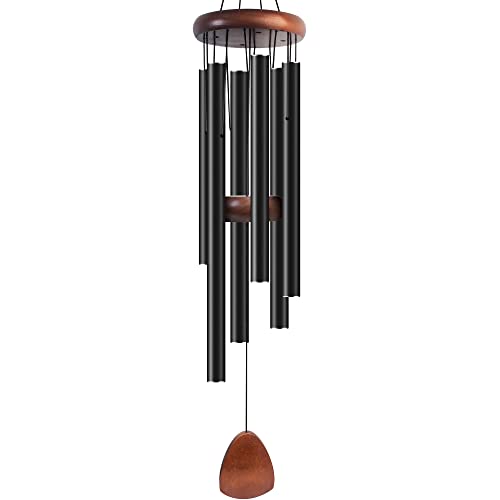


As an Amazon Associate we earn from qualifying purchases at no extra cost to you. Ratings are shown as listed on Amazon.
Quick Picks by Outdoor Situation
| Situation | Recommended type | Useful specifications | Why it fits | Typical market range |
|---|---|---|---|---|
| Apartment balcony or small porch | Compact aluminum chime | 12–20 in. long, 0.5–1.5 lb, 4–6 tubes | Produces clear sound without dominating a small area | $20–$50 |
| Covered front porch | Medium aluminum or mixed-material chime | 24–36 in. long, 1.5–4 lb, 5–8 tubes | Good balance of volume and protection from direct rain | $35–$100 |
| Open garden with regular wind | Large deep-tone aluminum chime | 36–48 in. long, 4–10 lb, 6–8 tubes | Long tubes create a lower tone that carries outdoors | $70–$180 |
| Quiet courtyard or sheltered garden | Wood, bamboo, or small ceramic chime | 14–28 in. long, 0.5–3 lb, 4–7 sound elements | Subtle sound works better where wind is limited | $20–$80 |
| Coastal or very exposed location | Powder-coated or anodized aluminum | 24–40 in. long, stainless or coated hardware | Better resistance to salt, moisture, and repeated movement | $45–$150 |
Material Comparison: Which Chime Sounds and Lasts Best?
Aluminum: the safest all-purpose choice
Aluminum tubes are popular because they offer a clear tone, relatively low weight, and good resistance to rust. The tube wall and finish matter: thicker tubes generally produce a fuller note, while thin tubes can sound bright or slightly tinny. Anodized or powder-coated aluminum usually keeps its appearance longer than bare, lightly painted metal.
Aluminum is the strongest choice when you want a chime that can be heard from a porch, patio, or medium-sized garden. It is also easier to hang securely than a similarly sized steel chime because the overall weight is lower.
Steel: bright, forceful, and heavier
Steel chimes can create a crisp, energetic sound and may tolerate impacts well, but they are more vulnerable to rust if the coating is scratched or hardware is poorly plated. Stainless steel reduces that concern but often costs more. Choose steel when you prefer a sharper, more bell-like tone and have a sheltered mounting point.
Wood and bamboo: warm but less predictable
Wooden and bamboo chimes produce a softer, dry, earthy sound rather than the sustained notes of metal tubes. They are attractive in planting beds and covered porches, but they require more maintenance. Splitting, fading, mildew, and fraying cords tend to appear sooner in damp or sunny locations.
Apply an exterior-appropriate protective finish only if the manufacturer permits it. Sealing a natural chime with an unsuitable product can trap moisture or change its sound. Bamboo also varies considerably in wall thickness, so two chimes of the same dimensions may not sound alike.
Ceramic and glass: decorative accents
Ceramic and glass pieces can add color and a distinctive click or ring, but they are more vulnerable to cracking and breakage from freezing temperatures, falling branches, and strong swinging. They are best in protected areas rather than exposed, high-wind locations.
Tube Length Controls Pitch More Than Overall Size
Longer tubes generally produce deeper notes, while shorter tubes create higher, quicker sounds. The longest tube in a chime may be 24 inches, 30 inches, or more, but the advertised overall length often includes the sail, clapper, and suspension ring. Compare the actual tube length when sound is the priority.
| Longest tube | Typical sound | Approximate outdoor use | Potential drawback |
|---|---|---|---|
| 4–8 in. | High, light, quick notes | Small balconies and sheltered windows | Can disappear in background noise |
| 9–16 in. | Balanced and moderately bright | Small patios and porches | Limited bass response |
| 17–28 in. | Fuller, mellow, clearly audible | Most patios and gardens | Needs a stronger mounting point |
| 29–40 in. | Deep, resonant, slower decay | Open gardens and large yards | Heavy and potentially too loud near neighbors |
For a soothing rather than busy sound, look for five to eight tubes arranged around a central clapper and a scale described as pentatonic, mellow, or deep. A chime with many small tubes may create more frequent notes, but not necessarily a richer or louder tone.
Hanging Hardware Is a Durability Feature
The suspension ring carries the full weight of the chime, while the cord or chain absorbs repeated twisting. A thin decorative loop may be adequate for a lightweight indoor-style chime but is a weak point on a 5-pound outdoor model.
- Best: stainless-steel ring or coated metal chain attached through a reinforced top plate.
- Acceptable: thick braided synthetic cord with sealed or protected ends.
- Use caution: untreated cotton, thin jute, or a small plastic loop exposed to direct sun and rain.
Use a rated outdoor hook, eye screw, or carabiner appropriate for the mounting surface. A large chime should be attached to a structural beam or solid masonry anchor, not merely to thin trim or a lightweight gutter. Leave several inches of clearance from walls and branches so the chime can move without striking them.
Weather Resistance and Ownership Realities
The first parts to wear are usually the cord, clapper connection, sail, and finish—not the metal tubes themselves. Wind-driven grit can rub through cord, ultraviolet light can make synthetic fibers brittle, and salt air accelerates corrosion on ordinary steel.
Inspect the chime at the start of each season and after severe weather. Check for:
- Frayed suspension or clapper cords;
- Rust around fasteners, rings, and tube openings;
- Cracks in wooden, ceramic, or glass components;
- A loose central clapper or missing wind sail;
- Tube dents that alter the tone or cause contact between tubes.
Wipe aluminum and coated metal with a soft cloth and mild soapy water, then dry thoroughly. Avoid abrasive pads, chlorine bleach, and aggressive metal polish unless the maker specifically recommends them. Remove leaves and insects from tube openings. For bamboo or wood, allow the pieces to dry fully after cleaning and store the chime indoors during prolonged wet or freezing periods if practical.
How to Choose the Right Size: A Simple Calculation
As a practical starting point, allow about 2 to 3 feet of open space around a medium chime so the tubes do not hit a wall or railing. A porch corner with 30 inches of clearance can therefore accommodate a chime roughly 24 to 30 inches long, provided the suspension point is centered and the lower sail has room to move.
Weight matters too. If a chime weighs 4 pounds and strong gusts make it swing aggressively, the repeated pulling force can be much greater than its stationary weight. For an exposed location, choose a conservative mounting point rated well above the listed weight—at least 15 pounds for a 4-pound chime—and inspect the anchor regularly.
Best Wind Chimes by Sound Preference
For deep, relaxing tones
Choose long aluminum tubes, preferably 20 inches or longer, with a low-tuned or deep-tone description. Hang the chime where it receives steady movement rather than occasional violent gusts.
For bright, noticeable sound
Select shorter aluminum or steel tubes with a compact arrangement. These respond to lighter breezes and are easier to hear near a busy street, but they may sound sharper in a small enclosed courtyard.
For a quiet decorative effect
Choose a small bamboo, wood, or ceramic design with four to six sound elements. It will contribute texture without producing a sustained metallic tone every time the wind changes.
Final Buying Advice
Prioritize the sound you want, then verify the tube length, total weight, and hardware. For most buyers, a 24- to 36-inch aluminum chime with corrosion-resistant hardware is the best all-round compromise. Move toward bamboo or wood for a softer, more natural accent; choose a large deep-tuned model only when there is enough space and a properly supported mounting point. A beautiful chime lasts far longer when its size matches the wind exposure and its weakest component—the cord or hook—is treated as seriously as the tubes.

Write Your Review
No reviews yet. Be the first to share your experience!