

Key takeaways
- One set for mixed wines: Choose a universal glass with a medium-wide bowl and a capacity around 15–20 ounces.
- Mostly bold reds: Look for a broad bowl of roughly 20–26 ounces, which gives the wine more room to open up.
- Mostly whites and sparkling wine: Pick a smaller, narrower bowl, generally 12–18 ounces. For sparkling wine, a tulip shape retains aroma better than a very narrow flute.
- Frequent entertaining or dishwasher use: Favor machine-made, lead-free crystal with a reinforced stem or stemless construction and an explicit dishwasher-safe label.
- Special-occasion presentation: Hand-blown crystal can offer a particularly light feel and fine rim, but it usually needs more careful handling and hand-washing.
Best Crystal Wine Glasses for Every Pour
The best crystal wine glasses for most households are lead-free crystal glasses with a thin, well-finished rim, a bowl matched to the wine style, and a shape you can store and wash without worry. Choose a larger bowl for aromatic reds, a narrower one for crisp whites, or a versatile universal glass if you want one set for everything.
Quick picks by situation
- One set for mixed wines: Choose a universal glass with a medium-wide bowl and a capacity around 15–20 ounces.
- Mostly bold reds: Look for a broad bowl of roughly 20–26 ounces, which gives the wine more room to open up.
- Mostly whites and sparkling wine: Pick a smaller, narrower bowl, generally 12–18 ounces. For sparkling wine, a tulip shape retains aroma better than a very narrow flute.
- Frequent entertaining or dishwasher use: Favor machine-made, lead-free crystal with a reinforced stem or stemless construction and an explicit dishwasher-safe label.
- Special-occasion presentation: Hand-blown crystal can offer a particularly light feel and fine rim, but it usually needs more careful handling and hand-washing.
Crystal types: what you are choosing
“Crystal” describes glass formulations and, in some markets, a traditional style of glassware—not necessarily the presence of lead. For everyday wine glasses, lead-free crystal is the practical default. It can be made thin and clear, and it avoids the need to handle lead-containing glassware. Traditional lead crystal may be valued for weight, brilliance, or decorative cutting, but it is not essential for good wine service.
Our top picks


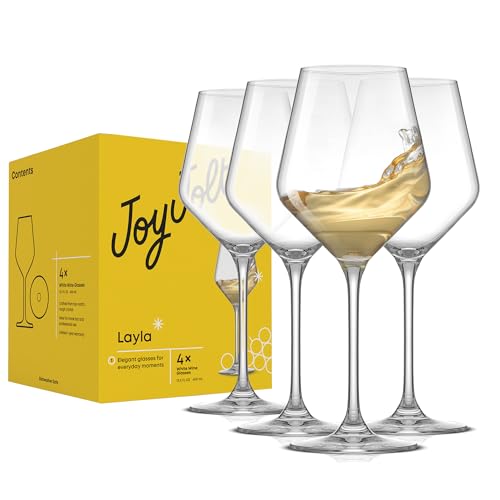
As an Amazon Associate we earn from qualifying purchases at no extra cost to you. Ratings are shown as listed on Amazon.
Manufacturing matters as much as the label. Machine-made glasses tend to be more consistent in shape and are often easier to replace as a set. Hand-blown glasses can be lighter and have delicate rims, but variation and a higher replacement cost are part of the trade-off. Neither method guarantees better flavor: bowl shape, cleanliness, and suitability for the wine matter more.
Compare common glass shapes
| Glass style | Typical capacity | Best fit | Practical trade-off |
|---|---|---|---|
| Large red-wine bowl | 20–26 oz (590–770 ml) | Cabernet Sauvignon, Syrah, many full-bodied reds | Allows swirling, but needs more cabinet and dishwasher space |
| Medium universal bowl | 15–20 oz (440–590 ml) | Mixed red and white wines; limited storage | A useful compromise, though less tailored than a dedicated shape |
| Narrow white-wine bowl | 12–18 oz (355–530 ml) | Sauvignon Blanc, Riesling, Pinot Grigio | Compact and easy to handle; less room for swirling |
| Tulip sparkling-wine glass | 10–16 oz (295–475 ml) | Champagne and other sparkling wines | Preserves aroma better than a narrow flute, but takes more room than one |
These are useful shopping ranges, not strict standards: makers measure capacity differently, and a glass filled to its brim is not a normal serving. A wider bowl exposes more wine to air and makes swirling easier. A narrower bowl concentrates aromas and can help keep delicate whites cool for longer. For sparkling wine, a tapered tulip offers a middle ground between aroma and bubble retention.
Rim, weight, and durability: the real trade-offs
A thin rim often feels refined and lets wine reach the palate without a thick edge in the way. But thinness is not a durability rating. A fine rim can chip if glasses knock together in a crowded cupboard or dishwasher rack. Inspect the rim for a smooth, even finish; avoid assuming that the thinnest option is automatically the best choice for everyday use.
Stems are another weak point. They can snap when glasses are twisted during washing, lifted by the bowl, or crowded together in storage. A stemless glass removes that breakage point and fits more easily on many shelves, but hands warm the wine more quickly and fingerprints show readily. If choosing a stem, hold it by the stem or base and give each glass its own space.
Durability depends on the whole design: glass thickness, stem junction, manufacturing quality, and how the glass is stored. For a home with frequent use, a sturdy machine-made lead-free crystal set is usually a better fit than an exceptionally delicate glass. Check whether the manufacturer sells individual replacements before buying a large matching set.
Dishwasher safety and care
Crystal is not automatically dishwasher-safe. Follow the care label for the exact model: some lead-free crystal glasses are rated for a dishwasher, while others may cloud, etch, or break from heat, detergent, and contact with neighboring items. If the label says hand-wash only, treat that as a meaningful limitation rather than a suggestion.
- For dishwasher-rated glasses: Use a glassware or gentle cycle, avoid high-heat drying if the machine allows, and leave space so rims and stems cannot touch.
- For hand-washing: Use warm water, mild detergent, and a soft sponge. Hold the bowl rather than twisting the stem, and rinse thoroughly.
- For drying: Let glasses air-dry on a secure rack or dry with a lint-free cloth. Do not twist a towel inside the bowl while gripping the stem; that movement can break the glass at its narrowest point.
- For storage: Keep glasses upright unless the maker recommends otherwise. Stacking or nesting can scratch rims, and crowded shelves increase the chance of chips.
Cloudiness can come from mineral deposits or permanent detergent etching. If a mark does not come off with a gentle wash, avoid abrasive pads; check the care instructions before trying a cleaning treatment.
Choose by household, not just by wine label
| Your situation | Best match | Why |
|---|---|---|
| Small cabinets or one mixed set | Universal glasses, 15–18 oz | Fewer shapes to store and suitable for many still wines |
| Regular red-wine drinker with room to store glassware | Large red bowls, 20–26 oz | More space to swirl fuller-bodied wines |
| Mostly whites or warm-climate entertaining | Smaller white-wine bowls, 12–16 oz | Practical size and less wine exposed in the bowl at once |
| Frequent dishwasher use or busy household | Machine-made, dishwasher-rated lead-free crystal | Designed for lower-maintenance use; still needs careful loading |
| Occasional formal dinners | Light, fine-rimmed glasses in the shapes you serve most | Prioritizes presentation without requiring an oversized everyday set |
How much should you spend?
Prices vary by brand, craftsmanship, and set size, but general market ranges can help frame the decision. Entry-level machine-made crystal sets commonly fall around $30–$80 for four glasses. Midrange options are often about $80–$200 for four, while premium hand-blown sets can cost $200 or more. These are broad ranges, not guarantees of quality.
Consider replacement cost alongside the sticker price. For example, a $120 set of four costs $30 per glass. If you use the set once a week for three years, that is about 156 uses per glass, or roughly $0.19 per use before breakage. A pricier set is not automatically better value if its delicate shape makes it unsuitable for your routine.
Bottom line
For most people searching for the best crystal wine glasses, a lead-free, machine-made universal set with a medium bowl and clear dishwasher guidance is the safest all-purpose choice. Add larger red bowls if you often pour fuller-bodied wines, or narrower white and tulip-shaped sparkling glasses if those are your regular picks. Prioritize a smooth rim, stable storage, and care instructions you will actually follow over the most dramatic capacity or the thinnest glass you can find.

Write Your Review
No reviews yet. Be the first to share your experience!