

Key takeaways
- Wood: Warm and repairable, but finish quality matters. Wipe spills promptly and avoid leaving standing water on joints or seat edges.
- Metal: Often durable and easy to wipe. Inspect welds, hardware, and floor glides; scratched coatings can expose the underlying metal to moisture.
- Plastic or molded seats: Simple to clean and useful in busy kitchens. They may show scratches or discoloration over time, so check the care instructions and color consistency.
- Upholstery: More comfortable for extended sitting, but fabric can hold food particles and stains. Removable, washable covers are easier to maintain than fixed upholstery.
- Faux leather or coated upholstery: Usually easier to wipe than woven fabric. Clean with a soft cloth and the recommended cleaner; harsh products can crack or dull the surface.
Best Counter Stools for an Island Kitchen: Choose by Fit First
The best counter stools for an island kitchen are sized to leave about 10–12 inches between the seat and countertop, with enough space between seats for elbows and easy access. For most standard 36-inch-high islands, that means a stool with a 24–26-inch seat height; then choose a back, footrest, and material to suit how often the seats are used and how much cleanup you can tolerate.
Start with island measurements, not stool style
Measure from the floor to the underside of the countertop overhang, not just to the top surface. A deep or thick overhang can affect legroom. For a comfortable seated position, aim for roughly 10–12 inches from the seat to the underside of the counter. If more than one person will sit at the island, measure the usable span between side panels or appliances and allow about 24–26 inches of width per person. A stool’s overall width—not only its seat width—determines whether it will fit.
Our top picks

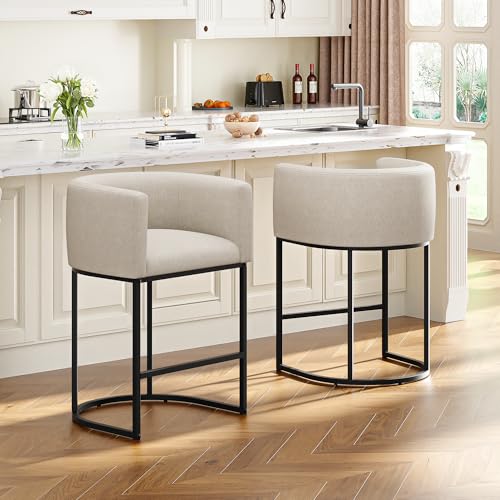


As an Amazon Associate we earn from qualifying purchases at no extra cost to you. Ratings are shown as listed on Amazon.
| Island height | Typical stool seat height | Usable island span per stool | Example layout width |
|---|---|---|---|
| 34 inches | 22–24 inches | 24–26 inches | 48 inches for 2 stools |
| 36 inches | 24–26 inches | 24–26 inches | 72 inches for 3 stools |
| 42 inches | 30–32 inches | 24–26 inches | 72 inches for 3 stools |
These are planning ranges, not guarantees of fit. Check the manufacturer’s listed seat height and overall width, and account for armrests, swivel hardware, and the space needed to pull stools out. If the counter height falls between common sizes, compare the seat-to-counter gap rather than choosing by the label “counter height” alone.
Which stool suits your kitchen?
| Your situation | Best starting point | Trade-off to consider |
|---|---|---|
| Small island or narrow walkway | Backless stool, about 16–18 inches wide | Less support; check that it tucks fully beneath the overhang. |
| Daily meals, homework, or long conversations | Stool with a supportive back and a footrest | It takes up more visual and physical space. |
| Young children or frequent spills | Wipeable seat with a stable base and simple seams | Hard surfaces may feel less comfortable for long sitting. |
| Flexible seating for different users | Height-adjustable stool, if its range suits the counter | More mechanisms mean more parts to inspect and clean. |
| Warm, natural-looking kitchen | Wood stool with a sealed finish | Unsealed wood can stain or absorb moisture. |
Backs, footrests, and seat shape: comfort versus clearance
Backless stools
These are easiest to tuck away and can keep a compact kitchen feeling open. They work well for quick breakfasts or occasional extra seating. The drawback is support: if people regularly sit at the island for an hour or more, a backless seat may feel tiring. Check whether the stool has a broad, stable base and whether its footrest is at a comfortable height.
Low backs and full backs
A low back provides some support while often keeping the profile modest. A full back is usually the better choice for longer meals, but its height and shape can prevent the stool from fitting under the counter. Before buying, compare the stool’s overall height with the counter overhang and any nearby window sill or cabinet. If the stool swivels, leave room for the back to rotate without striking adjacent surfaces.
Footrests and swivel seats
A footrest matters because feet that dangle can make even a well-padded seat uncomfortable. Look for a sturdy rung or ring that users can reach while seated. A swivel can make it easier to turn toward the room, but the seat needs extra clearance and the swivel joint can collect crumbs. For a tight layout, a fixed stool is often simpler.
Choose materials for the way the island is used
- Wood: Warm and repairable, but finish quality matters. Wipe spills promptly and avoid leaving standing water on joints or seat edges.
- Metal: Often durable and easy to wipe. Inspect welds, hardware, and floor glides; scratched coatings can expose the underlying metal to moisture.
- Plastic or molded seats: Simple to clean and useful in busy kitchens. They may show scratches or discoloration over time, so check the care instructions and color consistency.
- Upholstery: More comfortable for extended sitting, but fabric can hold food particles and stains. Removable, washable covers are easier to maintain than fixed upholstery.
- Faux leather or coated upholstery: Usually easier to wipe than woven fabric. Clean with a soft cloth and the recommended cleaner; harsh products can crack or dull the surface.
For any material, examine the places that take the most wear: seat edges, footrest joints, swivel connections, and the points where legs meet the frame. Floor glides are small but important. They can reduce scraping and protect flooring, though they may wear down or collect grit and need replacement.
A practical fit calculation
Suppose an island is 36 inches high and has 72 inches of clear seating span. A 25-inch seat leaves an 11-inch gap to the countertop, within the usual 10–12-inch target. At 24 inches of width per person, 72 inches accommodates three stools exactly. But if each stool is 20 inches wide with arms, three seats may feel crowded despite the nominal span. In that case, choose narrower armless stools or plan for two more comfortable seats. Also confirm that pulled-out stools do not block a main walkway or appliance door.
What to check before ordering
- Measure countertop height, underside clearance, overhang, and usable seating span.
- Compare seat height and total stool width with your measurements; include arms and backs.
- Check the listed weight capacity and whether the stool is intended for residential use.
- Confirm assembly requirements, return dimensions, and whether floor protectors are included.
- Read the care instructions for the exact finish or upholstery, especially if the kitchen sees frequent spills.
Prices vary by materials, construction, and whether stools are sold individually or in sets. As a broad market guide, simple backless stools commonly fall around $40–$120 each, while stools with backs, upholstery, or swivel mechanisms often range from about $100–$350 each. Higher-cost designs may use better finishes or construction, but price alone does not confirm comfort or durability.
Common ownership mistakes
The most frequent fit mistake is measuring to the countertop top and overlooking the underside, overhang, or a thick apron. Another is planning by seat width but forgetting the wider frame or arms. For maintenance, avoid dragging metal or wood legs across hard floors; keep glides clean and replace worn ones. Tighten hardware periodically if the maker recommends it, particularly on stools that swivel or are moved often. For upholstered seats, blot spills instead of rubbing them deeper into the fabric, and use only the cleaner specified for that material.
For a compact island, prioritize a narrow, armless stool that tucks in. For everyday seating, favor a supportive back and reachable footrest. In either case, verify the seat-to-counter gap and the actual footprint before choosing a finish or style.

Write Your Review
No reviews yet. Be the first to share your experience!