

Key takeaways
- Best all-around city choice: a Sold Secure Gold-rated U-lock with a 13–16 mm hardened-steel shackle.
- Best for high-risk parking: a Sold Secure Diamond-rated U-lock or anti-angle-grinder lock, accepting the extra weight and price.
- Best for securing two bikes or a frame to a wide object: a hardened chain with a protected disc-detainer or high-security cylinder.
- Best for commuters carrying the lock every day: a folding lock, preferably Sold Secure Gold, used with a secondary cable or compact U-lock.
- Best for trail and low-crime-area stops: a lighter U-lock or folding lock that fits inside a bag without discouraging regular use.
The best bike locks for maximum theft protection are a hardened-steel U-lock for most city riders, a heavy chain when you need more locking flexibility, and a compact folding lock only when portability matters more than resistance to power tools.
Our top picks


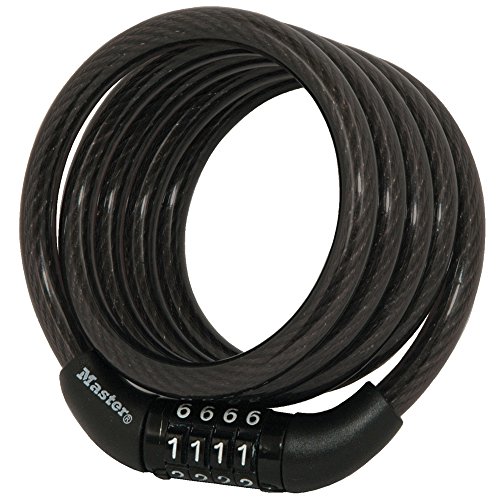

As an Amazon Associate we earn from qualifying purchases at no extra cost to you. Ratings are shown as listed on Amazon.
Best Bike Locks: Quick Recommendations
- Best all-around city choice: a Sold Secure Gold-rated U-lock with a 13–16 mm hardened-steel shackle.
- Best for high-risk parking: a Sold Secure Diamond-rated U-lock or anti-angle-grinder lock, accepting the extra weight and price.
- Best for securing two bikes or a frame to a wide object: a hardened chain with a protected disc-detainer or high-security cylinder.
- Best for commuters carrying the lock every day: a folding lock, preferably Sold Secure Gold, used with a secondary cable or compact U-lock.
- Best for trail and low-crime-area stops: a lighter U-lock or folding lock that fits inside a bag without discouraging regular use.
U-Locks vs. Chains vs. Folding Locks
Security ratings are useful, but they do not tell the whole story. Sold Secure Gold generally indicates strong resistance against more determined attacks, while Sold Secure Diamond is intended for the highest-risk bicycle and motorcycle security applications. The lock must still fit the bicycle, be attached correctly, and be secured to something that cannot be removed.
| Lock type | Typical security range | Typical weight | Useful internal size | Best use | Main limitation |
|---|---|---|---|---|---|
| Compact U-lock | Sold Secure Silver to Gold | 1.0–1.6 kg | 7–9 cm wide, 14–23 cm tall | One bicycle at a fixed city rack | May not fit thick posts, wide tires, or two bikes |
| Large U-lock | Sold Secure Gold to Diamond | 1.5–2.5 kg | 10–14 cm wide, 23–30 cm tall | Street furniture and larger frames | More leverage and more carrying weight |
| Security chain | Sold Secure Gold to Diamond | 2.5–6 kg | 90–140 cm length is common | Multiple bikes or awkward anchor points | Heavy; chain can damage paint without a sleeve |
| Folding lock | Sold Secure Silver to Gold | 1.0–1.8 kg | 75–120 cm unfolded length | Commuting and rack posts with limited frame clearance | Joints and rivets add attack points |
These are market-typical ranges rather than a specification for every model. Always check the current manufacturer specification and certification for the exact lock. Weight is especially important: a lock that stays at home provides no security on the ride.
Best U-Locks for Maximum Theft Protection
Why U-locks usually win in cities
A U-lock has fewer moving parts than a folding lock and gives a thief less flexible material to manipulate. A short shackle also limits the space available for inserting a jack or twisting tool. For that reason, a compact lock with a thick shackle can be more secure than a much larger lock that leaves a large open gap.
Examples of established U-lock families include the Kryptonite New-U Evolution, ABUS Granit XPlus 540, and higher-security models such as the Kryptonite New York Fahgettaboudit Mini. Their exact dimensions, weights, and certifications vary by version, so compare the product page rather than relying only on the model family name.
For ordinary daytime city parking, look for:
- A hardened-steel shackle of at least about 13 mm; 16 mm or more is preferable for higher-risk locations.
- A double-locking crossbar, meaning both sides of the shackle must be defeated before it opens.
- A protected keyway or well-regarded disc-detainer cylinder.
- An internal height that clears the frame, rear wheel, and anchor without leaving excessive empty space.
- A Sold Secure Gold or Diamond rating where an independent certification is available.
A compact U-lock is not automatically better. If its internal dimensions cannot capture the frame and an immovable anchor, its theoretical security is irrelevant.
When a Chain Is the Better Choice
A chain is the most adaptable option. A 90–100 cm chain can secure one bicycle to many street fixtures, while a 120 cm or longer chain may accommodate two bicycles or a large frame. The trade-off is weight: links thick enough for serious theft resistance quickly become uncomfortable to carry.
Choose a chain when your parking location has unusually wide posts, when several bikes must be secured together, or when you need to lock through a difficult frame geometry. Models from established security brands such as Kryptonite, ABUS, and Hiplok are available in different thicknesses and rating levels.
Do not judge a chain only by its link thickness. Examine the weakest component: the end link, lock body, connector, or cylinder. A chain with a fabric sleeve is easier on paint and quieter against metal racks. Keep it off the ground where possible; a thief can use the ground to support heavy cutting tools.
Are Folding Locks Secure Enough?
Folding locks are attractive because they pack neatly into a frame-mounted case and usually offer more usable length than a compact U-lock at a similar weight. The ABUS Bordo range is a well-known example, with versions that differ substantially in security level and weight.
Their segmented construction introduces joints, rivets, and pivot areas. That does not make every folding lock weak, but it makes certification and model selection particularly important. A high-quality Gold-rated folding lock can suit a regular commuter who parks briefly in a busy area. For overnight parking, isolated racks, or expensive bicycles, pair it with a stronger U-lock or choose a chain or Diamond-rated U-lock instead.
Decision Matrix: Match the Lock to Your Routine
| Your situation | Recommended choice | Target specification | Reason |
|---|---|---|---|
| Short daytime stops in a busy district | Compact U-lock | Sold Secure Gold, 13–16 mm shackle | Good resistance without excessive carrying weight |
| Overnight parking or a valuable e-bike | Diamond-rated U-lock or chain | 16–20 mm hardened steel where practical | Raises the time, noise, and tool requirements for an attack |
| Two bicycles or a large, awkward anchor | Long security chain | 100–140 cm, Gold or Diamond rating | Length and flexibility matter more than compactness |
| Daily train commute with limited luggage space | Folding lock | Gold rating, about 1.2–1.8 kg | Efficient storage and useful reach |
| Short trail café stops in a low-risk area | Light U-lock or folding lock | About 0.8–1.3 kg; prioritize consistent carrying | Practical security is better than a heavy lock left behind |
How to Size and Use a Bike Lock
Measure the actual parking points before buying. For a U-lock, allow enough internal space to capture the frame’s main triangle and the rack, but avoid a large unused gap. A useful starting point is roughly 2–4 cm of clearance around the secured parts. For a chain, measure the route around the frame and anchor, then add approximately 15 cm for hand movement and locking the mechanism.
- Pass the lock through the frame, not only the front or rear wheel.
- Include the rear wheel when possible, because it is usually more expensive and harder to replace than a front wheel.
- Use a secondary cable only for low-value components; a cable alone is not a high-security lock.
- Keep the lock body and keyway facing downward or toward the frame, reducing access and water exposure.
- Remove slack so the lock cannot be twisted against the ground.
- Park in a visible, well-used location and avoid racks that can be unbolted, cut, or lifted over.
Ownership Costs and Maintenance
General market pricing is approximately $40–$100 for a basic to mid-range U-lock, $90–$180 for a high-security U-lock, $70–$250 for a security chain, and $60–$180 for a quality folding lock. Anti-angle-grinder designs and certified Diamond-rated products can cost more.
The parts most likely to become troublesome are the cylinder, spring-loaded locking mechanism, folding joints, and chain sleeve. Wipe road grit from the shackle and lubricate the cylinder only with the lubricant recommended by the manufacturer. Avoid forcing a key into a dirty or frozen keyway. Store the lock dry, inspect for bent shackles or loose rivets, and replace it after serious attack damage even if it still appears to close.
The most common buying mistake is choosing by weight alone. The second is buying a lock that is too small to secure the frame properly. Select the highest security level you can carry every time, make sure its dimensions suit your bicycle and parking fixtures, and reserve the heaviest lock for situations where the theft risk justifies it.

Write Your Review
No reviews yet. Be the first to share your experience!