

Key takeaways
- The stone is a consumable part. Thermal shock, dropped cookware and spills can crack it. Let the oven cool naturally; do not pour water onto a hot stone.
- Burnt flour is a common failure point. Excess flour or semolina can scorch and leave bitter carbon on the floor. Use a light dusting and brush loose residue away between cooks.
- Moisture causes avoidable damage. Use the manufacturer-appropriate cover only after the oven is cool and dry. Do not seal damp ash inside the chamber.
- Wind affects gas performance. Position the oven in a sheltered, ventilated area, while maintaining the required clearance from walls and combustible materials.
- Inspect the gas connection. Check the hose, regulator and fittings for wear or damage before the season begins, and use a qualified professional for any permanent gas installation.
- Storage changes the best choice. A Roccbox or Tread can be put away by one person; an Arc, Dome or Dome XL may need two people or a dedicated wheeled stand.
The best Gozney pizza oven for most homes is the Roccbox for compact value, while the Arc XL is the stronger choice for frequent family cooking and the Dome range suits cooks who want a larger, more permanent outdoor setup.
Our top picks


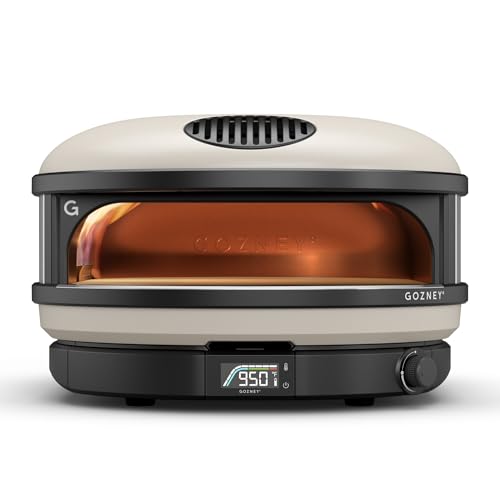

As an Amazon Associate we earn from qualifying purchases at no extra cost to you. Ratings are shown as listed on Amazon.
Best Gozney pizza ovens at a glance
| Oven | Fuel | Cooking surface | Maximum heat | Approx. weight | Best for |
|---|---|---|---|---|---|
| Roccbox | Propane; optional wood burner | 12-inch pizza | 500°C / 932°F | About 20 lb / 9 kg | Small patios, beginners, value |
| Tread | Propane; wood capability varies by configuration | 12-inch pizza | About 500°C / 932°F | About 30 lb / 14 kg | Portable outdoor cooking |
| Arc | Gas | 14-inch pizza | About 500°C / 932°F | About 58 lb / 26 kg | Regular family use |
| Arc XL | Gas | 16-inch pizza | About 500°C / 932°F | About 60–70 lb / 27–32 kg | Large pizzas and entertaining |
| Dome | Gas; wood-capable versions available | 16-inch pizza | About 500°C / 932°F | About 125 lb / 57 kg | Permanent outdoor kitchens |
| Dome XL | Gas and wood, depending on model | About 20-inch pizza | About 500°C / 932°F | Well over 150 lb / 68 kg | High-volume cooking and big gatherings |
Specifications can differ between regional versions and newer generations, especially for weight and included accessories. Check the product label before purchase if a particular fuel type or countertop limit matters.
Our picks by situation
| Your situation | Best match | Why | Main compromise |
|---|---|---|---|
| First pizza oven, limited space | Roccbox | Small footprint, quick gas ignition, simple controls | One 12-inch pizza at a time |
| Taking an oven to a campsite or second home | Tread | Designed around transport and outdoor use | Still needs a stable, heat-safe surface and gas cylinder |
| Weekly cooking for two to four people | Arc | Larger opening and floor than the Roccbox without Dome-level bulk | Not a practical lift-and-carry oven |
| Frequent parties or 16-inch pizzas | Arc XL | More turning room and fewer size restrictions | Higher cost and greater storage demands |
| Built-in outdoor kitchen or dedicated stand | Dome | More thermal mass, room for larger cooking sessions and multiple foods | Expensive, heavy and difficult to relocate |
| Several pizzas in succession for a crowd | Dome XL | Largest cooking area in the range | Requires substantial space, support and budget |
Roccbox: the sensible starting point
The Roccbox remains the easiest Gozney to recommend when the priority is accessible home pizza making. Its 12-inch stone is large enough for a standard personal pizza but small enough to heat efficiently. Gas makes the learning curve forgiving: turn it on, allow roughly 15–20 minutes to preheat, and adjust the flame without managing a fire.
The compact chamber can reach pizza-baking temperatures around 500°C, but its size creates a practical limit. A thick 12-inch pizza, large cast-iron pan or roast may leave little room to maneuver. The oven also recovers heat more quickly for one or two pizzas than for a long queue of pizzas.
Choose the optional wood setup if smoky flavor and live-fire cooking matter more than convenience. Wood requires more attention, creates ash and can make temperature control less predictable for a beginner. For occasional use, propane is usually the lower-friction choice.
Tread: portable, but not weightless
The Tread targets people who want to move an outdoor oven rather than leave it on a patio. It is more travel-oriented than the Roccbox, with a design intended for outdoor transport and repeated setup. That does not make it a lightweight tabletop appliance: around 14 kg before fuel, tools and food is enough to affect how far you will realistically carry it.
Its 12-inch capacity keeps cooking familiar for Roccbox users. The key advantage is portability and outdoor versatility, not a larger pizza. Before taking it camping, confirm the fuel configuration, local fire rules and whether your gas cylinder connection is compatible. Never operate it inside a tent, garage, enclosed porch or vehicle.
Arc versus Arc XL: the important size decision
The Arc is the better middle ground for a household that expects to cook often. Its roughly 14-inch capacity provides more space to launch, rotate and retrieve a pizza than the Roccbox, while the gas burner removes much of the fire management associated with wood. It is best treated as a semi-permanent patio appliance because its weight makes frequent relocation inconvenient.
The Arc XL earns its higher price when the extra floor area will actually be used. A 16-inch pizza needs more than a nominally larger stone: the opening must allow the peel, and the side clearances must leave room to turn the pizza without striking the wall. It also provides more flexibility for bread, vegetables, steaks and larger pans.
There is a useful capacity calculation here. If a 12-inch pizza is enough for two people, four guests may require two pizzas at once or a faster sequence. Moving from a 12-inch oven to a 16-inch oven increases the diameter by one-third, but the theoretical cooking area rises by about 78% because area follows the square of the radius. That extra room is valuable for family-size pizzas, although the oven still cooks one pizza at a time.
Dome and Dome XL: for a dedicated cooking station
The Dome range is aimed at owners with a permanent outdoor location, a sturdy stand and a willingness to pay for capacity. Compared with the smaller models, the larger chamber and greater thermal mass can make back-to-back cooking more comfortable, particularly when cooking different foods at different temperatures.
Gas is the practical option when predictable startup and repeatable heat are priorities. A wood-capable Dome is more appealing if you enjoy tending a fire and want the extra flexibility of live-fire cooking. Wood is not automatically better: it requires dry, suitable fuel, ash removal and attention to flame placement.
Dome XL is a specialist choice rather than the default “best” model. Its larger cooking area is useful for big pizzas and entertaining, but its size can turn installation into a construction and logistics question. Measure gates, steps, storage doors and the final stand, not just the space on the patio.
Heat-up time, fuel and running costs
Gozney gas ovens commonly reach cooking temperature in approximately 15–30 minutes, depending on ambient temperature, wind, fuel pressure and the model’s thermal mass. Larger ovens may take longer to saturate even when the stone surface appears hot. Use an infrared thermometer to check the stone rather than relying only on the air temperature or the flame color.
A simple ownership estimate helps compare frequent use. Suppose a propane cylinder refill costs $25 and supplies roughly 8–12 hours of oven operation. At 45 minutes of burner time per session, that equals about 10–16 sessions, or approximately $1.60–$2.50 of fuel per use. Actual consumption varies significantly with burner setting, preheat time and wind; wood costs can be higher or lower depending on local supply.
Durability and maintenance realities
- The stone is a consumable part. Thermal shock, dropped cookware and spills can crack it. Let the oven cool naturally; do not pour water onto a hot stone.
- Burnt flour is a common failure point. Excess flour or semolina can scorch and leave bitter carbon on the floor. Use a light dusting and brush loose residue away between cooks.
- Moisture causes avoidable damage. Use the manufacturer-appropriate cover only after the oven is cool and dry. Do not seal damp ash inside the chamber.
- Wind affects gas performance. Position the oven in a sheltered, ventilated area, while maintaining the required clearance from walls and combustible materials.
- Inspect the gas connection. Check the hose, regulator and fittings for wear or damage before the season begins, and use a qualified professional for any permanent gas installation.
- Storage changes the best choice. A Roccbox or Tread can be put away by one person; an Arc, Dome or Dome XL may need two people or a dedicated wheeled stand.
Final verdict
For the widest range of home users, the Roccbox is the best Gozney pizza oven when compact size, fast gas heating and manageable cost matter most. Pick the Tread when portability is central, the Arc for regular family cooking, and the Arc XL when 16-inch pizzas and entertaining justify the extra bulk. Choose a Dome or Dome XL only when you have the space, support and cooking frequency to benefit from a permanent high-capacity setup.

Write Your Review
No reviews yet. Be the first to share your experience!