

Key takeaways
- For maximum indoor maneuverability, start with a correctly fitted standard or two-wheel walker. For mixed indoor and outdoor use, choose a rollator with a width that fits the home, front wheels of about 7 to 8 inches, easy-to-squeeze locking brakes, and a firm seat at…
The best walkers for seniors are the ones whose width, height, wheels, brakes, seat, and weight match the user’s body, home layout, and usual walking surfaces—not necessarily the model with the most features.
A basic fixed walker is usually the most stable choice for short indoor transfers and people who need to place substantial weight through the frame. A two-wheel walker adds smoother forward movement, while a four-wheel rollator is generally more convenient outdoors and for longer distances. The trade-off is that a rollator requires the user to control moving wheels and hand brakes, so it may not suit everyone.
Our top picks


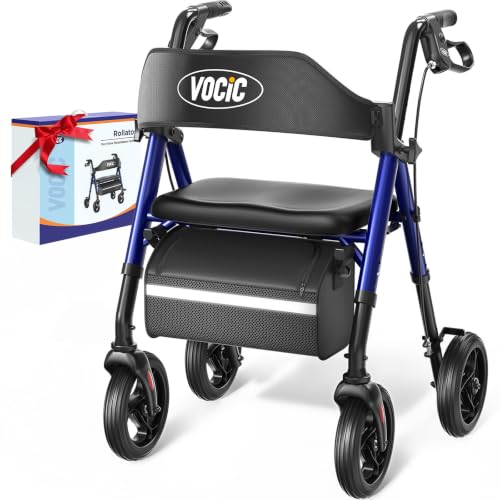
As an Amazon Associate we earn from qualifying purchases at no extra cost to you. Ratings are shown as listed on Amazon.
Quick comparison: which walker fits the situation?
| Situation | Most suitable type | Useful target specifications | Main compromise |
|---|---|---|---|
| Small rooms, narrow halls, frequent standing support | Standard or two-wheel walker | 22–25 in. wide; 6–8 in. wheels; 6–9 lb | Usually no seat and less convenient outdoors |
| Indoor and outdoor walking with occasional rests | Four-wheel rollator | 23–27 in. wide; 7–9 in. front wheels; 13–18 lb | Needs brake control and more storage space |
| Uneven sidewalks, paths, and longer outings | Outdoor-oriented rollator | At least 8 in. wheels; cable or loop brakes; 15–22 lb | Bulkier and harder to lift into a vehicle |
| Very limited storage or frequent car travel | Folding rollator or compact walker | Folded depth under 10–12 in.; under 15 lb where possible | Small wheels may feel rough outdoors |
| Need for a rest seat during shopping or appointments | Rollator with padded seat and backrest | Seat width 17–20 in.; seat height 18–23 in.; capacity commonly 250–350 lb | Heavier, wider, and not intended as a transport wheelchair |
These are practical selection targets rather than universal requirements. A physical therapist, occupational therapist, or other qualified professional can help determine whether a person should use a fixed walker, two-wheel walker, or rollator.
How the frame width affects stability
A wider frame generally provides a broader support base, but width alone does not guarantee safer walking. A walker that is too wide may force the user to reach outward or twist when passing through doorways. Measure the narrowest route at home, including bathroom entrances, between furniture, and around kitchen counters.
For many homes, a frame around 22 to 25 inches wide is easier to maneuver. Rollators measuring 26 to 28 inches may feel more planted outdoors but can be awkward in older homes. Leave extra clearance: a 24-inch doorway is not truly a 24-inch usable opening if the user must turn, manage a bag, or walk beside a caregiver.
Height adjustment is a safety feature, not a convenience
With shoes on and arms relaxed, the handgrips should normally line up near the wrist crease. When the hands rest on the grips, the elbows should remain slightly bent—often around 15 to 30 degrees. This lets the user apply pressure without hunching or locking the elbows.
Adjust both sides to the same height. Uneven settings can make the frame rock or encourage an asymmetrical posture. Push-button legs are quick to change, while tool-free telescoping adjustments can provide finer fitting. Check that each adjustment pin is fully engaged before use.
A simple fit calculation can prevent a common mistake. If the wrist crease is 32 inches from the floor while wearing walking shoes, begin with grips close to 32 inches, then check posture and comfort with a professional if possible. Do not choose a height based only on the user’s overall stature; leg length, posture, and hand position differ substantially.
Wheel size determines where a walker feels secure
Small wheels, typically 5 to 6 inches, are lighter and easier to control indoors. They can catch on thresholds, cracks, gravel, and thick carpet. Front wheels around 7 to 8 inches roll more smoothly over ordinary outdoor pavement. Larger wheels can also reduce the tendency to stop abruptly at a sidewalk seam.
Wheel size does not replace caution. A rollator should not be used to climb stairs, escalators, or steep curbs. Approach thresholds slowly, keep both hands on the grips, and follow the manufacturer’s instructions. Swiveling front wheels improve turning but may feel less predictable than fixed front wheels for someone new to a rollator.
Brakes: compare control, not just the presence of a lever
Most rollators use loop-style hand brakes. Squeezing the levers slows the wheels; pushing or pulling them into a locked position holds the rollator still. The user must be able to squeeze both levers evenly and understand the difference between slowing and locking.
Test the brake reach with the hands positioned naturally. A lever that is too far away, stiff, or difficult to hold may be unsuitable even if the frame is otherwise excellent. Some models offer adjustable brake cables or handles. Brake cables can stretch over time, and worn pads or damaged wheel hardware require inspection and replacement.
Never sit on a rollator until both parking brakes are locked and the device is on level ground. Do not use a rollator as a seat while it is moving, and do not pull it backward while seated unless the manufacturer specifically permits that use.
Seat padding and seat height change real-world usability
A padded seat is useful for planned rest breaks, but thicker padding is not automatically better. Very soft foam can compress unevenly and make sitting or rising less stable. A firm, supportive seat with a washable cover is often easier to clean and easier to stand from.
Seat height matters more than cushion thickness. A seat that is too low increases the effort needed to stand; one that is too high may leave the feet dangling. When seated, the user should be able to place both feet securely on the ground. Check the seat width and the manufacturer’s weight capacity, including clothing and any carried items.
A rollator seat is not a substitute for a wheelchair. It is designed for brief rests, not for being pushed while someone remains seated. A backrest may improve comfort, but it can also add weight and make the folded package larger.
Foldability versus rigidity and weight
Folding mechanisms make storage and car transport easier, but each hinge, latch, and release strap adds parts that need inspection. The frame should open fully and lock without excessive play. A lightweight walker under about 12 pounds is easier to lift, while a 16- to 22-pound rollator may feel more stable and carry larger wheels, a seat, and a basket.
Use a decision matrix rather than choosing the lightest model automatically:
| Priority | Recommended emphasis | What to accept as a trade-off |
|---|---|---|
| Lowest budget, mainly indoor use | Simple frame, reliable tips, correct height range | No seat, smaller wheels, fewer accessories |
| New walker user | Predictable steering, easy brakes, professional fitting | Possibly more weight than a minimalist model |
| Small apartment | Under 25 in. wide and compact folded dimensions | Less outdoor performance |
| Daily outdoor use | 8-in. wheels, durable tires, adjustable brakes | Higher weight and a larger turning radius |
| Frequent car transport | One-hand folding and a manageable lifting weight | Smaller basket or less rigid frame |
Ownership details that product listings often omit
The parts that commonly wear first are rubber tips, wheels, brake cables, brake pads, seat fasteners, and folding latches. Inspect rubber tips for flattening, cracks, or a shiny surface that reduces grip. Spin each wheel and look for wobbling, embedded debris, or uneven wear.
Clean the frame with mild soap and water, then dry the joints. Avoid soaking bearings, using abrasive cleaners, or applying oil where the manufacturer specifies a dry mechanism. Keep the walker out of prolonged rain and store it dry. Periodically tighten only the fasteners identified in the instructions; over-tightening can damage tubing or prevent folding.
Common mistakes include hanging heavy bags from one handle, using a basket beyond its capacity, walking too far behind the frame, and leaning a rollator against a moving surface. Keep loads low and centered. Before every outing, confirm that the frame is fully open, the wheels turn freely, the brakes lock, and the user can comfortably reach the grips.
Bottom line
For maximum indoor maneuverability, start with a correctly fitted standard or two-wheel walker. For mixed indoor and outdoor use, choose a rollator with a width that fits the home, front wheels of about 7 to 8 inches, easy-to-squeeze locking brakes, and a firm seat at an appropriate height. Prioritize fit and control over accessories, and seek professional guidance when balance, strength, vision, or hand function makes walker selection uncertain.

Write Your Review
No reviews yet. Be the first to share your experience!