
Our Short List of 3

- Backup battery: rechargeable lithium-ion in the base station, up to 24 hours as published by Ring
- Kit contents: base station, 2 keypads, 8 contact sensors, 2 motion detectors, 1 range extender
- Base station power: 100-240V AC adapter included
- Device link: Z-Wave between base station and components, with Wi-Fi and Ethernet at the base station

- Backup battery: rechargeable base station battery, up to 24 hours as published by SimpliSafe
- Kit contents: base station, keypad, 1 entry sensor, 1 motion sensor, 1 key fob
- Siren: 95 dB, built into the base station
- Connectivity: built-in cellular connection plus Wi-Fi; works with Alexa and Google Assistant
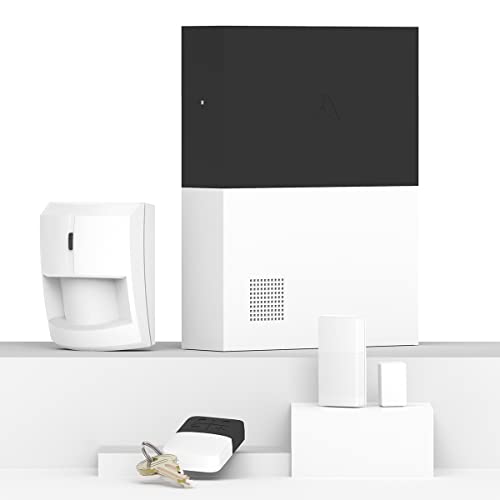
- Backup battery: built-in nickel-metal hydride pack, up to 5 hours per abode documentation; full charge up to 72 hours
- Kit contents: gateway hub, 1 mini door/window sensor, 1 motion sensor, 1 key fob
- Siren: 93 dB, built into the hub
- Connectivity: Ethernet to the router; Z-Wave and Zigbee radios; works with Apple HomeKit, Alexa and Google Assistant
All 4 Picks at a Glance
| Product | Specs | Action |
|---|---|---|
| Ring Alarm 14-Piece Kit (2nd Gen) |
| Check price on Amazon |
| SimpliSafe 5 Piece Wireless Home Security System |
| Check price on Amazon |
| abode 4 Piece Wireless Smart Security System |
| Check price on Amazon |
 PGST Wireless Home Alarm System, 8-Piece Kit (PG103A) |
| Check price on Amazon |
Key takeaways
- Do all alarm security systems have a battery backup? How panel, sensor and siren batteries work, how long they last, and five systems with published times.
The short answer is: nearly every proper alarm system does, but not every product sold under the alarm label works the same way. Any system built around a control panel or hub — the kind that monitors door sensors, motion detectors and a siren — almost always carries a rechargeable backup battery inside that panel. It has to. An alarm that goes dark the moment the mains power fails would leave the home unprotected during exactly the kind of event, a blackout, when protection matters most. Makers therefore treat the backup battery as a standard part of the design, and they publish how long it lasts: a full day on some systems, a single work shift on others.
The exceptions sit at the edges of the category. A standalone siren host or a single battery-powered door alarm is not a panel system at all; it simply runs on its own batteries until they fade. And even on a full system, the panel battery is only one of three separate battery layers, each with its own job and its own lifespan. Understanding which battery does what is the key to knowing what keeps working when the power goes out.
Disclosure: As an Amazon Associate, we earn from qualifying purchases made through links on this page, at no extra cost to you.
Three different batteries inside one system
When people ask whether an alarm system “has a battery,” they usually picture a single battery somewhere. In practice there are three, and they fail in three different ways.
The panel or hub backup battery is the one the question is really about. It sits inside the main control unit and takes over automatically when mains power drops. On current DIY systems it is a rechargeable lithium-ion or nickel-metal hydride pack built into the hub. On older hardwired panels it is traditionally a sealed lead-acid block sitting in the metal control cabinet. Either way, its job is narrow: keep the panel, its radio links and its siren alive for a stated number of hours.
Sensor batteries are separate and far more numerous. Wireless door and window sensors usually run on small coin cells such as CR2032 or CR2450 cells, motion detectors commonly use AAA cells or a lithium cell, and some 433 MHz accessories use small 12 V cells. These sensors are battery powered full time, outage or not, so a power cut changes nothing for them. What matters is the slow fade over months or years, which is why panels and apps issue low-battery warnings for individual sensors.
Keypad and siren batteries form the third layer. Wireless keypads are often rechargeable or run on replaceable cells so they can sit away from the panel. Plug-in accessories can carry their own small backup too — Ring, for example, publishes a 24-hour battery backup figure for its Alarm Range Extender as well as for the base station — and many wireless outdoor sirens hold a small built-in rechargeable pack so the siren still sounds even if its power lead is cut.
What happens when the power goes out
The switch to backup power is automatic and, on the systems below, effectively instant: the panel keeps receiving sensor signals, and if a door opens, the siren sounds just as it would on mains power. Arming and disarming from the keypad or a remote keeps working, because those parts never depended on the wall outlet in the first place.
The part that can change is communication. A system that sends phone alerts over home Wi-Fi loses that path if the router is also dark, unless it has a second route. This is where designs diverge. SimpliSafe builds a cellular connection into its base station. Abode puts a SIM slot in its hub and enables 4G backup on its higher monitoring plan. PGST’s GSM and 4G panels can send text messages and place calls over the mobile network. Without a cellular path, the alarm still works locally — siren, sensors, keypad — but the phone in your pocket may hear nothing until the internet returns.
It is also worth knowing what the backup battery does not cover. Cameras, smart plugs and other mains-powered accessories on the same network are not fed by the panel battery. The backup exists to protect the alarm loop itself, nothing more.
How long does the backup battery actually last?
Published figures for the systems below span a wide range: up to 24 hours for the Ring Alarm base station and the SimpliSafe base station, roughly 8 hours for the PGST panels, and up to 5 hours for the abode hub. Treat every one of these numbers as a standby-style estimate from the maker’s own documentation, measured under the maker’s conditions. A panel that is actively sounding its siren and pushing out alerts draws more than a panel sitting quietly armed, so real endurance during a noisy outage will be shorter than the headline figure.
Chemistry explains part of the spread. Lithium-ion packs pack more energy into a small hub, which is how the compact DIY panels reach their figures. Abode’s nickel-metal hydride pack is the reason its number is lower, and abode’s documentation adds two practical details: the pack can take up to 72 hours to charge fully, and a physical switch on the back of the hub turns the backup on — leave it off and there is no backup at all. PGST’s manuals make the matching point from the other side, advising owners to keep the host connected to power so the backup battery stays charged.
Age matters as well. Rechargeable packs slowly lose capacity over the years, so a five-year-old panel will not match its original figure. If an older system starts reporting low backup battery warnings, the pack is usually replaceable on hardwired panels, while sealed DIY hubs may need maker support.
Five alarm systems with published battery backup figures
The five systems below were chosen because each maker publishes its backup battery type or duration in its own listing or manual, which makes them useful reference points for what “having a battery” actually means in practice.
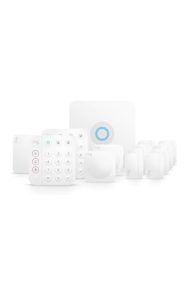
Ring Alarm 14-Piece Kit (2nd Gen)
- Backup battery: rechargeable lithium-ion in the base station, up to 24 hours as published by Ring
- Kit contents: base station, 2 keypads, 8 contact sensors, 2 motion detectors, 1 range extender
- Base station power: 100-240V AC adapter included
- Device link: Z-Wave between base station and components, with Wi-Fi and Ethernet at the base station
Ring’s kit is the clearest illustration of the layered approach. The base station carries a rechargeable lithium-ion backup that Ring rates for up to 24 hours, the keypads are rechargeable, and even the plug-in range extender publishes its own 24-hour backup figure, so a cut power cable does not silence any single part of the system. The 14-piece kit suits larger homes, with eight contact sensors and two motion detectors feeding the base station over Z-Wave.
SimpliSafe 5 Piece Wireless Home Security System
- Backup battery: rechargeable base station battery, up to 24 hours as published by SimpliSafe
- Kit contents: base station, keypad, 1 entry sensor, 1 motion sensor, 1 key fob
- Siren: 95 dB, built into the base station
- Connectivity: built-in cellular connection plus Wi-Fi; works with Alexa and Google Assistant
SimpliSafe publishes the same headline figure as Ring — a base station backup battery that lasts up to 24 hours — and pairs it with a built-in cellular connection, so alerts can still leave the house when both power and broadband are down, as long as a monitoring plan is active. The base station also houses a 95 dB siren. This five-piece kit is the compact starting point in the range: one entry sensor, one motion sensor and a key fob alongside the base station and keypad.
abode 4 Piece Wireless Smart Security System
- Backup battery: built-in nickel-metal hydride pack, up to 5 hours per abode documentation; full charge up to 72 hours
- Kit contents: gateway hub, 1 mini door/window sensor, 1 motion sensor, 1 key fob
- Siren: 93 dB, built into the hub
- Connectivity: Ethernet to the router; Z-Wave and Zigbee radios; works with Apple HomeKit, Alexa and Google Assistant
Abode is the honest counter-example that proves duration is not automatic. Its Smart Security Hub uses a built-in nickel-metal hydride backup battery that abode’s documentation puts at up to five hours — enough for a short outage, far short of a full day. The same documentation notes the pack needs up to 72 hours for a full charge and is switched on at the back of the hub. In return, the hub offers Ethernet connection, Z-Wave and Zigbee radios, Apple HomeKit support and a 93 dB built-in siren, with a SIM slot for 4G backup on the maker’s Pro plan.
PGST Wireless Home Alarm System, 8-Piece Kit (PG103A)
- Backup battery: built-in lithium-ion, approximately 8 hours per the PGST manual
- Kit contents: alarm host, 1 door sensor, 1 motion detector, 2 remote controls, 2 RFID cards, 1 alarm siren
- Siren: 120 dB
- Connectivity: Wi-Fi (2.4 GHz) plus 2G/3G/4G cellular; Smart Life app; works with Alexa
PGST’s manual for the PG103A states the arrangement plainly: the alarm host has a built-in lithium-ion backup battery providing approximately 8 hours of operation during a power outage, and owners are told to keep the host connected to power so the pack stays charged. The same manual covers the second battery layer too, describing the app’s low-battery reminders for the wireless sensors. The kit combines Wi-Fi with 2G, 3G and 4G cellular paths, so the panel can send app alerts, texts or calls when a sensor trips.
PGST 2025 WiFi Wireless Home Alarm System (PG107F-US-E)
The larger PGST kit publishes the same backup story with a bigger sensor count. Its manual states that the alarm host includes a built-in lithium-ion battery providing up to 8 hours of backup power during an outage, and the Smart Life app flags sensor batteries as they run low. The host is a 4.3-inch full-touch LCD unit combining panel, keypad and siren functions, and the box stretches to eight door and window sensors and four motion detectors, which makes it the widest-coverage option here.
Specs
- Backup battery: built-in lithium-ion, up to 8 hours per the PGST manual
- Kit contents: alarm host, 8 door/window sensors, 4 motion detectors, 3 remote controls, 3 RFID cards, 1 alarm siren, 1 emergency button
- Siren: 120 dB
- Screen: 4.3-inch full-touch LCD
- Connectivity: GSM/4G plus Wi-Fi (2.4 GHz); Smart Life app; works with Alexa
- Expansion: up to 99 sensors and 5 remote controls
Frequently asked questions
Does every alarm system have a backup battery?
Every system built around a control panel or hub from a mainstream maker includes one, because the panel is expected to keep working through an outage. The exceptions are products that are not really panel systems: standalone siren units and single battery-powered door alarms run entirely on their own batteries, and a few very basic kits leave the panel dependent on its power adapter. Checking for a published backup figure in the manual, like the ones quoted above, is the fastest way to confirm which type a product is.
Will my alarm still work during a power cut?
Yes, within the limits of its backup battery. Sensors are battery powered already, so they keep reporting; the panel switches to its internal pack automatically; and the siren can still sound. What can pause is remote alerting. If the system talks to your phone over home Wi-Fi only, a dead router means no alerts until power returns, while systems with a cellular path — built in, or enabled on a plan — can keep sending them.
How long do the sensor batteries last?
Far longer than the panel backup, because sensors sip power and only transmit in short bursts. Makers commonly quote a year or more for door and window sensors on coin cells, and motion detectors on AAA or lithium cells sit in a similar range, though busy doors shorten things. The practical safeguard is the low-battery warning: panels and apps flag the individual sensor that is fading, as PGST documents for its app, so a sensor rarely dies without notice.
What should I check about the battery before buying a system?
Four things. First, the published backup duration, and whether it comes from the maker’s manual rather than a headline claim. Second, the chemistry and whether the pack is replaceable or sealed into the hub. Third, any conditions attached — abode’s hub, for instance, has a backup switch that must be turned on, and its pack needs up to 72 hours to charge fully. Fourth, whether alerts survive an internet outage, which is a question about cellular backup rather than battery size.
Conclusion
So, does every alarm security system have a battery? Every panel-based system worth the name does — a rechargeable backup pack in the hub is as standard as the siren itself. What is not standard is everything around that simple fact: whether the backup lasts five hours or a full day, whether the sensors and sirens carry batteries of their own (they do, and those are the ones you will actually replace), and whether the system can still reach your phone once the router goes dark. Read the maker’s published backup figure before buying, keep the panel plugged in so the pack stays charged, and the battery question answers itself the first time the lights go out.
More from Amazon
Programs that pair well with the guide above. Offers and eligibility are set by Amazon and may change.
Free shipping on eligible items, Prime Video and more. Eligible new members can start with a free trial.
Start a Prime free trialAudiobooks and podcasts to listen to on the go. Eligible new members can start with a free trial.
Try Audible freeAd-free music streaming. Eligible new subscribers can start with a free trial.
Try Music Unlimited freeA free business account with business pricing and bulk-buying tools for work, shop or home office.
Create a business accountAs an Amazon Associate we earn from qualifying purchases.

Write Your Review
No reviews yet. Be the first to share your experience!