
Our Short List of 3

- View on Amazon: https://www.amazon.com/dp/B00OHD15E6

- View on Amazon: https://www.amazon.com/dp/B0BY8D81NB

- View on Amazon: https://www.amazon.com/dp/B07PRGGRGW
All 4 Picks at a Glance
| Product | Specs | Action |
|---|---|---|
| KERUI Standalone Security Alarm System Kit |
| Check price on Amazon |
| TECKNET Door Alarms, 3 Pack |
| Check price on Amazon |
| Hosmart Wireless Driveway Alarm System |
| Check price on Amazon |
 UltraPro Personal Security Window and Door Alarm, 4 Pack |
| Check price on Amazon |
Key takeaways
- Compare motorhome alarm systems, from a full wireless siren kit to simple door alarms, with sensors, range and power explained to help you secure your rig.
As an Amazon Associate we earn from qualifying purchases.
A motorhome is a difficult thing to secure. It is a vehicle and a home at the same time, with an entry door, cab doors, windows, roof vents and external storage lockers all offering a way in, and it is often left unattended in exactly the places where help is furthest away: a storage yard, a lay-by, a campsite while you are out for the day, or a quiet street outside a house. Its contents are also unusually portable and valuable for its size, from electronics and tools to documents and personal belongings. A house alarm assumes mains power, thick walls and a fixed address. A motorhome alarm has to work within a small, thin-walled space, on limited power, without drilling into bodywork you may not want to alter, and without sounding so often at normal campsite movement that you stop using it.
That shapes what a good system looks like for this job. At one end are complete wireless kits with a siren, door contacts, motion detectors and remotes, covering the door, lockers and living space as one armed system with no network needed. At the other end are individual battery door alarms, which do one job loudly, need no hub or wiring, and fit in minutes.
This guide compares four alarm systems that cover those approaches, each usable in a motorhome without professional installation. One is a complete standalone siren kit whose own product page names motorhome use. One is a pack of door alarms whose listing names caravans among its uses. One is a long-range outdoor motion alert for the pitch or storage space around the rig. The fourth is a simple four pack of window and door alarms for covering several openings at once. The how-to-choose section explains how to combine or choose between them for the way you actually park and travel.
Disclosure: This article contains affiliate links. If you buy through these links, we may earn a commission at no additional cost to you.
How to Choose a Motorhome Alarm System
Decide what the alarm has to do when it triggers
There are three different jobs an alarm can do, and confusing them leads to the wrong purchase. A local siren makes noise at the motorhome itself, to drive an intruder away and alert people nearby. A perimeter alert makes noise or a chime inside, to warn you while you are in or near the rig that someone or something is approaching. A remote alert notifies your phone, which is the only option that helps when you are miles away, but it depends on a network connection and usually on a hub, an app or a subscription arrangement. Most motorhome owners need the first job most of all, many want the second at night, and the third is valuable mainly for rigs stored away from home. Choose systems by which of those jobs they genuinely perform, as listed on their product pages, not by the word alarm alone.
Count the openings, then choose sensors
Walk around your motorhome and count what opens: habitation door, cab doors, windows that open, roof vents large enough to matter, and external lockers holding anything worth taking. Door and window protection uses magnetic contact sensors, which trigger when the two parts separate. Living-space protection uses a passive infrared motion detector, which covers a volume rather than an opening and is well suited to the single main space of a motorhome. A complete kit that supports many wireless detectors lets you start with the entry door and add locker and window sensors later. A pack of standalone alarms covers several openings at once but each unit works independently, with its own switch and batteries.
Power, and life away from hook-up
Check how each system is powered before anything else, because a motorhome spends much of its life off mains power. Standalone door alarms run on small batteries for long periods and ask nothing from the vehicle. A full siren kit may need mains power for its siren unit, which suits a rig on hook-up or in storage with power available, and needs more thought for wild camping. Motion alert receivers may run on batteries or a plug-in supply. Match the system to your pattern: a stored motorhome with mains available can support a powered siren kit, while a touring motorhome that rarely hooks up is better served by battery-only devices that cannot drain the leisure battery or go dead with the inverter.
Volume, controls and living with the alarm
A remote control lets you arm the system as you leave and disarm it before opening the door, which is how alarms get used consistently. A system that needs a code entered on the unit itself, or an app opened on a phone, adds friction at the moment you are carrying bags to the door. Look also for a gentler chime mode for daytime use, so the same sensors can tell you a door has opened without treating every arrival as an intrusion.
KERUI Standalone Security Alarm System Kit
- View on Amazon: https://www.amazon.com/dp/B00OHD15E6
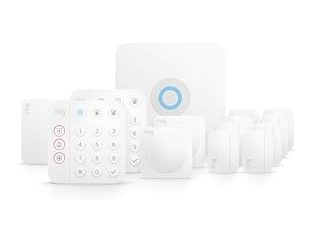
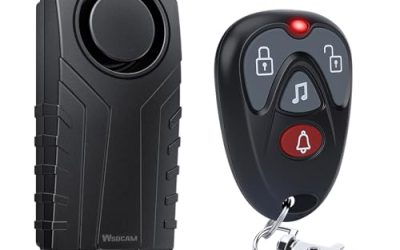
The KERUI kit is the most complete system in this guide, and the only one whose own Amazon product page names the motorhome directly, listing motor home among the settings its complete kit protects and describing the portable siren as suitable for a motorhome among other small spaces. The page lists the kit as a standalone wireless system with a weatherproof strobe siren horn, remote controls, door contact sensors and motion sensors, with an audible noise level of one hundred and fifteen decibels, a maximum range of two hundred and fifty feet, a wireless operating frequency of four hundred and thirty three megahertz, sensor technology covering both motion and contact sensors, wall mounting, and power from an AC supply in the range listed on the page, with batteries required for its wireless components. The model number is listed as KERUI-H01.
The expandability is what makes this a system rather than a single alarm. The page states that the alarm horn supports up to thirty wireless detectors and eight remote keyfobs, and that the kit is fully programmable, with the door alarm armed and disarmed by remote control using a security code you set. For a motorhome, that means one siren can cover the habitation door, cab doors, opening windows and the valuable external lockers, with a motion detector watching the living space, all armed together as you leave. The page also notes a panic function on the remote, which sounds the alarm at once in an emergency, a feature with real value when you are inside the rig at night.
Just as important for touring use, the page states plainly that this system needs no WiFi, no GSM and no app. It works in a storage compound, on a rural campsite and in a lay-by with no signal, because everything it does is local: detection, siren and strobe at the vehicle itself. The trade-offs follow from that design and from its power supply. It will not notify your phone while you are away, and the siren unit needs mains power, so it fits best when the motorhome is on hook-up, at home or in storage with power available. Within those conditions, it is the closest product here to a house alarm translated for a motorhome.
TECKNET Door Alarms, 3 Pack
- View on Amazon: https://www.amazon.com/dp/B0BY8D81NB
The TECKNET pack takes the opposite approach: three self-contained door and window alarms, each with its own magnetic sensor, sounder and controls, and no hub, siren unit or wiring at all. Its Amazon product page lists the model number as TK-WA803 and a unit count of three, and describes the product as a two in one alarm and chime with three level volume control, for home security across houses, hotels, cars, sheds and caravans. That caravan wording matters here, because the use pattern is the same as a motorhome habitation door: a single main door, opening windows, and a need to fit protection without altering the vehicle.
Each unit mounts with adhesive, triggers when its magnet separates from the sensor as a door or window opens, and can be set to a full alarm or to a chime. In a motorhome, the three units map neatly onto the openings most owners worry about first: the habitation door, the largest opening window, and the external locker door that holds tools or equipment. The three level volume control is a genuinely useful detail in a small vehicle, letting you run a loud setting when the rig is stored and empty, and a lower setting or the chime mode when you are living in it and want to know a door has opened without a full siren beside the bed.
The limitations are those of any standalone alarms. Each unit is armed, switched and powered separately, so there is no single remote action that secures the whole vehicle, no motion coverage of the living space, and no alert sent anywhere beyond the sound the unit itself makes. Battery checks become part of your departure routine. In return you get the simplest possible installation, no draw on the vehicle electrics, no mains requirement, and a system that can move to a different motorhome in minutes. For many touring owners, especially those who rarely leave the rig far from where people are present, that trade is the right one.
Hosmart Wireless Driveway Alarm System
- View on Amazon: https://www.amazon.com/dp/B07PRGGRGW
The Hosmart system watches the space around the motorhome rather than its doors, which makes it a perimeter layer rather than a replacement for door alarms. Its Amazon product page describes it as a wireless driveway alarm sensor system with a weatherproof outdoor motion sensor and detector, lists its maximum range in its title as half a mile between sensor and receiver, and lists the model and part number as the half mile receiver version. The page explains that the sensor in this version is powered by AA batteries and is not rechargeable, and describes the motion sensor with wireless motion alert as a convenient safety and security system.
Used for a motorhome, the sensor is placed where people or vehicles must pass to reach the rig: the approach to a pitch on a quiet site, the front of a storage bay, a driveway where the motorhome is parked at home, or beside the habitation door at a remote stop. When movement is detected, the receiver inside alerts you. That warning, while you are inside the rig at night or sitting nearby during the day, is something door contact alarms cannot give you, because they only speak once a door is already opening. The weatherproof sensor and battery power suit outdoor placement without running cables across a pitch, and the long wireless range means the receiver can sit inside the motorhome with the sensor well outside it.
Be clear about what it does not do. It has no door contacts and no siren at the vehicle, so on its own it will not respond to a locker being opened quietly on the far side of the rig, and it will also notice animals and passers-by, so sensor placement and angle decide whether it is helpful or chatty. It pairs naturally with one of the door alarm options in this guide: the Hosmart as the early warning layer, and contact alarms as the layer that responds to an actual opening. That combination covers both stages of an intrusion for a parked motorhome without any wiring or network.
UltraPro Personal Security Window and Door Alarm, 4 Pack
- View on Amazon: https://www.amazon.com/dp/B00FGPM1SS
The UltraPro pack, sold under the GE branding on its Amazon product page, is the simplest way in this guide to cover several openings at once. The page lists it as a four pack of personal security window and door alarms, model four five one seven four, providing do it yourself protection with a burglar alert, wireless chime and alarm modes, easy installation, and magnetic sensor operation with off, chime and alarm settings. The product description on the page presents them as a simple to use, cost effective security solution to protect against home invasions, and the same peel and stick, battery powered format transfers directly to a motorhome.
Four units cover a typical motorhome layout in one purchase: habitation door, cab door or a second external door, a main opening window, and one external locker. Because each unit has off, chime and alarm modes, you can run the habitation door on chime while you are living in the vehicle, so arrivals are announced gently, and switch the stored lockers and windows to full alarm. When the motorhome goes into storage, every unit can be set to alarm, giving a basic but complete contact layer on the openings most likely to be tried, with no mains power, no hub and nothing connected to the vehicle systems.
As with the TECKNET pack, there is no central siren, remote control, motion detection or phone notification, and each unit depends on its own batteries and switch. Read this pack as coverage and simplicity first: the easiest system here to fit in one short session, and a sensible first layer that can later be backed up by a siren kit or perimeter alert.
Comparison Table
| Product | Type | Sensors and coverage | Power and control | ASIN |
|---|---|---|---|---|
| KERUI Standalone Security Alarm System Kit | Complete wireless siren kit | Door contacts and motion, supports up to 30 detectors | Mains powered siren, remote controls, no WiFi or app | B00OHD15E6 |
| TECKNET Door Alarms, 3 Pack | Standalone door alarms | 3 magnetic door and window units | Battery powered, alarm and chime, 3 level volume | B0BY8D81NB |
| Hosmart Wireless Driveway Alarm System | Perimeter motion alert | Weatherproof outdoor motion sensor, half mile range in title | AA battery sensor, indoor receiver alert | B07PRGGRGW |
| UltraPro Window and Door Alarm, 4 Pack | Standalone door alarms | 4 magnetic window and door units | Battery powered, off, chime and alarm modes | B00FGPM1SS |
Frequently Asked Questions
Does a motorhome alarm need WiFi or a phone app?
No. The KERUI kit in this guide is listed as working with no WiFi, GSM or app, and the standalone door alarms need no connection at all. App based systems can send alerts to your phone, but they depend on coverage where the motorhome is parked, which is often weakest exactly where motorhomes are left.
Which openings should I protect first?
Start with the habitation door, then external lockers holding tools or equipment, then the largest opening windows and cab doors. Contact sensors suit all of those. Add a motion detector for the living space when the motorhome is stored or left empty, and consider a perimeter motion alert for warning while you are inside.
Will an alarm drain my leisure battery?
The battery powered door alarms and the Hosmart sensor in this guide run on their own batteries and draw nothing from the vehicle. The KERUI siren unit uses mains power, so it suits hook-up, home parking or powered storage rather than long periods off grid.
Can I install these systems without drilling?
Yes. The door and window alarms here mount with adhesive, and the KERUI kit uses wireless sensors with a wall mounted siren, so no vehicle wiring is involved. That also means the systems can be repositioned, or removed when the motorhome is sold, without leaving holes in the body.
Is a loud siren or a chime better at night on a campsite?
Both have a place. A full alarm setting is right when the motorhome is empty or stored. When you are sleeping inside, a chime or lower volume setting on the habitation door, as the TECKNET and UltraPro units provide, tells you a door has opened without a siren sounding beside you for a family member returning late.
Conclusion
Choose by your situation. If the motorhome sits on hook-up or in powered storage and you want one armed system for the door, lockers and living space, the KERUI kit is the complete answer here, with its siren, motion and contact sensors, remote controls and support for up to thirty detectors, and no dependence on a network. If you tour without regular hook-up and want protection fitted in minutes with no draw on the vehicle, the TECKNET three pack and the UltraPro four pack cover the main openings on their own batteries, with chime modes that suit life inside the rig. If your worry is approach while you are parked somewhere quiet, add the Hosmart perimeter motion alert as an early warning layer in front of any of them. A motorhome alarm needs to be armed every time and powered in a way your travel pattern supports.
More from Amazon
Programs that pair well with the guide above. Offers and eligibility are set by Amazon and may change.
Free shipping on eligible items, Prime Video and more. Eligible new members can start with a free trial.
Start a Prime free trialAudiobooks and podcasts to listen to on the go. Eligible new members can start with a free trial.
Try Audible freeAd-free music streaming. Eligible new subscribers can start with a free trial.
Try Music Unlimited freeA free business account with business pricing and bulk-buying tools for work, shop or home office.
Create a business accountAs an Amazon Associate we earn from qualifying purchases.

Write Your Review
No reviews yet. Be the first to share your experience!