
Our Short List of 3
All 4 Picks at a Glance
| Product | Specs | Action |
|---|---|---|
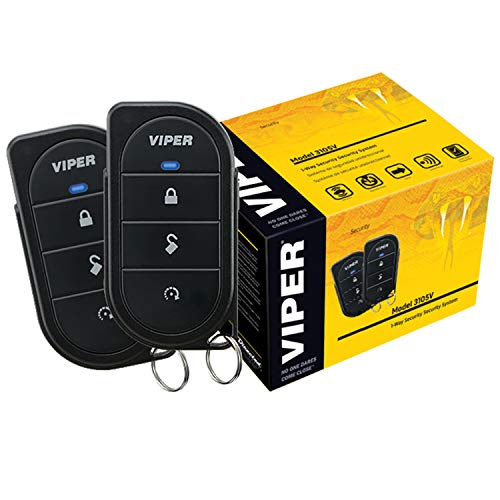
| Best Overall: Viper 350 PLUS 3105V 1-Way Car Alarm With Keyless Entry | Check price on Amazon | |
 Best Value Branded Security: Avital 3100LX Security System | Check price on Amazon | |
 Best Simple Viper: Viper 3100V 1-Way Security System | Check price on Amazon | |
 Best Budget Universal Kit: BANVIE 1 Way Car Security Alarm and Keyless Entry System | Check price on Amazon |
Key takeaways
- Compare the best one way car alarm systems from Viper, Avital, BANVIE and InstallGear, with shock sensors, starter kill, keyless entry and remote range explained.
A one way car alarm is the simplest form of aftermarket vehicle security you can buy. You press a button on the remote, the car receives the command, and the system arms, locks the doors and watches its sensors. The remote does not talk back to you, so there is no paging alert in your pocket when the alarm triggers, but there is also no LCD remote to charge, no two-way transceiver to pay for and far less wiring complexity during installation. For a daily driver parked on a driveway, a work truck, an older car with no factory security at all, or a second vehicle that just needs a loud siren and a starter kill, a one way system covers the essentials at the lowest cost in the category.
This guide compares five one way car alarm systems that are still sold on Amazon US: the Viper 350 PLUS 3105V, the Avital 3100LX, the Viper 3100V, the BANVIE 1 Way Car Security Alarm and Keyless Entry System, and the InstallGear Car Alarm Security and Keyless Entry System. Every system here uses one way remotes only. Two-way paging systems and standalone sensor accessories were deliberately left out, because mixing them into a one way guide helps nobody: if you want confirmation alerts sent back to the remote, that is a different product class with a different budget. Below you will find what one way communication actually means in daily use, how the five systems differ on range, sensors and what is included in the box, and the installation questions to settle before you order any of them.
Disclosure: Emil Broker is reader-supported. When you buy through links on our site, we may earn a commission at no extra cost to you. As an Amazon Associate, we earn from qualifying purchases.
Quick Comparison
| Product | Remote setup | Headline features | Best for |
|---|---|---|---|
| Viper 350 PLUS 3105V | Two 4-button one way remotes | Keyless entry, shock sensor, starter kill | Best overall one way alarm |
| Avital 3100LX | Two one way remotes | Horn-based alert, shock sensor, starter kill | Lowest-cost branded security |
| Viper 3100V | Two one way remotes | Starter kill, parking light flash, onboard shock sensor | Simple Viper security without extras |
| BANVIE 1 Way System | Two one way remotes | Keyless entry, shock sensor, trunk release | Universal 12V cars on a tight budget |
| InstallGear IGCA | Two 4-button one way remotes | Trunk pop, door lock and unlock, panic | DIY-friendly keyless entry plus alarm |
What One Way Actually Means
In a one way system, communication flows in a single direction: from the remote in your hand to the control module hidden under the dashboard. When you press lock, the module arms the alarm, locks the power doors if they are connected, flashes the parking lights and chirps the siren or horn to confirm it heard you. When the alarm is triggered while you are away, the siren sounds at the car, but the remote stays silent. You will only know something happened if you hear the siren yourself or see the LED status light flashing a trigger report when you return.
A two-way system adds a receiver inside the remote, so the car can page you when a sensor trips. That confirmation is genuinely useful if you park far from where you sleep or work, but it raises the price, shortens remote battery life and makes replacement remotes more expensive. One way systems trade that feedback for simplicity: the remotes are small, cheap to replace, run for a long time on a coin cell, and the whole kit costs a fraction of a paging system. For cars parked within earshot of the house, that trade is usually the right one.
Every system in this guide still includes the core security hardware that matters: a control module, at least one shock or impact sensor, door trigger inputs, a starter kill or engine cut relay output, and keyless entry outputs for lock and unlock. The differences are in remote range, whether a siren is included in the box or the system uses the factory horn, and how many convenience channels the remotes can control.
Best Overall: Viper 350 PLUS 3105V 1-Way Car Alarm With Keyless Entry
The Viper 350 PLUS 3105V is the reference point for this category and the easiest recommendation for most buyers. Viper is the flagship brand of Directed Electronics, the same company behind Avital, and the 3105V has been the standard entry-level one way system in install shops for years. It pairs two 4-button one way remotes with a stated range of up to 1,500 feet, which is enough to lock or disarm the car from inside a house, across a small car park or from an office window without walking to the kerb.
Security coverage is complete for a system at this level. A built-in shock sensor watches for impacts to the body and glass, door and bonnet trigger inputs watch for entry points being opened, and a starter kill output interrupts the starter circuit while the system is armed, so the engine cannot be cranked with the alarm set. Keyless entry is integrated rather than an add-on: lock and unlock outputs drive the power door locks, and the remote’s auxiliary channel can be wired to a trunk release on cars that support it. Parking light flash and siren chirps give you visible and audible confirmation at the car itself, which matters more on a one way system because the remote gives you none.
The 3105V is also SmartStart compatible in the Viper ecosystem, meaning an installer can add a separate telematics module later if you ever want phone-based control, but nothing about the base system requires it. Choose the 350 PLUS if you want the proven shop-installed option with the strongest dealer and documentation support of any system here. Skip it if your car will regularly sit more than a few hundred feet from where you are, because no one way remote can tell you the alarm is sounding at that distance.
Best Value Branded Security: Avital 3100LX Security System
The Avital 3100LX comes from the same parent company as Viper and covers the same fundamentals — one way remotes, keyless entry, a shock sensor and a starter kill — with one deliberate omission that defines it: there is no siren in the box. Instead, the 3100LX sounds the vehicle’s factory horn when the alarm triggers. That keeps the kit small and inexpensive, and a pulsing factory horn is still a loud, attention-getting alert, but it is a different sound strategy from a dedicated siren, and buyers should know about it before ordering rather than after opening the box.
In daily use the Avital behaves like the Viper’s close relative. The remotes lock, unlock and arm the system, the shock sensor and door triggers watch the car while it is parked, and the starter kill blocks cranking while armed. Because the hardware is simpler, installation is marginally quicker, and there is no siren to mount in the engine bay. Avital backs the 3100LX with a limited lifetime warranty on the control module, which is unusually strong backing for a budget system and reflects its Directed Electronics origins.
Choose the 3100LX if you want recognised-brand security and keyless entry at the lowest sensible cost and you are comfortable with the factory horn doing the alerting. If your car has a weak or quiet horn, or you specifically want a dedicated siren with its own mounting and tone, pick one of the siren-equipped systems in this guide instead, or budget for adding a siren to the Avital during installation.
Best Simple Viper: Viper 3100V 1-Way Security System
The Viper 3100V is the stripped-back sibling of the 350 PLUS. It keeps the parts that make a car alarm a car alarm — two one way remotes, an onboard shock sensor, door trigger protection, parking light flash confirmation and a starter kill function — and trims the extras. Viper rates the system at up to a quarter mile of range under ideal conditions, which in real streets and car parks translates to reliable operation across a driveway, a forecourt or a small car park.
Where the 3105V adds convenience channels and broader accessory support, the 3100V concentrates on arm, disarm, lock and unlock done reliably. That focus makes it a sensible fit for older cars and trucks that have power locks but no factory alarm, for work vehicles that need basic theft deterrence without a complicated install, and for anyone replacing a failed entry-level system with the closest modern equivalent. The status LED and valet switch arrangement is the familiar Viper layout, so any installer who has fitted Directed systems before will be on home ground.
Choose the 3100V if you want Viper build and documentation with the shortest feature list that still counts as full security. Choose the 350 PLUS above it if you want the extra auxiliary channel flexibility and the longer stated remote range for roughly the same installation effort.
Best Budget Universal Kit: BANVIE 1 Way Car Security Alarm and Keyless Entry System
BANVIE builds universal 12-volt security kits rather than brand-shop systems, and its 1 Way Car Security Alarm and Keyless Entry System is aimed squarely at the do-it-yourself installer. The kit is designed to work with most DC 12V cars and bundles the control module, two one way remotes, a siren and a shock sensor into a single box, so there is no separate siren or sensor purchase needed before the install can start.
Function coverage follows the standard universal-kit pattern: remote lock and unlock, arm and disarm, trunk release where the car supports it, a car-finder function that flashes the lights and chirps so you can locate the vehicle in a car park, and shock-triggered alarming when the body takes an impact. Silent arm modes let you lock up at night without a chirp waking the household. Because it is a universal kit, plan on identifying your car’s lock wiring type before you start — universal systems support the common central locking configurations, but they ask more of the installer than a vehicle-specific harness would.
Choose the BANVIE if your priority is a complete one way alarm and keyless entry kit in one box at a budget level, and you are comfortable working through a universal wiring diagram. If you would rather hand a recognised brand box to a professional installer and never think about it again, the Viper and Avital systems above are the safer route.
Best for DIY Keyless Entry: InstallGear Car Alarm Security and Keyless Entry System
InstallGear’s Car Alarm Security and Keyless Entry System, model IGCA, splits the difference between a pure keyless entry kit and a full alarm. It ships with two 4-button remotes and covers door lock and unlock, trunk pop and a panic function alongside its alarm and shock sensing, which makes it a practical upgrade for an older car that currently has neither remote locking nor any security at all.
The appeal here is the combination in a single install. Many older vehicles need two separate jobs — add remote locking, then add an alarm — and the IGCA folds both into one wiring session under the dash. The four-button layout keeps the main commands separate and easy to find by touch: lock, unlock, trunk and panic each get their own button rather than hiding functions behind long presses. As with any universal-fit system, confirm your vehicle’s door lock circuit type before ordering, and expect the trunk pop function to need a relay and a car with an electric release solenoid.
Choose the InstallGear if your car lacks keyless entry entirely and you want remote locking and an alarm from one kit and one install. If your car already has factory remote locking and you only need to add security, the Viper 3100V or Avital 3100LX will integrate more cleanly with what is already there.
How to Choose a One Way Car Alarm
Start with where the car sleeps. A one way alarm only protects a car you can hear. If the vehicle parks on your driveway, outside your flat or within sight of your workplace, a siren-based one way system does its whole job. If it parks streets away or in a multi-storey structure while you are elsewhere, no one way system can alert you, and you should be shopping for a two-way paging system instead of anything in this guide.
Check what is in the box. The single most common surprise in this category is the siren. Some systems, like the Avital 3100LX, use the factory horn and include no siren. Others bundle a siren, shock sensor and remotes together. Read the includes list for the exact kit you are ordering, and confirm whether the shock sensor is built into the module, separate in the box, or an optional accessory.
Confirm your door locks. Keyless entry outputs assume power door locks. A car with manual locks needs lock actuators added before any of these systems can lock it remotely, which is a bigger job than the alarm itself. Also identify whether your locks are positive trigger, negative trigger or require a reverse-polarity relay setup, because that decides how much extra hardware the install needs.
Think about the starter kill. The starter kill or engine cut output is the feature that turns a noise-maker into theft prevention. Make sure the kit you choose includes the relay or the output your installer needs, and have it wired during the main install rather than as an afterthought.
Plan the installation honestly. Every system here is a hardwired 12-volt install involving ignition, starter, door trigger and lighting circuits. Confident DIY installers with a multimeter and a wiring diagram for their exact car fit universal kits like the BANVIE and InstallGear regularly. If that sentence does not describe you, professional installation of a Viper or Avital by a shop that sells the brand is money well spent, and the labour will likely cost more than the hardware.
Keep remote replacement in mind. One way remotes are inexpensive and widely available for the Viper and Avital lines, which matters because remotes are the part you will actually lose or break. Before buying any system, check that spare remotes for that model are easy to find.
Frequently Asked Questions
Will a one way alarm drain my car battery? A correctly installed system draws a very small standby current to power its receiver and LED. On a healthy battery and a car driven regularly, that draw is not a practical problem. Cars that sit unused for weeks at a time are the exception for any aftermarket electronics, alarm or otherwise.
Can I install a one way car alarm myself? You can if you are comfortable with automotive wiring, can read your car’s wiring diagram and own a multimeter. Universal kits expect more improvisation than branded systems with vehicle documentation. If you are cutting into ignition and starter circuits for the first time, professional installation is the safer choice.
Does a one way alarm work with a manual transmission? Alarm and keyless entry functions are transmission-independent, and none of the systems in this guide is a remote start system, so the usual manual gearbox remote start concerns do not apply here.
What happens if I lose both remotes? The system can be disarmed with the valet override procedure described in each maker’s manual, which is exactly why that procedure and the valet switch location should stay private. Replacement one way remotes can then be programmed to the module.
Will one of these systems lower my insurance cost? Some insurers recognise an installed alarm with a starter kill as a theft deterrent, and some do not. It depends entirely on your insurer and policy, so ask them directly rather than assuming any system in this guide changes your premium.
The Bottom Line
For most buyers, the Viper 350 PLUS 3105V is the best one way car alarm: complete sensors, a starter kill, proper keyless entry and the deepest installer support in the category. The Avital 3100LX delivers the same brand pedigree for less by sounding the factory horn instead of a siren. The Viper 3100V trims the feature list to the essentials, the BANVIE packs a complete universal kit into one budget box, and the InstallGear IGCA is the pick when the car needs remote locking added at the same time as the alarm. Match the system to where the car parks, what is already fitted, and who is doing the wiring, and a one way alarm will quietly do its job for years.
More from Amazon
Programs that pair well with the guide above. Offers and eligibility are set by Amazon and may change.
Free shipping on eligible items, Prime Video and more. Eligible new members can start with a free trial.
Start a Prime free trialAudiobooks and podcasts to listen to on the go. Eligible new members can start with a free trial.
Try Audible freeAd-free music streaming. Eligible new subscribers can start with a free trial.
Try Music Unlimited freeA free business account with business pricing and bulk-buying tools for work, shop or home office.
Create a business accountAs an Amazon Associate we earn from qualifying purchases.
Write Your Review
No reviews yet. Be the first to share your experience!