

Key takeaways
- Budget tier: The F22 and, where still sold, the F11. These are light, simple and forgiving, and they cost less than any of the machines that follow. The compromise is fewer controls and less depth in difficult soil.
- Mid-range tier: The F44. It adds manual ground balance, more modes and a larger coil, and it is the tier where most reviewers say value peaks.
- Premium tier: The F75 for coins and relics, and the Gold Bug Pro or Gold Bug 2 for gold. Spending here only makes sense if you already know the target you are after.
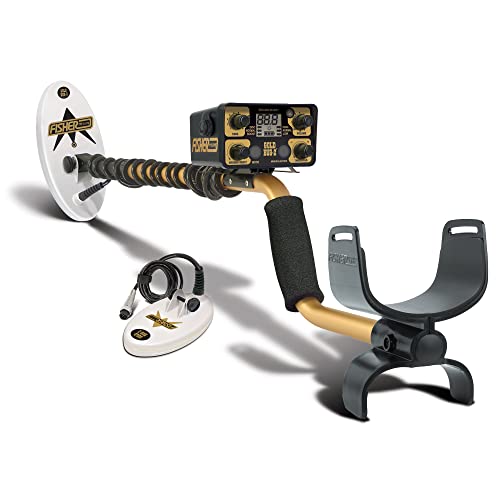
The Fisher F22 suits first-time buyers who want a light, simple detector for parks and beaches, the F44 suits most people who want manual ground balance and a bigger coil, the F75 suits dedicated coin and relic hunters, and the Gold Bug family suits anyone chasing small gold. Fisher is one of the oldest names in the hobby, and its range is easier to sort than most because each model targets a different job. This guide lays out what reviewers and the maker say about each current line, where each one falls short, and how to choose without overspending.
Our top picks


As an Amazon Associate we earn from qualifying purchases at no extra cost to you.
Fisher Metal Detectors at a Glance
| Model | Best for | Key stated points | Limits | Budget tier |
|---|---|---|---|---|
| Fisher F22 | Beginners, kids, casual park and beach hunting | Reviewers list about 2.3 lb weight, a 9 inch coil, and simple mode controls | No manual ground balance; reports differ on how weatherproof it is | Budget |
| Fisher F44 | Most hobbyists who want room to grow | Reviewers list five modes, Fe-Tone iron audio, manual ground balance and an 11 inch coil | Not designed for gold prospecting | Mid-range |
| Fisher F75 | Serious coin and relic hunters | Dual-filter discrimination to reject iron while keeping valuable targets | Not submersible; one listing marks it discontinued, so stock varies | Premium |
| Fisher Gold Bug Pro | Gold prospecting | Reviewers list a 19 kHz operating frequency, Ground Grab plus manual balance, about 2.5 lb | Less suited to general coin hunting | Premium |
| Fisher Gold Bug 2 | Experienced prospectors after tiny nuggets | Reviewers describe it as Fisher’s highest-frequency detector at 71 kHz | Steeper learning curve; very sensitive to mineralized ground and trash | Premium |
The specifications above come from the maker’s product descriptions as relayed by independent reviewers such as DetectHistory, Metal Pursuits and Detector Finder. Several of those write-ups are a few seasons old, so treat weights and coil sizes as typical rather than exact for a unit you are about to buy.
How Fisher Detectors Are Organized
Fisher sells two broad families. The general-purpose line, which includes the F11, F22, F44 and F75, is built around the VLF (very low frequency) induction-balance design that dominates the hobby. These models use a frequency in the mid range, which gives a balanced response to coins, jewelry and relics. The gold family, the Gold Bug series, uses higher frequencies that respond better to very small, low-conductivity gold. Because frequency affects how a detector sees targets, the family you choose matters more than small differences inside a family.
Reviewers consistently describe a clear ladder. The F22 sits at the bottom for simplicity, the F44 adds controls and a larger coil, and the F75 adds the most refined target separation. The Gold Bug models sit alongside that ladder, not above it, because they are tools for a different target. A buyer who mostly hunts parks and wants gold nuggets once a year will usually be better served by one good general detector than by two compromised ones.
Fisher F22: The Simple Starter
Reviewers at sites such as Tech Metals Research and Metal Detecting in the USA repeatedly call the F22 a sensible first detector. It is light, which matters for a long afternoon swinging a coil, and its controls are limited enough that a new user is not overwhelmed. Its automatic ground handling means you spend your time walking and listening rather than adjusting settings.
The trade-off is the same simplicity. Reviewers note there is no manual ground balance, which limits performance in highly mineralized soil, and they disagree about weather resistance: some describe it as weatherproof, while others say it is not waterproof and should not be used for underwater hunting. If you plan to hunt wet sand or shallow water, read the maker’s manual carefully and treat any submersion claim with caution unless the maker states it for your specific unit.
Who should skip it
Anyone who already knows they enjoy the hobby and hunts mineralized soil will outgrow it quickly. A buyer who wants to learn how ground balance works, or who wants to separate iron by tone, is better off starting with the F44.
Fisher F44: The Practical Middle
The F44 is the model most outlets name as the best all-around pick. Reviewers describe five search modes, an iron audio feature called Fe-Tone that tells you by sound when a target is likely iron, and manual ground balance for tricky soil. Its 11 inch coil is larger than the F22’s, which reviewers say gives slightly more depth on coin-sized targets.
Because it is more adjustable, it also asks a little more of the user. A beginner can leave it in its default mode and still hunt productively, then explore the extra controls later. That growth path is why many guides call it the safest single purchase for someone unsure how deep they will go into the hobby.
Limits to keep in mind
It is a coin, jewelry and relic machine, not a prospecting tool. Reviewers also point out that a larger coil is a bit heavier in the hand and less nimble in tight, trashy spots than a small coil. Fisher and some retailers sell different coil options, so check what comes with the exact package you are considering.
Fisher F75: The Coin and Relic Specialist
The F75 has a reputation among serious hunters for precise target separation. The feature reviewers highlight most is dual-filter discrimination, which lets you reject iron without also rejecting some valuable targets that sit nearby in the signal range. That matters in old parks, schoolyards and house sites where iron nails and bottle caps are everywhere and a good coin may be sitting beside them.
It is the most demanding general model to learn. A newcomer who buys it first may find the display and settings more than they need. It is also not intended for gold prospecting and is not designed to be submerged, according to the reviews summarized above. One listing in a comparison guide marks the F75 as discontinued, while another guide still presents it as a top overall pick, so availability may depend on the seller and on remaining stock. If you cannot find a new unit, the F44 is the closest current step down, and Fisher’s other premium general models are worth asking a dealer about.
Fisher Gold Bug Pro and Gold Bug 2: For Gold
Gold is a different problem from coins. Nuggets are small, often found in mineralized ground, and give faint signals. Higher operating frequencies see smaller targets more readily, which is why the Gold Bug detectors exist.
Reviewers list the Gold Bug Pro as the main gold-prospecting choice in the range. It operates at 19 kHz, offers an automatic Ground Grab feature plus manual ground balance, and weighs about 2.5 lb. It is sold in some packages with both a smaller and a larger coil, which lets a prospector switch between sensitivity and coverage. The Gold Bug 2 is described as Fisher’s highest-frequency model, at 71 kHz, and is aimed at experienced users hunting very small nuggets.
Both are poor value for a casual park hunter. High-frequency machines tend to chatter over salty or mineral-heavy ground and pick up tiny bits of junk that a lower-frequency general detector would ignore. If your plan is gold, they are the right tools. If your plan is coins, they are not.
Budget Tiers Explained
- Budget tier: The F22 and, where still sold, the F11. These are light, simple and forgiving, and they cost less than any of the machines that follow. The compromise is fewer controls and less depth in difficult soil.
- Mid-range tier: The F44. It adds manual ground balance, more modes and a larger coil, and it is the tier where most reviewers say value peaks.
- Premium tier: The F75 for coins and relics, and the Gold Bug Pro or Gold Bug 2 for gold. Spending here only makes sense if you already know the target you are after.
Pick Fisher If You Want This
| Pick this model | If you | Because |
|---|---|---|
| F22 | are new to detecting or buying for a young hunter | It is light and needs very little setup |
| F44 | want one detector you will not outgrow quickly | It adds manual ground balance, Fe-Tone audio and a bigger coil |
| F75 | already hunt old sites and want better target separation | Its dual-filter discrimination helps in iron-heavy ground |
| Gold Bug Pro | want to prospect for small gold in the field | Its higher frequency suits small, low-conductivity targets |
| Gold Bug 2 | are experienced and chase the tiniest nuggets | Reviewers describe the highest frequency in the Fisher range |
Fit, Weight and Care Notes
Weight and balance matter more than spec sheets for most hobbyists. A detector in the 2 to 3 lb range is comfortable for several hours, but the added weight of a larger coil or a battery pack can tire a wrist. Adjust the shaft so your arm hangs naturally, and use a lower arm cuff if the model offers one.
Moisture is the most common cause of damage. Even models described as weatherproof by reviewers should be wiped dry after hunting in wet grass or surf, and the coil connector should be kept clean. Never assume submersion is safe unless the manual for your specific model says so. Store the unit with batteries removed if you will not use it for several weeks to prevent leakage.
Alternatives Worth Considering
- Garrett ACE series: Frequently listed alongside the F44 as a competing mid-range choice for beginners and intermediates, with a strong reputation for ease of use.
- Minelab Vanquish and Equinox lines: The Vanquish is often named as a competitor at the entry and mid levels, and the Equinox is a premium multi-frequency option with waterproof designs, for buyers who plan to hunt beaches and water.
- Nokta Legend and Simplex lines: Praised in several roundups for waterproof construction and wireless audio, and worth comparing if you want to hunt wet ground.
Frequently Asked Questions
Which Fisher detector is best for a beginner?
Most reviewers point to the F22 for the simplest start and to the F44 for beginners who expect to keep the hobby. The F22 is lighter and cheaper, while the F44 gives you manual ground balance and more modes. If you are unsure, the F44 is the safer long-term choice.
Is the Fisher F75 still available?
Sources disagree. One comparison guide lists it as discontinued, while another still treats it as a leading pick. Availability probably depends on the seller and on remaining stock, so ask a dealer before you plan around it.
Can I use a Fisher detector in water?
It depends on the exact model, and reviews on the F22 even contradict each other about weatherproofing. Follow the maker’s manual for your unit, and do not submerge a detector unless the manual says that model is designed for it. The F75 is described as not submersible.
Which Fisher is best for finding gold?
Reviewers name the Gold Bug Pro as the main gold-hunting choice, with the Gold Bug 2 aimed at experienced users after the smallest nuggets. The general-purpose F-series models are not designed for prospecting. Gold hunting also depends heavily on location and soil, so expect a learning curve.
Does a bigger coil always find deeper targets?
A larger coil usually reaches deeper on large targets and covers more ground, which is why the F44’s 11 inch coil is described as a modest depth gain over the F22’s. The trade-off is less precision in trashy areas and more weight. Smaller coils separate close targets better.
Do I need headphones?
Headphones are strongly recommended. They block wind and traffic noise so you can hear faint signals, and they save battery on models that drive a speaker. Check that the plug type matches your detector before buying.








Write Your Review
No reviews yet. Be the first to share your experience!