

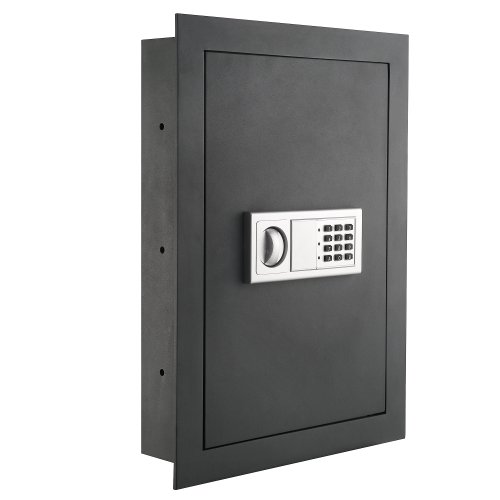
For most households the best wall safe is a steel, between-the-studs model with an electronic keypad and backup keys, such as the Paragon Lock and Safe Superior Wall Safe or the Protex PWS-1814E, while anyone whose main worry is fire or flood damage to papers is better served by a freestanding fire-rated unit like the SentrySafe SFW123GDC. A wall safe is a concealment and quick-access tool first and a fire vault second, and picking the right one comes down to wall depth, stud spacing, what you plan to store and how much installation work you are willing to do.
Our top picks



As an Amazon Associate we earn from qualifying purchases at no extra cost to you.
Wall Safe Picks at a Glance
| Model | Best for | Key stated specs | Limits |
|---|---|---|---|
| Paragon Lock and Safe Superior Wall Safe | Hidden storage for documents, jewelry and small valuables | Bob Vila lists 22 in high, 16 in wide, 4 in deep, about 39 lb, steel body, electronic keypad with backup keys, three interior shelves, mounting hardware and batteries included, alarm that sounds for 5 minutes after three wrong codes | Reviewer notes it is not fire- or water-resistant; locking housing takes up part of the middle shelf |
| Protex PWS-1814E | Buyers who want a keypad wall safe sized for standard stud bays | CNN Underscored describes it as an electronic wall safe built to fit between standard studs | Shallow interior; confirm the maker’s interior dimensions before buying |
| SentrySafe SFW123GDC | Fire and water protection for papers and media | Bob Vila names it best overall home safe; sold as a digital fire and water safe | Freestanding unit, not a purpose-built between-stud wall safe; one roundup says it can be recessed if you choose |
| Generic between-stud steel boxes | Tight budgets and simple concealment | Roundups describe them as sized for standard stud spacing, usually with a single steel layer | Thin steel, uneven lock quality, little fire protection |
What a Wall Safe Does Well and Where It Falls Short
A wall safe hides in plain sight. Installed behind a framed picture, a mirror or inside a closet wall, it is invisible to a casual search, and it does not take up floor space the way a freestanding cabinet does. It also gives fast access to passports, spare keys, a small amount of jewelry or a backup drive without opening a heavy door.
The trade-off is protection. Reviewers and security-focused outlets are consistent on a few points. Most wall safes use a single layer of relatively thin steel because the cavity between studs is shallow. They are generally not fire-rated, and the market.com buyer’s guide notes that even fire-focused brands such as SentrySafe put document and fire protection ahead of lock strength. In other words, you rarely get a deep, thick-walled box and a certified fire rating in the same product at a modest size.
That is why the best wall safe is the one matched to the job. If the goal is to keep things out of sight from a visitor or opportunistic thief, a hidden between-stud safe is sensible. If the goal is to survive a house fire, a certified fire safe stored low in the home is the better route, and many households end up using one of each.
Understanding the Main Types
Between-the-studs safes
These are the most common. They are sized to slide into the gap between two vertical studs, which in many homes sit 16 inches apart on center, though some walls use 24 inches. A box in the 14 to 16 inch width range is built around that spacing. Because they bolt or screw into the framing on both sides, the studs themselves help hold the safe in place, and that matters because a loose box can be pried out.
The Paragon unit that Bob Vila reviewed follows this pattern with a 4 inch depth, which is why it can sit in a typical interior wall without poking out the other side. The reviewer rated it highly for ease of use, durability and security, while flagging the lack of fire and water resistance.
Recessed or in-wall fire safes
Some gun-safe and home-safe roundups cover larger in-wall designs that are framed into a thicker cavity. These deliver more depth but require real carpentry. If you are not comfortable cutting into framing, hire a contractor or installer, and have an electrician mark or check for wiring before any cutting begins.
Freestanding fire and water safes
The SentrySafe SFW123GDC appears in several 2026 roundups as the practical choice for documents. It is not a wall safe, but it solves the fire and water problem that most wall safes cannot. Bolting it to a floor or placing it inside a closet adds some theft resistance.
Key Features to Compare
Lock type
Electronic keypads are fast and widely used. Look for a backup key or override, because batteries do die. Models with an alarm after repeated wrong entries, such as the Paragon, add a deterrent. Mechanical combination dials do not need power but are slower to open. Biometric locks exist on some boxes, but reviewers generally treat simple keypads as more reliable for a first purchase.
Steel thickness and door design
Makers sometimes list steel gauge. A lower gauge number means thicker steel. A solid door with concealed hinges and several live locking bolts is harder to attack than a thin flap with a single latch. If a listing does not give gauge or bolt details, treat the box as light-duty concealment.
Interior size
Exterior dimensions are not interior dimensions. A 4 inch deep exterior leaves little room once walls and door padding are subtracted. Measure the items you plan to store, including a passport, a folded document or a small jewelry box, and compare against the interior numbers the maker supplies. Legal-size folders often do not fit flat in a 14 inch wide box.
Mounting hardware and installation
The Paragon ships with mounting hardware and batteries according to Bob Vila, and the reviewer noted that setup is easier before the wall surface goes up. In an existing wall you will need a stud finder, a drywall saw, a level and a drill. Decide where the door will swing so it does not hit a nearby frame or shelf.
Fit, Size and Installation Notes
- Locate studs. Use a stud finder and mark both edges of two neighboring studs. Confirm the center-to-center spacing matches the safe.
- Check for hazards. Wiring, plumbing and ductwork often run inside walls. Switch off power at the breaker and consider hiring an electrician if outlets or switches are nearby. Exterior walls may contain insulation and are usually a poor choice.
- Pick a discreet location. Behind a large picture, inside a closet, or behind a piece of furniture that is rarely moved. Avoid the master bedroom wall behind the headboard, which is the first place many burglars look.
- Cut and fit. Trace the outline, cut carefully and test the fit before fastening. Fasten into the studs with the supplied hardware.
- Set the code. Choose a code that is not a birthday or address, record the backup key location somewhere safe, and replace batteries on a schedule the maker suggests.
Keep in mind that a hidden safe is only hidden if few people know about it. Telling visitors, contractors or house cleaners defeats the point.
Budget Tiers
| Tier | What to expect | Sensible use |
|---|---|---|
| Budget | Generic between-stud steel boxes, single steel layer, basic keypad. Roundups warn they can deter casual snooping but not a determined thief. | Spare keys, copies of documents, low-value items |
| Mid-range | Named-brand units like the Paragon Superior and the Protex PWS-1814E, with sturdier construction, backup keys and better hardware | Passports, jewelry, small cash reserve, backup drives |
| Premium | Larger in-wall or UL-rated safes, often professionally installed, sometimes with fire ratings | High-value items and irreplaceable records |
Pick X If You Need Y
| Pick this | If you need |
|---|---|
| Paragon Superior Wall Safe | A shallow, keypad-operated hidden safe with a lockout alarm and included mounting hardware |
| Protex PWS-1814E | A between-stud electronic safe recommended by a major consumer outlet for standard walls |
| SentrySafe SFW123GDC | Fire and water protection for papers, even though it is not a true wall safe |
| A generic between-stud box | The lowest cost concealment and you accept thin steel |
| A professionally installed in-wall safe | More depth and security for valuables and you are willing to pay for installation |
Alternatives to Consider
- Freestanding fire safe: Best for documents. Bolt it down if possible.
- Floor safe: Set into a concrete slab, often in a closet or garage. It is hard to remove but needs more work to install and is not suitable for every foundation.
- Bank safe deposit box: Offers off-site protection for irreplaceable papers, though access is limited to bank hours.
- Diversion safes and lockable cabinets: Can complement a main safe, but they are concealment only.
Care and Safety
Change the batteries on a regular schedule and keep a spare set outside the safe. Test the backup key occasionally. If the safe will hold a firearm, follow local law and the firearm maker’s guidance on storage, and look for a model sold specifically for that purpose, since between-stud boxes are rarely rated for it. Do not store important originals only in a hidden unit with no fire rating. Keep digital copies of key records elsewhere.
Frequently Asked Questions
Are wall safes actually secure?
They are good at concealment and basic deterrence, but reviewers point out that many use a single layer of thin steel. A determined burglar with tools and time can often defeat a budget box. Choose heavier steel, anchor into studs and keep the location secret for the best results.
Can a wall safe protect documents from a fire?
Not usually. The Paragon Superior Wall Safe, for instance, is described by Bob Vila as not fire- or water-resistant. If fire protection is your priority, look for a safe whose maker lists a tested fire rating, such as the freestanding SentrySafe SFW123GDC.
How do I know if a wall safe will fit my wall?
Measure the distance between two studs on center and confirm the wall is a standard interior wall with enough depth. A 4 inch exterior depth, like the Paragon, fits most standard framing. Compare the safe’s exterior width with the gap between studs before buying.
Where is the best place to install one?
Choose a spot that is not obvious and not in the path of wires or pipes. Closets and walls behind large framed pictures are common choices. Avoid exterior walls and areas that run along kitchens or bathrooms where moisture or plumbing may be present.
Should I hire someone to install it?
If you are comfortable with a drill and a drywall saw, a between-stud model is a manageable project. If you are unsure about wiring or framing, hire a handyperson or an electrician to check the wall first. A poor installation can weaken security more than a cheaper safe would.
Electronic or mechanical lock?
Electronic keypads open faster and often include extras such as lockout alarms, but they rely on batteries and need a backup key. Mechanical dials work without power but are slower. For a household safe that is opened regularly, most buyers favor a keypad with a physical backup.





Write Your Review
No reviews yet. Be the first to share your experience!