

Key takeaways
- Mounting height: A doorbell is usually installed at about doorbell height. A standalone camera works best a few feet above reach, angled slightly down, so it sees faces and is harder to tamper with.
- Wi-Fi signal: Many of these cameras use only the 2.4 GHz band. Check the signal on the porch with your phone before drilling holes.
- Weather: Look for an IP65 or IP66 rating, as listed for the Arlo doorbell and Tapo C425. A covered porch eases the load but does not remove the need for weather resistance.
- Rental rules: Landlords and building managers may restrict drilling, and some require approval for exterior cameras. A magnetic or adhesive mount is a good option if you are unsure.
For most front porches, a wired video doorbell or a wired floodlight camera gives the most dependable coverage, a solar-powered camera such as the eufy SoloCam S340 suits porches with no nearby wiring, and a magnetic battery camera such as the Tapo C425 suits renters or anyone who wants to reposition a camera freely. The right choice depends on three practical questions: can you reach doorbell wiring or a power outlet, do you want to avoid a monthly plan, and how wide a view of the porch floor do you need for packages? This guide walks through the current options reviewers keep naming and what the makers actually state about them.
At a Glance: Porch Camera Options
| Model | Best for | Key stated specs | Limits |
|---|---|---|---|
| Arlo Video Doorbell 2K (2nd Gen) | Package visibility at the door | Retail listings state a 1944 x 1944 square image, a 180-degree diagonal view, IP65 rating, built-in siren, and either rechargeable battery or existing 16 to 24V doorbell wiring | 2.4 GHz Wi-Fi only; cloud history and smart alerts need a paid plan; no local storage |
| Google Nest Doorbell (Wired, 3rd Gen) | Existing wired doorbell setups | The Great Reviewer lists it as a wired front-door pick | Needs doorbell wiring; some features depend on a Google subscription |
| Ring Video Doorbell Wired | Compact, wired, Alexa households | Kid of Speed describes 1080p video, two-way talk and motion detection | Recording history relies on a Ring plan |
| eufy SoloCam S340 | Porches without wiring | The maker lists a 3K wide lens, a 2K telephoto lens, pan and tilt, a removable 2.2W solar panel, 8 GB built-in storage and no monthly fee | 2.4 GHz Wi-Fi only; needs some direct sun; bulkier than a doorbell |
| Tapo C425 | Renters and flexible mounting | The maker lists 2K 4MP video, IP66, a magnetic base, up to 300 days of battery life under light use, and microSD up to 512 GB | Battery life drops with heavy use; card sold separately |
| Aqara Doorbell Camera Hub G410 | Local storage with a doorbell | Smart Home Explorer ranks it first for local storage, citing microSD recording and battery operation | Fewer ecosystem integrations than the largest brands, according to the same roundup type |
| Reolink Argus 4 Pro | Wide outdoor battery coverage | The Great Reviewer calls it its best outdoor camera | Mounting height and Wi-Fi strength affect results |
Doorbell Camera or Standalone Camera?
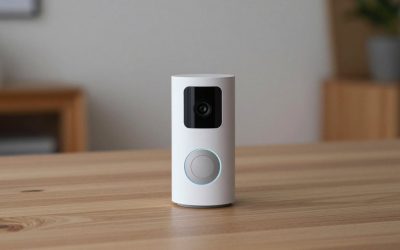
A video doorbell has a built-in advantage: it sits where visitors and couriers naturally stop. It captures faces at roughly eye level and usually offers a two-way talk feature, so you can speak with someone who does not ring. A standalone camera mounted under the porch ceiling sees more of the surroundings, including the driveway, the walkway and any cars, but it is farther from faces and often needs a separate doorbell if you want visitors to announce themselves.
Many households end up with both. The doorbell watches the door and the packages, while a second camera covers the approach. If you only want one device, choose the doorbell if deliveries and visitors are the main concern, and choose a pan-tilt or wide-angle camera if the porch is deep, wraps around the house or faces a street.
Field of View and Package Visibility
Most porch complaints come down to framing. A narrow, horizontal image may show a visitor clearly and still miss a box left at the doormat. That is why reviewers pay attention to square or tall frames. Arlo’s second-generation doorbell uses a 1:1 square image with a 180-degree diagonal field of view, which retailers and reviewers describe as a head-to-toe view. A tall image helps when you want to see both a face and the packages on the ground.
Wider is not always better. A very wide lens stretches distant objects and shrinks faces, so a person at the edge of the frame can look small. The Arlo listing also mentions a short motion range of about 10 feet and black-and-white night vision to about 20 feet, which suits a compact porch but is not designed for watching the street. Match the numbers to the space. Measure the distance from the doorbell mount point to the far edge of the area you want to see, and compare that to the stated detection range.
Power: Wired, Battery or Solar
Wired
Wired models avoid recharging and tend to be more reliable for continuous alerts. A doorbell that uses your existing chime wiring is the easiest wired upgrade, provided the transformer supplies the voltage the maker lists. Arlo, for example, states a 16 to 24V AC range for its doorbell. If your home has no doorbell wiring, a wired model may require an electrician or a plug-in alternative. Electrical work involves risk, so turn off power at the breaker and follow the manufacturer’s installation guide, or hire a licensed electrician.
Battery
Battery cameras place fewer constraints on location. Tapo states up to 300 days for the C425 based on about 230 seconds of daily use, and notes that heavier use of 360 seconds a day lowers that to about 180 days. A busy porch with frequent motion triggers will drain faster than a quiet one, so treat the longest figures as the best case. Cold weather also reduces lithium battery performance, so expect more frequent charging in winter climates.
Solar
Solar suits porches that receive daylight but have no outlet. Eufy states that the S340 solar panel is rated 2.2W and that about two hours of direct sunlight per day keeps it powered, with the internal battery offering reserve power of up to three months. A covered porch that never sees the sun will not benefit, though the panel is removable and can be placed in a sunnier spot with its cable. Reviewers also note small differences in the pan and tilt ranges between the maker’s regional pages, so read the spec sheet for your market.
Storage and Subscriptions
Storage is the area where cameras differ most. Eufy’s S340 includes 8 GB of built-in storage and no monthly fee. Tapo supports microSD cards up to 512 GB and also offers a cloud plan. Aqara is highlighted by one roundup for local recording. In contrast, Arlo states that cloud storage, smart alerts and video history require an Arlo Secure plan, and its doorbell has no local slot. Ring and Nest cameras also lean on paid plans for stored history, according to the reviewers listed above.
Consider what you actually need. If you only want live alerts and a short clip, free features may be enough. If you want to review events from last week or share footage after a package theft, you will need either local storage or a plan. Compare the yearly cost of a plan with the one-time cost of a memory card before you buy.
Budget Tiers
Budget
Entry-level cameras from Tapo and similar brands deliver 2K video and local storage without a plan. Smart Security Guru names a Vimtag two-pack as its best-value pick and a Tapo floodlight kit appears in another roundup. The trade-offs are usually app polish and smart-home integrations rather than image quality.
Mid-range
This is where the eufy S340, the Reolink Argus 4 Pro, the Ring wired doorbell and Arlo’s second-generation doorbell sit. You get higher resolution, better night modes and more complete apps. Check whether the features you want are free or locked behind a plan.
Premium
Reviewed.com picks the Nest Cam (battery) Gen 2 as its top outdoor camera, citing a good set of free smart features and several ways to mount it. Premium cameras often justify their cost through software, such as person and package recognition, rather than hardware.
Installation and Safety Notes
- Mounting height: A doorbell is usually installed at about doorbell height. A standalone camera works best a few feet above reach, angled slightly down, so it sees faces and is harder to tamper with.
- Wi-Fi signal: Many of these cameras use only the 2.4 GHz band. Check the signal on the porch with your phone before drilling holes.
- Weather: Look for an IP65 or IP66 rating, as listed for the Arlo doorbell and Tapo C425. A covered porch eases the load but does not remove the need for weather resistance.
- Rental rules: Landlords and building managers may restrict drilling, and some require approval for exterior cameras. A magnetic or adhesive mount is a good option if you are unsure.
Pick X If… Decision Table
| Pick this | If you… |
|---|---|
| Arlo Video Doorbell 2K (2nd Gen) | want a tall, wide frame for packages and are willing to use a paid plan for history |
| Nest Doorbell (Wired, 3rd Gen) | already use Google Home and have doorbell wiring |
| Ring Video Doorbell Wired | prefer a wired unit in an Alexa household |
| eufy SoloCam S340 | have no wiring, get some sun, and want pan-tilt tracking without a monthly fee |
| Tapo C425 | rent your home, want a magnetic mount, and plan to use a memory card |
| Aqara G410 | want a doorbell with local recording as the priority |
| Reolink Argus 4 Pro | need wide outdoor coverage from a battery camera |
Alternatives to Consider
- Floodlight cameras: Misec names the Ring Floodlight Cam Wired Plus as its editor’s choice. Built-in lights deter visitors and improve night footage, but they require a junction box and, often, an electrician.
- PoE cameras: If you can run a network cable to the porch, a wired PoE camera gives constant power and recording to a local recorder with no recharging.
Frequently Asked Questions
Where should a front porch camera be mounted?
Place it a few feet above reach, usually near the ceiling of the porch or beside the door, angled down toward the approach. This captures faces without extreme upward angles. Avoid mounting it facing directly into a bright light or the setting sun.
Do porch cameras work without Wi-Fi?
Most need Wi-Fi for live alerts and remote viewing. Some, such as models with microSD slots, can record locally if the connection drops, but you would not receive notifications. A wired PoE system is the option that does not depend on Wi-Fi.
Is a subscription necessary?
It depends on the brand. Eufy states no monthly fee for the S340, and Tapo allows local microSD recording. Arlo says its doorbell relies on a plan for video history and smart alerts. Decide how long you want to keep footage before choosing.
How long do battery cameras last on a charge?
The maker figures are best-case, based on light use. Tapo’s C425 is stated at up to 300 days at about 230 seconds of daily use and about 180 days at 360 seconds. Frequent triggers, cold weather and live viewing shorten battery life.
Can I install a wired doorbell myself?
Many people replace a doorbell using the existing low-voltage wires, and the maker’s guide covers the steps. Turn off the circuit first and confirm the transformer rating matches the stated range. If your wiring is old, unclear or involves higher voltage, hire a licensed electrician.
Will a porch camera stop package theft?
A visible camera may discourage some thieves, and recorded video helps when you report an incident, but it cannot prevent theft by itself. Pairing it with a delivery instruction, a locker or a neighbor pickup arrangement works better than relying on the camera alone.






Write Your Review
No reviews yet. Be the first to share your experience!