

Key takeaways
- Best compact phone setup: Insta360 Flow 2 Pro. It folds into a small package, has strong subject-tracking features, and is suited to creators who carry a gimbal daily.
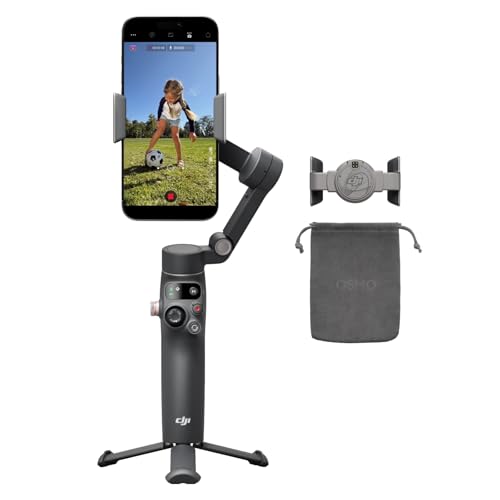
- Best phone gimbal with built-in accessories: DJI Osmo Mobile 7P. Its integrated extension rod and tripod reduce the number of separate pieces you need to pack.
- Best entry-level mirrorless option: Zhiyun Crane M3S. It is relatively light and works well with small mirrorless bodies and compact lenses.
- Best mirrorless balance of capacity and portability: DJI RS 4 Mini. It provides more payload headroom than phone gimbals while remaining substantially smaller than a full-size camera stabilizer.
- Best for heavier mirrorless kits: DJI RS 4. Choose it when your camera, zoom lens, cage, monitor, or accessories approach the Mini’s practical limit.
The best gimbal stabilizers for most phone users are the DJI Osmo Mobile 7P and Insta360 Flow 2 Pro, while mirrorless-camera owners should start with the DJI RS 4 Mini, Zhiyun Crane M3S, or DJI RS 4 according to camera-and-lens weight.
The right choice is not simply the model with the longest battery life. A phone gimbal must fit your phone with its case, balance comfortably, and fold small enough to carry. A camera gimbal must support the complete shooting setup—including lens, plate, cable, microphone, and sometimes a follow-focus motor—without operating near its limit.
Our top picks


As an Amazon Associate we earn from qualifying purchases at no extra cost to you. Ratings are shown as listed on Amazon.
Quick recommendations by situation
- Best compact phone setup: Insta360 Flow 2 Pro. It folds into a small package, has strong subject-tracking features, and is suited to creators who carry a gimbal daily.
- Best phone gimbal with built-in accessories: DJI Osmo Mobile 7P. Its integrated extension rod and tripod reduce the number of separate pieces you need to pack.
- Best entry-level mirrorless option: Zhiyun Crane M3S. It is relatively light and works well with small mirrorless bodies and compact lenses.
- Best mirrorless balance of capacity and portability: DJI RS 4 Mini. It provides more payload headroom than phone gimbals while remaining substantially smaller than a full-size camera stabilizer.
- Best for heavier mirrorless kits: DJI RS 4. Choose it when your camera, zoom lens, cage, monitor, or accessories approach the Mini’s practical limit.
Phone gimbals versus mirrorless-camera gimbals
Phone gimbals use a clamp and are designed around a narrow weight range. They are quick to set up, often include electronic subject tracking, and fold more conveniently than camera models. Their limitation is flexibility: a large phone case, magnetic filter, external light, or oversized microphone can move the phone’s center of gravity outside the clamp’s comfortable range.
Mirrorless gimbals use a quick-release plate and adjustable arms. They require balancing each motor axis before recording, but they can support interchangeable lenses and accessories. Payload figures are not a promise that every camera-lens combination will work perfectly. A short, light prime lens is easier to stabilize than a similarly heavy lens extending far forward, because the latter creates more leverage on the motors.
| Model | Designed for | Approx. weight | Claimed battery life | Folded or transport consideration | Useful capacity |
|---|---|---|---|---|---|
| DJI Osmo Mobile 7P | Smartphones | About 370 g, excluding phone | Up to about 10 hours | Compact folding body; built-in extension rod and tripod | Typical phones, approximately 170–300 g depending on clamp and balance |
| Insta360 Flow 2 Pro | Smartphones | About 357 g, excluding phone | Up to about 12 hours | Folding design with integrated tripod and extension mechanism | Typical smartphones; allow extra margin for thick cases and accessories |
| Zhiyun Crane M3S | Small mirrorless cameras and phones with suitable accessories | About 705 g | Up to about 7.5 hours | Compact camera-gimbal form, but larger than a phone gimbal | Up to roughly 1.5 kg, depending on balance and setup |
| DJI RS 4 Mini | Compact mirrorless cameras | About 890 g | Up to about 13 hours | Folds for transport but needs a dedicated camera bag compartment | Up to roughly 2 kg |
| DJI RS 4 | Mirrorless and heavier hybrid-camera setups | About 1.4 kg | Up to about 12 hours | Full-size gimbal; transport size is less convenient than the Mini | Up to roughly 3 kg |
Specifications can vary by package, battery configuration, and regional version. Treat payload figures as maximum manufacturer guidance, not as a target operating weight. A practical rule is to keep a camera gimbal at least 20% below its stated payload when possible.
DJI Osmo Mobile 7P versus Insta360 Flow 2 Pro
These are the closest head-to-head choices for phone creators. The Osmo Mobile 7P is particularly appealing if you want a self-contained filming tool: its integrated extension rod and tripod can support a quick stand-and-record setup without separate accessories. DJI’s tracking and camera-control features are useful for solo presenters, walking shots, and family videos.
The Flow 2 Pro is similarly travel-friendly and has a strong emphasis on tracking and hands-free operation. Its foldable structure and built-in support make it a good choice for frequent travelers or anyone who wants to move from handheld footage to a stationary shot quickly. Insta360 also offers optional accessories that can broaden its use, but every added light, fill device, or mount increases bulk.
Choose the Osmo Mobile 7P when you value integrated hardware and DJI’s ecosystem. Choose the Flow 2 Pro when compact carrying and subject-tracking workflow are more important. For either model, check that your phone fits with its case installed; removing a case every time can erase much of the convenience advantage.
Choosing a gimbal for a mirrorless camera
Small cameras and prime lenses
The Zhiyun Crane M3S is suitable for compact mirrorless bodies paired with small prime lenses or short zooms. Its lighter design is easier to carry during a long day, but it leaves less room for accessories. A cage, large microphone, monitor, or heavy battery can quickly turn a comfortable setup into a difficult one.
Compact hybrid kits with room to grow
The DJI RS 4 Mini is the stronger all-around choice for many mirrorless owners. It offers more motor capacity than a phone gimbal or ultralight camera stabilizer while remaining easier to transport than a full-size model. It is a sensible fit for a small APS-C or full-frame body with a moderate zoom, provided the complete setup balances inside the adjustment range.
Heavy zooms and accessory-rich rigs
The DJI RS 4 is preferable when your setup includes a larger zoom, camera cage, wireless video transmitter, monitor, focus motor, or other accessories. The additional capacity and larger adjustment range provide a better margin for balancing. The trade-off is substantial: the gimbal itself is heavier, occupies more bag space, and can become tiring before the camera battery runs out.
Decision matrix: match the gimbal to your routine
| Your situation | Best direction | Why |
|---|---|---|
| Occasional phone videos, lowest cost | Basic phone gimbal or Osmo Mobile 7P | Fast setup and no camera plates or balancing procedure |
| Daily commuting or travel with limited bag space | Insta360 Flow 2 Pro | Low carry burden and compact folded design |
| New mirrorless owner using one small lens | Zhiyun Crane M3S | Lightweight entry into camera gimbals |
| Mirrorless body with several lenses | DJI RS 4 Mini | More payload margin and a broader adjustment range |
| Camera cage, monitor, large zoom, or follow focus | DJI RS 4 | Higher capacity reduces the risk of running motors close to maximum |
| Short clips several times a week | Prioritize folding size and setup speed | Convenience affects whether the gimbal actually gets used |
| Long event or travel shoots | Prioritize battery, spare batteries, and a comfortable handle | Runtime alone does not solve fatigue or charging problems |
Calculate your real camera payload before buying
Weigh the complete rig rather than relying on the camera body’s advertised weight. For example:
- Camera body: 650 g
- Lens: 700 g
- Quick-release plate and cable: 100 g
- Cage and microphone: 250 g
- Total: 1,700 g
A 1,700 g setup is within a nominal 2 kg payload, but it leaves only 300 g of stated capacity. Because the lens may extend forward and the accessories may sit high or to one side, the DJI RS 4 Mini could be workable but not comfortably future-proof. A full-size DJI RS 4 would provide a more useful margin, especially if you plan to add a monitor or larger lens.
For a lighter setup—650 g body, 300 g prime lens, and 100 g of plate and accessories—the total is about 1,050 g. That is a much more appropriate target for the Zhiyun Crane M3S or RS 4 Mini.
Battery life and ownership costs
Published runtimes are best-case figures. Motor strength, tracking, Bluetooth, screen brightness, cold weather, and repeated repositioning reduce real-world endurance. If a phone gimbal claims 10 hours and your filming pattern uses it actively for 45 minutes per outing, the theoretical runtime covers about 13 outings. In practice, plan on fewer because standby time and charging losses consume part of that figure.
Phone gimbals generally use internal batteries, so the battery is a long-term wear item rather than a quick swap. Camera gimbals often use removable batteries or battery grips, making a spare more practical for events. Check charging time and whether the gimbal can power or charge the camera; compatibility varies by camera and cable.
Setup, care, and common mistakes
- Remove unnecessary accessories first. Balance the camera with the lens, plate, and recording essentials installed. Adding a microphone later can change the center of gravity.
- Balance before powering the motors. Adjust tilt, roll, and pan axes until the camera stays near position when released. This reduces motor strain and improves battery life.
- Run automatic tuning after balancing. Use a lower motor setting for a light camera and a higher setting only when the rig needs it. Excessive motor strength can introduce vibration.
- Lock the axes for transport. Folding or placing an unlocked gimbal under pressure can damage joints and increase wear.
- Keep moving parts clean. Dust and sand can enter sliding arms and locking mechanisms. Use a soft, dry brush or air blower; avoid spraying liquid into the gimbal.
- Store batteries partly charged when appropriate. Follow the manufacturer’s storage guidance, avoid leaving a depleted battery for months, and keep the gimbal away from high heat.
The parts most likely to cause trouble are not usually the motors themselves but clamps, locking knobs, USB ports, quick-release plates, and built-in batteries. A loose plate creates apparent stabilization problems that no software update can fix. For frequent professional use, factor in replacement plates, a spare battery where supported, and a protective case rather than spending the entire budget on the gimbal body.
Final buying advice
Buy a phone gimbal when fast setup, tracking, and small folded size matter more than interchangeable lenses. The DJI Osmo Mobile 7P and Insta360 Flow 2 Pro are the leading choices for different versions of that use case. Buy a camera gimbal only after weighing the complete rig. The Zhiyun Crane M3S suits genuinely small setups, the DJI RS 4 Mini is the balanced choice for many compact mirrorless kits, and the DJI RS 4 is the safer option for heavier lenses and accessories.
The best gimbal stabilizers are the ones that leave enough payload margin, fit your transport routine, and can be balanced without a frustrating teardown. A lighter model that you carry regularly will usually produce more useful footage than a larger model left at home.




Write Your Review
No reviews yet. Be the first to share your experience!