

Key takeaways
- The best beginner sewing machines are the Brother CS7000X for the widest learning runway, the Brother XM2701 for simple low-cost projects, the Janome 2212 for mechanical controls, and the Singer MX231 when presser-foot clearance and basic garment sewing matter most.…
The best beginner sewing machines are the Brother CS7000X for the widest learning runway, the Brother XM2701 for simple low-cost projects, the Janome 2212 for mechanical controls, and the Singer MX231 when presser-foot clearance and basic garment sewing matter most.
A good first machine should make correct threading, speed control, stitch selection, and routine cleaning easier—not merely offer the largest stitch count. The right choice depends on whether you want to repair clothing occasionally, learn garment construction, sew home décor, or grow into quilting.
Our top picks


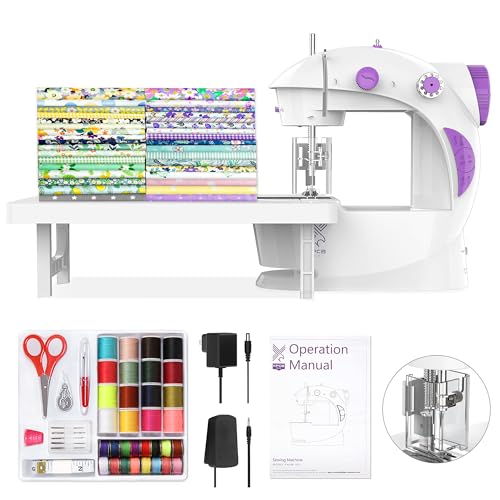

As an Amazon Associate we earn from qualifying purchases at no extra cost to you. Ratings are shown as listed on Amazon.
Best beginner sewing machines by situation
| Situation | Best fit | Why it makes sense | Typical market range in 2026 |
|---|---|---|---|
| Lowest-cost learning and repairs | Brother XM2701 | Lightweight, simple controls, 27 stitches, automatic needle threader | $120–$180 |
| Most room to progress | Brother CS7000X | 70 stitches, adjustable speed, needle up/down, quilting accessories | $220–$300 |
| Prefer knobs and mechanical feedback | Janome 2212 | 12 useful stitches, four-step buttonhole, straightforward controls | $180–$250 |
| Basic garments and thicker fabric layers | Singer MX231 | Metal frame, adjustable stitch length and width, extra-high presser-foot lifter | $150–$230 |
| More frequent sewing with lighter weight | Janome 3160QDC-T | Computerized controls, 60 stitches, speed limiting, automatic thread cutter | $500–$700 |
Head-to-head: which beginner machine is easiest to learn?
Brother CS7000X: best overall for learning and future projects
The CS7000X is the most flexible choice when the beginner does not yet know what they will sew. Its 70 built-in stitches include utility, stretch, decorative, and quilting options, while the LCD screen makes stitch selection less mysterious than a long row of unlabeled knobs. The start/stop button and adjustable speed control are particularly useful for someone learning to guide fabric slowly.
Its automatic needle threader, drop-in bobbin, needle up/down function, and included walking foot reduce common beginner frustrations. The machine weighs about 14 lb, so it is portable without being extremely light. The trade-off is that computerized controls add electronic components that may be more expensive to diagnose outside the warranty period. For ordinary alterations, crafts, and light-to-medium fabrics, it offers more capability than most beginners need initially—but that headroom can prevent an early upgrade.
Brother XM2701: the easiest economical starting point
The XM2701 keeps the learning curve short with 27 stitches, a top-loading bobbin, an automatic needle threader, and a simple stitch dial. It weighs roughly 12 lb and is easy to store in a closet or carry to a table. The included zipper, blind-stitch, buttonhole, and zigzag feet cover common repair and craft tasks.
Choose it for hemming, mending, beginner clothing projects, and lightweight home décor. It is less suitable for frequent thick canvas work or ambitious quilting. Its lighter construction is convenient, but it also means the machine can move more readily when sewing at high speed. Using a firm, level table and slowing the machine down helps.
Janome 2212: best for people who want simple mechanical controls
The Janome 2212 has 12 stitches and traditional dials rather than a screen. That limited selection is an advantage for a learner who wants to understand stitch length, width, and fabric handling without navigating menus. It includes a four-step buttonhole and a free arm for cuffs and sleeves.
The machine uses a front-loading bobbin rather than the more immediately visible top-loading style found on many beginner machines. Loading it correctly takes a little practice, but the arrangement is serviceable and familiar to many repair technicians. It includes fewer convenience features than the Brother computerized models: expect to thread the needle manually and control speed with the foot pedal. Select it when reliability, tactile controls, and repair-oriented simplicity matter more than decorative stitches.
Singer MX231: a practical choice for basic garments
The MX231 offers 97 stitch applications, including utility and stretch options, with adjustable stitch length and width. Its extra-high presser-foot lifter creates more room for thicker fabric layers than a standard lift, which is useful when sewing denim hems, fleece, or several cotton layers.
That clearance does not make it an industrial machine. A domestic model can struggle if the fabric is forced under the foot, the needle is too small, or the seam suddenly becomes several layers thicker. The included all-purpose, zipper, buttonhole, and button-sewing feet are useful, but the model has fewer beginner-focused electronic aids than the CS7000X. It is a sensible middle ground for someone who expects to sew garments and wants physical knobs.
Janome 3160QDC-T: best upgrade for frequent sewing
The 3160QDC-T is more expensive, but its 60 stitches, speed control, automatic thread cutter, needle up/down setting, and one-step buttonhole make repeated projects less tiring. It weighs about 12 lb and is marketed toward quilting, so it balances portability with a broader feature set.
It is overkill for occasional repairs. It becomes easier to justify when you sew several times per month, value consistent buttonholes, or expect to add quilting and patchwork. As with any computerized machine, keep the foot pedal, power cord, and control panel dry and avoid storing it in a damp area.
Feature comparison that matters more than stitch count
| Model | Stitch count | Speed control | Needle threading | Bobbin style | Approx. weight | Useful clearance or control detail |
|---|---|---|---|---|---|---|
| Brother XM2701 | 27 | Foot pedal | Automatic needle threader | Top-loading | 12.6 lb | Free arm; simple dial selection |
| Brother CS7000X | 70 | Slider plus start/stop button | Automatic needle threader | Top-loading | 14 lb | Needle up/down; quilting feet included |
| Janome 2212 | 12 | Foot pedal | Manual | Front-loading | 13.2 lb | Mechanical dials; four-step buttonhole |
| Singer MX231 | 97 applications | Foot pedal | Manual | Front-loading | 12.2 lb | Extra-high presser-foot lifter |
| Janome 3160QDC-T | 60 | Slider plus start/stop button | Automatic needle threader | Top-loading | 12 lb | Automatic thread cutter; needle up/down |
Stitch count should not decide the purchase by itself. Most beginners use straight stitch, zigzag, a stretch stitch, and a buttonhole. A machine with 12 well-chosen stitches can be more useful than one with 100 decorative variations if its threading path is clearer and its foot pedal is easier to control.
Threading, speed, and presser-foot clearance
Automatic needle threaders save time, but they are not magic. The needle must be at its highest position, the thread must sit correctly in the guide, and the needle must be straight. A bent needle is a common reason the hook fails to catch the thread.
Speed control is especially valuable for curves, corners, and a first buttonhole. A slider limits the machine’s maximum speed while the foot pedal still controls movement. If a machine lacks a slider, practice pressing the pedal with the middle of the foot rather than abruptly using the toe.
Presser-foot clearance matters when fabric thickness changes mid-seam. Raise the foot before placing fabric, align the edge guide, and lower it fully before sewing. Do not pull thick fabric through the machine; use the handwheel to take the first few stitches if the seam begins at a bulky ridge. A walking foot can help multiple layers feed evenly, but it is not a substitute for correct needle size and thread tension.
Included accessories and repairability
Look for an all-purpose foot, zipper foot, buttonhole foot, blind-stitch foot, bobbins compatible with the model, a seam ripper, needles, and a soft cover. The CS7000X is particularly generous for quilting beginners because it includes additional quilting-oriented feet. Accessories are useful only when replacements remain available, so check the manufacturer’s parts listings before buying specialized feet.
Mechanical machines such as the Janome 2212 generally have fewer electronic parts and can be easier for an independent sewing-machine technician to diagnose. Computerized machines offer superior convenience but may require an authorized service center for board or display problems. In either case, repairability depends on local service availability, not just the brand name.
The parts most likely to wear first are needles, bobbins, presser feet, the needle-plate area, the bobbin case, and eventually the foot pedal or belt. Needles are inexpensive consumables: replace one after hitting a pin, sewing over a thick seam awkwardly, or noticing skipped stitches. Use a size 70/10 or 80/12 needle for lightweight woven cotton, 90/14 for denim or medium-heavy fabric, and a ballpoint or stretch needle for knits.
A low-cost ownership calculation
Suppose a $180 machine is used twice per month for three years. That is 72 sessions, or about $2.50 per session before thread, needles, and fabric. If an included zipper foot and buttonhole foot prevent two separate accessory purchases of approximately $15 each, the effective equipment cost falls further. The calculation favors the machine you will actually use: a cheaper model stored because threading is frustrating has a higher practical cost than a slightly more expensive machine that gets used weekly.
First setup and maintenance routine
- Read the threading diagram and wind a fresh bobbin, keeping the thread evenly distributed.
- Install a new needle with the flat side facing the direction specified in the manual.
- Thread the upper path with the presser foot raised so the tension discs open.
- Pull both thread tails under the foot and behind it for the first few stitches.
- Test on a fabric scrap using the same layers as the project.
- After sewing, remove lint from the bobbin area with the supplied brush and cover the machine.
Do not oil a computerized machine unless its manual specifically permits it. Excess oil can attract lint, while incorrect cleaning can damage sensors or belts. If stitches suddenly become uneven, rethread first, replace the needle second, and check bobbin insertion before changing tension settings. Those three steps solve many apparent machine faults.
Final recommendation
Buy the Brother XM2701 for the simplest affordable entry, the Brother CS7000X for the best balance of learning aids and future projects, the Janome 2212 for dependable mechanical control, and the Singer MX231 when extra presser-foot clearance is a priority. Choose the Janome 3160QDC-T only when frequent sewing makes its automatic cutter, speed limiting, and one-step buttonhole worth the added cost.

Write Your Review
No reviews yet. Be the first to share your experience!