

Key takeaways
- Plug-in versus hardwired: Wireless kits do not tap the existing doorbell transformer. If you already have a wired doorbell, you can leave it in place and add a wireless button beside it, or replace the chime with a smart doorbell that works with your existing low-voltage wiring. For any change to household wiring or the transformer, use a licensed electrician and follow the manufacturer’s manual.
- Interference: Wireless buttons usually use sub-gigahertz radio. Garage door openers, baby monitors and other remotes can sometimes interfere. If the receiver behaves oddly, change the code or channel if the kit offers one.
- Light placement: Strobe receivers work best at eye level, in a spot you can see from your usual chair, desk or bed. Avoid putting them behind a TV or in a corner where the flash is hidden.
- Multiple buttons: Some kits let you assign different flash patterns or tones to the front and back doors. Look for this if you need to tell the doors apart.
- Visitors and household members: Make sure everyone in the home knows the pager or light is the primary alert. A loud chime that annoys neighbours is rarely necessary if the receiver offers volume control.
- Emergency alerts: A doorbell receiver is not a smoke or carbon monoxide alarm. For fire and gas safety, use alarms designed for people with hearing loss and follow the maker’s instructions and local codes.
For most households with a hearing-impaired member, a plug-in wireless doorbell with a bright strobe receiver and an optional vibrating pager is the best starting point, while a purpose-built system such as Bellman and Symfon suits people with profound hearing loss who need a bed shaker and a dependable, rechargeable pager. If you live in a small home and only need a visual cue during the day, a budget flashing kit is usually enough. Larger homes, night-time sleepers and shift workers should look at multi-receiver or vibration-capable systems.
This guide compares the types of products that roundup sites and makers keep pointing to, explains what the stated specifications really mean, and gives a decision table so you can match a system to your door, your home layout and your hearing needs. Where a figure comes from a maker page, it is described as the maker’s claim. Where it comes from an outlet, the outlet is named. Specs and bundles change between listings, so treat any number here as a starting point and read the box contents on the product page before you buy.
Our top picks


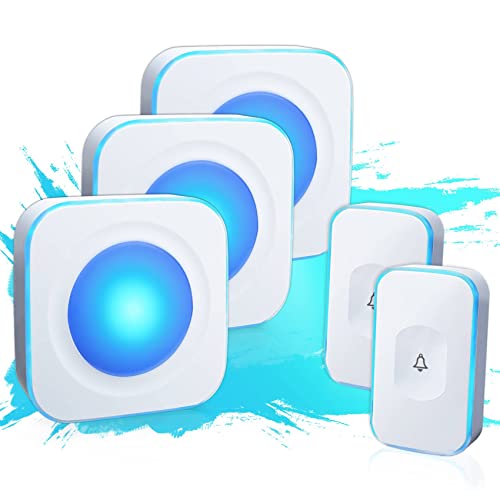
As an Amazon Associate we earn from qualifying purchases at no extra cost to you.
At a Glance: Wireless Doorbell Options Compared
| Product or line | Best for | Key stated specs | Limits |
|---|---|---|---|
| CallToU hearing impaired doorbell | Mixed hearing loss, homes that need flash plus vibration | Reviewers report a range of up to 1,000 feet, volume up to 110 dB, flashing light and vibrating clip-on receiver, several alert modes | Needs batteries; the vibrating receiver is small, so it is less suited to deep sleepers |
| Safeguard Supply LRA series | Larger homes, small offices, studios and clinics | The maker lists up to 1,000 feet line-of-sight range and strobe-light receivers alongside sound receivers | Strobe-focused; no dedicated bed shaker in the basic kit |
| TECKNET WA888-style kit | Budget buyers who want flash-only, ring-only or both | Roundups cite flash, ring or both modes, two receivers and a stated range of about 1,300 feet | Plastic build; range claims are open-air figures |
| JSIEEM-style multi-receiver kit | Multi-room coverage | Roundups describe three receivers and a flash-only mode | Plug-in receivers need an outlet in each room |
| Philips DES3140-style battery receiver | Small flats and apartments | Described by roundups as battery powered with bright blinking lights | Limited reach for large homes; no vibration |
| Bellman and Symfon doorbell notification system | Profound hearing loss, night-time alerts, premium buyers | The maker lists flash and vibration receivers, bed shaker, alarm clock and pager versions, including a rechargeable pager set | Premium tier; more components to set up |
| Smart video doorbell with phone or watch alerts | People who already wear a smartwatch and want to see the visitor | Push notifications, live video, two-way audio on most models | Depends on Wi-Fi and a charged phone; no strobe in a room without a phone |
What Actually Matters When Choosing
Flash, vibration or both
A flashing light works well when you are awake and in the same room. It does little if you are asleep, in the shower or in a room with the door closed. Vibration works anywhere you carry the pager, and a bed shaker covers sleep. Hear4You, a hearing-products retailer, advises that people with severe or profound hearing loss should choose a flashing doorbell that can also connect to a portable vibrating pager, and that larger homes should choose a system that supports multiple receivers in different rooms. That advice matches how most of the better-known kits are structured.
Range and what it really means
Many kits quote ranges of 1,000 feet or more. These are line-of-sight, open-air figures. Brick, concrete, metal doors, foil-backed insulation and Wi-Fi congestion on the same band all shorten the distance in a real house. For a typical single-family home, a stated range several times the width of the house is a sensible margin. If the doorbell button is on a detached garage or a far gate, pick a system whose maker states a longer range and test it before fixing the button permanently.
Receivers and where they go
Plug-in receivers with a strobe are bright and do not need battery changes, but they need an outlet in each room you want covered. Battery receivers are portable and can sit on a nightstand or travel with you, but you must replace or recharge the batteries. A rechargeable pager, as offered in the Bellman and Symfon range, removes the habit of checking batteries, which matters if the pager is your only alert at night.
Button power and mounting
Most wireless push buttons are battery powered or self-powered by the press. Check the mounting method (screws or adhesive), the weather rating on the button and whether the button can be fixed to a metal frame without losing signal. If you rent, adhesive mounting avoids drilling.
Volume still counts
Many people with partial hearing loss benefit from a loud, low-pitched chime in addition to the light. The CallToU line is reported by roundups to reach up to 110 dB, and the Safeguard Supply range offers sound and visual receiver choices. Adjustable tone and volume help other family members too, so everyone in the house is alerted by the same button.
Tier-by-Tier Breakdown
Budget tier: flash-first kits
Budget kits from brands such as TECKNET and JSIEEM focus on a plug-in or battery receiver with a strobe and a selectable chime. Roundup sites describe flash-only, ring-only and combined modes, with two or three receivers in the box. This tier is a good fit for a small to medium home where the person is awake and moving between a few rooms. The main trade-offs are build quality and the lack of a strong vibration option. If the main goal is a reliable light cue in the living room and kitchen, a budget kit does the job. If you sleep through light cues, step up a tier.
Mid-range tier: flash plus portable vibration
The CallToU line is the product that appears most often in 2026 roundups for this tier. Reviewers describe a clip-on or portable receiver that combines a flashing light, a vibration motor and a loud ring, with modes such as ring plus vibration, ring plus flash, all three, or flash only. Variants come with different numbers of buttons and receivers, so a household with a front and back door can look for a two-button version. The trade-offs are battery use in the receivers and the small size of the vibration motor, which is meant to be felt on a belt or pocket rather than to wake a sleeper.
Premium tier: purpose-built accessibility systems
Bellman and Symfon builds systems for deaf and hard-of-hearing users. The maker lists several receiver types: a flash receiver paired with a bed shaker, an alarm clock receiver with a bed shaker, a vibration-only pager, a rechargeable pager with charger and bed shaker, and a portable receiver with a bed shaker. The advantage is that the pieces are designed to work together, including night-time alerts through a bed shaker placed under a mattress or pillow. The trade-off is the premium tier and the extra pieces to place and maintain. For buyers who live alone, who sleep deeply or who are profoundly deaf, this is the category that most directly solves the problem.
Fit, Setup and Compatibility Notes
- Plug-in versus hardwired: Wireless kits do not tap the existing doorbell transformer. If you already have a wired doorbell, you can leave it in place and add a wireless button beside it, or replace the chime with a smart doorbell that works with your existing low-voltage wiring. For any change to household wiring or the transformer, use a licensed electrician and follow the manufacturer’s manual.
- Interference: Wireless buttons usually use sub-gigahertz radio. Garage door openers, baby monitors and other remotes can sometimes interfere. If the receiver behaves oddly, change the code or channel if the kit offers one.
- Light placement: Strobe receivers work best at eye level, in a spot you can see from your usual chair, desk or bed. Avoid putting them behind a TV or in a corner where the flash is hidden.
- Multiple buttons: Some kits let you assign different flash patterns or tones to the front and back doors. Look for this if you need to tell the doors apart.
- Visitors and household members: Make sure everyone in the home knows the pager or light is the primary alert. A loud chime that annoys neighbours is rarely necessary if the receiver offers volume control.
- Emergency alerts: A doorbell receiver is not a smoke or carbon monoxide alarm. For fire and gas safety, use alarms designed for people with hearing loss and follow the maker’s instructions and local codes.
Pick X If… Decision Table
| If this describes you | Choose | Why |
|---|---|---|
| You are awake during the day, live in a small home and want the simplest option | A budget flash-and-chime kit with one or two receivers | Low cost, plug in and go, enough for a few rooms |
| You move around the house and need alerts anywhere | A mid-range kit with a portable vibrating receiver such as the CallToU line | Flash, vibration and sound in one clip-on unit |
| You have profound hearing loss or sleep deeply | A Bellman and Symfon system with a bed shaker | Purpose-built night-time alert, rechargeable pager options |
| You have a large house, office or studio | Safeguard Supply LRA series or another long-range kit with strobe receivers | The maker lists up to 1,000 feet line-of-sight and strobe receiver choices |
| You live with hearing family members who also want a chime | A kit with adjustable volume and flash-plus-ring mode | One button serves everyone |
| You want to see and speak to visitors | A video doorbell plus a flash receiver backup | Visual confirmation of who is at the door |
Alternatives to Consider
- Smart video doorbell: sends phone or watch alerts and shows the visitor, but depends on Wi-Fi and notifications.
- Smart bulb integration: flashes a lamp when the button is pressed, at the cost of a longer setup.
Frequently Asked Questions
Do I need a vibrating receiver or is a flashing light enough?
A flashing light is enough if you are usually awake and in sight of the receiver. If you often sleep, shower or work in a closed room, a vibrating pager or bed shaker is far more dependable. Hear4You advises that people with severe or profound hearing loss pair a flashing doorbell with a portable vibrating pager.
How far will a wireless doorbell work in a real house?
Makers quote figures such as 1,000 feet or more, but these are open-air, line-of-sight numbers. Walls, metal doors and electronic interference reduce the distance. Choose a kit with a stated range well above the size of your home and test the signal at the farthest room before fixing the button in place.
Can I use a smart video doorbell instead?
Yes, if you always carry a phone or wear a smartwatch and have reliable Wi-Fi. Video doorbells send notifications and let you see the visitor, but they do not flash a room or wake you from sleep unless your phone does. Many buyers use one alongside a simple strobe receiver.
Will a wireless kit work with my existing wired doorbell?
Wireless kits are separate from your wiring, so you can usually leave the wired bell in place and add a wireless button next to it. If you want to replace the wired chime or transformer, hire a licensed electrician and follow the manufacturer’s manual for the product you choose.
How many receivers do I need?
Plan on one receiver in each room where you spend time, plus one in the bedroom if the kit has a night mode. Roundups describe kits with two or three receivers as common for medium homes. Portable or clip-on receivers can reduce the number you need.
Is a purpose-built system worth the premium tier?
For people with profound hearing loss, who live alone or who sleep deeply, a purpose-built system with a bed shaker and rechargeable pager is often worth it. For a small home with light sleepers and daytime use, a budget or mid-range flash kit is usually adequate. Decide based on how and when you need the alert.






Write Your Review
No reviews yet. Be the first to share your experience!